
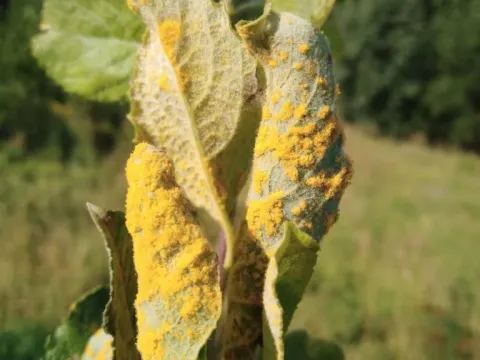
Willow rust
Melampsora aecidioides
The causative agent of willow rust is a specialized fungal pathogen known as Melampsora aecidioides. This fungus acts as an obligate parasite, strictly dependent on its host plant for survival and reproduction.
What the section contains
Willow rust
The pathogen's mycelium colonizes the intercellular spaces within the willow's foliage and young stems. By absorbing nutrients directly from the living plant tissue, the fungus causes significant physiological stress to the host.
The life cycle of the fungus is complex and involves the production of several spore types, including urediniospores, which are responsible for the rapid spread of the disease throughout the summer growing season.
The fungus overwinters primarily as teliospores on fallen, infected leaves. As environmental conditions improve in the spring, these spores germinate to initiate the primary infection cycle for the new growing season.
Due to its specialized nature, the pathogen synchronizes its development with the phenology of the willow, making it particularly aggressive during the periods of rapid shoot extension and new leaf growth.
The primary clinical signs of willow rust are the appearance of small, bright yellow to orange spots on the upper surface of the leaves. These spots indicate where the fungus has penetrated the plant tissue.
As the infection progresses, powdery orange pustules develop on the underside of the leaves. These pustules represent dense clusters of spores, which are easily disseminated by wind or splashing water.
Infected leaves often undergo chlorosis, becoming yellow and stunted. As the infection intensifies, the foliage may curl, wither, and drop prematurely, which is a classic symptom of significant rust infestation.
During the late season, the appearance of dark, crusty lesions on the foliage marks the production of overwintering structures. These indicate that the fungus is preparing to enter its dormant phase.
- Bright yellow or orange spots on leaves.
- Powdery spore-filled pustules on leaf undersides.
- Premature yellowing and leaf shedding.
- Distortion and necrosis of young succulent shoots.
- Dark overwintering crusts on debris.
High humidity and consistent moisture are the most critical environmental factors driving the development of willow rust. Frequent rainfall or heavy dew significantly promotes spore germination and host colonization.
Dense, overcrowded willow plantings are highly susceptible to rust because they limit air movement. Stagnant air keeps the foliage wet for extended periods, creating an ideal incubation environment for the fungus.
The fungus thrives within a temperature range of 15 to 22 degrees Celsius. During these mild, moist conditions, the pathogen can produce multiple generations of spores, leading to rapid disease expansion.
Low-lying areas with poor soil drainage and lack of sunlight are high-risk zones for willow rust. In such sites, the microclimate often favors persistent fungal activity throughout the summer.
Trees that are already stressed due to poor soil fertility, root competition, or improper irrigation are generally less capable of resisting the pathogen compared to vigorous, healthy willows.
The primary economic and biological damage is caused by the substantial loss of photosynthetic leaf area. This reduction in the plant's ability to produce energy leads to stunted growth and reduced vigor.
Early leaf drop prevents the willow shoots from properly hardening off before the arrival of autumn frosts. Consequently, the tips of the branches are highly prone to winter injury and dieback.
In nurseries and ornamental landscapes, willow rust significantly degrades the aesthetic value of the trees. Heavily infected stock often fails to meet quality standards for sale or transplanting.
If left unmanaged, chronic infections over multiple years can lead to the systemic decline of the tree. This process lowers the tree's natural defense mechanisms and makes it vulnerable to secondary pests.
For plantations dedicated to biomass or basketry production, willow rust represents a major production risk, as it directly impacts the biomass accumulation and yield of the willow sticks.
The most fundamental cultural practice is the thorough sanitation of the site. Collecting and destroying all fallen leaves in the autumn removes the primary source of overwintering inoculum.
Strategic pruning to thin out the canopy is essential to improve airflow and increase sunlight penetration. This reduces the duration of leaf wetness and effectively discourages fungal spore attachment.
The selection and planting of rust-resistant willow cultivars offer the best long-term strategy for managing the disease. This is particularly important when establishing new high-value stands.
Monitoring for initial signs of infection in the spring allows for timely intervention. If necessary, the application of fungicides can suppress the spread of the pathogen during the most vulnerable periods.
Balanced nutrition is crucial for promoting tree resilience. Avoiding excessive nitrogen, which can lead to lush, soft tissue more susceptible to fungal attack, is key to maintaining a healthy willow plant.