
Common ink cap
Coprinopsis atramentaria
Description
Pathogen
The Common ink cap (Coprinopsis atramentaria) is a saprotrophic fungus and is not classified as a plant pathogen. It does not infect or cause disease in living agricultural crops.
Instead of attacking plants, this fungus functions as a decomposer, breaking down complex organic matter and wood debris in the soil into simpler chemical compounds.
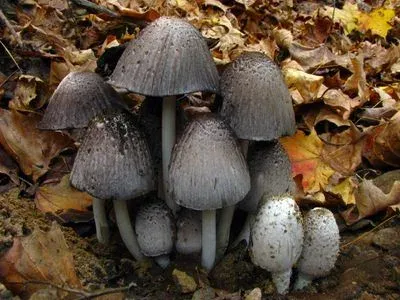
The life cycle of the common ink cap involves the production of bell-shaped caps that undergo autolysis, turning into a black liquid as the spores mature and are released.
Because it lacks the specialized enzymatic tools required to degrade living plant cell walls, it remains entirely harmless to agricultural and horticultural plants.
In agricultural science, the presence of such saprotrophs is generally viewed as an indicator of organic richness rather than a sign of pathological infection.
Conditions for development
Common ink caps thrive in environments rich in nitrogen and decaying organic matter, such as manured fields, compost heaps, and areas near buried wood.
Optimal development occurs under conditions of high humidity and moderate temperatures, which are essential for the rapid growth of the fungal mycelium in the substrate.
The fungus is most visible following rainfall, as the moisture stimulates the emergence of the fruiting bodies from the underlying subterranean mycelial network.
Agronomically, its presence is most frequently noted in soils with high moisture content and high levels of un-composted organic residue.
Dissemination is highly efficient due to the massive production of spores, which are easily transported by wind or water, allowing the fungus to colonize new nutrient-rich spots.
Why it matters
The common ink cap poses no direct threat to crops. It does not parasitize roots, stems, or leaves, and it does not secrete phytotoxins that could inhibit plant growth.
Potential indirect issues may arise in controlled environments like greenhouses, where excessive fungal growth may indicate an over-saturated substrate and a lack of proper aeration.
In certain contexts, the colonization of the soil by a high biomass of saprotrophic fungi may compete briefly with plants for available mineral nutrients, although this effect is typically negligible.
The main concern for farmers is primarily aesthetic or operational, such as the need to clear large amounts of fungal material to facilitate field management.
There is no evidence that this fungus facilitates the transmission of other soil-borne diseases, nor does it provide a gateway for secondary bacterial or fungal infections in plants.
Protection
Because the common ink cap is not a plant disease, there is no need for chemical fungicidal control. Management focuses on improving agronomic standards.
The most effective strategy is the proper management of organic fertilizers, ensuring that manure and compost are fully matured before being applied to the fields.
Improving soil structure through mechanical tilling and drainage helps regulate soil moisture, creating less favorable conditions for fungal mycelium proliferation.
In intensive cultivation systems, maintaining a proper balance of nutrients and moisture is key to minimizing the presence of opportunistic saprotrophic fungi.
If the concentration of mushrooms becomes a concern, physical removal of the fruiting bodies is sufficient to stop the current spore dispersal cycle without chemical intervention.
Discussion
No discussions yet — be the first.