
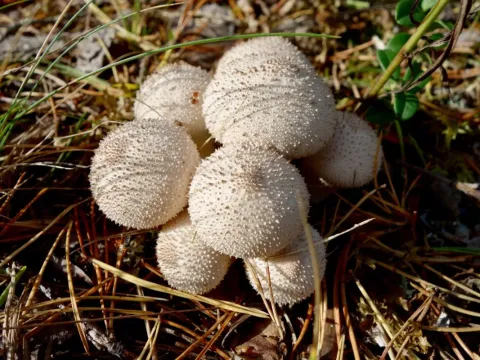
Tail puffball
Lycoperdon caudatum
Lycoperdon caudatum, commonly known as the tail puffball, is a basidiomycete fungus that primarily functions as a saprotroph within agricultural soil ecosystems. While not a classic plant pathogen, its presence can indicate suboptimal soil conditions.
What the section contains
Tail puffball
The fungus develops by forming a mycelial network that degrades organic matter. It is typically found in environments with abundant woody debris, high humidity, and poor aeration, which are common in poorly managed soil profiles.
The fungus spreads via spores released from mature fruiting bodies. These spores are highly resistant to environmental stressors and can survive in the soil for extended periods, waiting for suitable conditions for colonization.
Although it does not actively invade healthy tissues, it can opportunistically colonize weakened root systems. By utilizing the roots as a nutrient base, the fungus contributes to the decline of crops already stressed by other factors.
Understanding the biology of Lycoperdon caudatum is crucial for agronomists, as it serves as a bioindicator for soil health. High levels of this fungus suggest a need for improved organic matter decomposition processes.
The most prominent sign of the tail puffball is the development of pear-shaped fruiting bodies with a characteristic "tail" at the base. These appear above ground near the base of plants or in areas with accumulated organic matter.
In the rhizosphere, the presence of the fungus is manifested by a dense, whitish mycelial mat. This mycelium physically envelops the roots, effectively acting as a barrier to water and nutrient uptake by the host plant.
Visually, infected crops exhibit signs of stress, including stunted growth, leaf chlorosis, and reduced turgor pressure. These symptoms often become more pronounced during peak growth stages or under drought conditions.
As the fruiting bodies mature, they transition from white to a brownish, leathery state. When disturbed, they release a cloud of spores, which is the primary mechanism for the rapid dispersal of the fungus throughout the field.
In cases of heavy infestation, a musty odor may be detected near the soil surface. This is a result of the rapid decomposition of organic materials by the fungus, which alters the microbial profile of the soil.
High soil moisture is the primary driver for the development of the tail puffball. Prolonged rainfall and high humidity levels create the ideal environment for the activation of spores and the development of fruiting bodies.
The accumulation of uncomposted organic matter, such as fresh straw or woody chips, provides an essential nutrient base for the fungus. Proper management of these materials is necessary to prevent mass colonization.
Heavy, poorly aerated soils are particularly susceptible to this fungus. Lack of oxygen in the root zone suppresses the activity of beneficial soil bacteria, allowing the tail puffball to dominate the soil microbial community.
Soil acidity also influences the growth of Lycoperdon caudatum. It thrives in slightly acidic conditions where the competitiveness of other soil microorganisms is restricted, giving the fungus a significant advantage.
Dense planting patterns and lack of crop rotation contribute to the buildup of the pathogen in the soil. Consistent environmental conditions over several seasons allow the fungus to establish deep-seated colonies.
The main harm caused by the tail puffball is the restriction of nutrient uptake. By coating the roots with its mycelium, the fungus competes with the plant for nitrogen and phosphorus, leading to reduced yield and crop quality.
Physically, the dense mycelial web restricts the availability of water to the roots, causing the plants to suffer from water stress even in adequately irrigated fields. This severely impacts the crop's ability to withstand heat and drought.
The fungus may release metabolic products into the soil that are toxic to young seedlings. This can result in poor germination rates and loss of plants during the critical early stages of development, necessitating replanting.
Presence of the fungus can also complicate farm management. Spores can be transported on machinery and tools, spreading the pathogen to healthy areas of the farm and creating new hotspots for infestation.
Finally, the fungus reduces the overall resilience of the crop, making it more susceptible to opportunistic pathogens. This increases the need for corrective measures and fungicide applications, which can raise production costs.
The most effective strategy for managing the tail puffball is liming the soil to maintain a neutral pH. A balanced pH environment limits the competitiveness of the fungus and encourages beneficial microbial activity.
All organic materials should be fully composted before application to the fields. Avoiding fresh organic matter prevents the fungus from gaining a foothold and stops the rapid buildup of its mycelial network.
Improving soil aeration through deep cultivation and regular harrowing is vital. Increasing oxygen levels in the soil profile facilitates the death of fungal colonies that cannot survive in oxygen-rich environments.
Manual removal of fruiting bodies before they release spores is a key sanitation practice. Properly disposing of these materials prevents the localized infection from spreading across larger areas of the crop.
The application of biological control agents containing Trichoderma species is highly effective. These beneficial organisms act as natural competitors, displacing the tail puffball and restoring a healthy balance to the rhizosphere.