
Take-all root rot
Gaeumannomyces graminis
The disease is caused by the soil-borne fungus Gaeumannomyces graminis, which specifically attacks the roots and basal stems of various grass species. It is a member of the Magnaporthaceae family.
What the section contains
Take-all root rot
The fungus survives primarily in crop residues within the soil. It spreads by growing mycelium from infected debris to the roots of emerging cereal crops, establishing a parasitic relationship.
The pathogen forms dark, dense mycelial mats on the root surface, which is a diagnostic characteristic of the infection. It penetrates the vascular tissues, causing systemic dysfunction.
Common hosts include winter wheat, winter barley, rye, and oats. Wheat is typically the most susceptible host, often showing severe symptoms in intensive monoculture systems.
The fungus produces perithecia, the sexual fruiting bodies, which can act as a secondary inoculum source, though root-to-root contact is the primary mode of transmission.
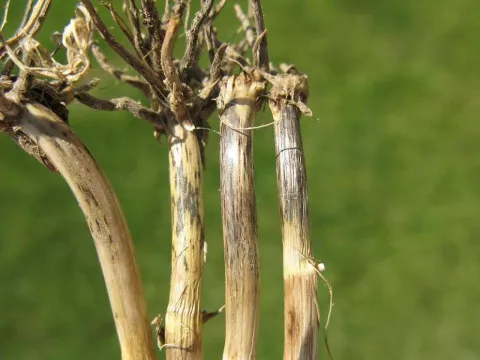
Early symptoms include stunting and yellowing of the plants. Affected roots become brittle, discolored, and eventually turn coal-black, reflecting the necrotic tissues.
The base of the stem often displays a black discoloration under the leaf sheaths. In some cases, you may observe the black fungal mycelium adhering to the crown of the plant.
A hallmark symptom is the formation of «whiteheads» in the field. These are prematurely ripened, bleached ears that are often empty or contain only shriveled, light-weight grains.
The disease usually occurs in patches within a field. Within these patches, plants are significantly shorter, exhibit poor tillering, and may lodge easily due to a weakened root system.
When pulling an infected plant from the soil, the roots easily snap off at the base because the crown has been severely compromised by the fungal infection.
The pathogen thrives in moist soil conditions, particularly during cool to moderate temperatures ranging from 12°C to 20°C, which often coincide with the spring growing season.
Soil pH plays a critical role in disease severity. Take-all is more prevalent and aggressive in neutral to alkaline soils, whereas acidic soils tend to suppress its activity.
Poorly drained soils or soils with high compaction levels favor the fungus, as these conditions provide the necessary moisture for mycelial growth and spread.
Continuous cropping of susceptible hosts, such as wheat after wheat, leads to a significant accumulation of inoculum, drastically increasing the risk of severe outbreaks.
Deficiencies in essential nutrients, especially phosphorus and potassium, can reduce the natural defense mechanisms of the plants, making them more prone to infection.
The primary damage is caused by the destruction of the root system, which prevents the plant from taking up sufficient water and essential minerals during critical grain-filling stages.
This results in reduced tillering, lower grain weight, and fewer seeds per ear. In severe cases, the entire plant may die before maturity, leading to empty whiteheads.
Crop lodging due to root decay creates significant harvesting difficulties, further increasing yield losses and costs associated with agricultural operations.
Take-all can cause yield reductions ranging from 20% to 50% in heavily infested fields, making it one of the most economically damaging root diseases in cereal production.
Beyond quantity, grain quality is also compromised. The resulting grain is often small, shriveled, and has low test weight, reducing its market value for milling and feed.
Crop rotation is the most effective management strategy. Introducing non-host crops like oats, pulses, or brassicas helps break the pathogen's life cycle in the soil.
Proper soil tillage practices that incorporate crop residues deep into the soil can promote faster decomposition, thereby reducing the survival period of the fungus.
Maintaining balanced soil fertility and addressing micronutrient deficiencies strengthens the plant's physiological resilience against fungal penetration.
The use of effective fungicide seed treatments specifically registered for take-all suppression is essential for protecting young seedlings during the initial establishment phase.
Rigorous weed control is vital, as grass weeds (such as couch grass or wild grasses) can serve as alternative hosts and reservoirs for the fungus between cereal crops.