
Take-all disease
Gaeumannomyces radicicola
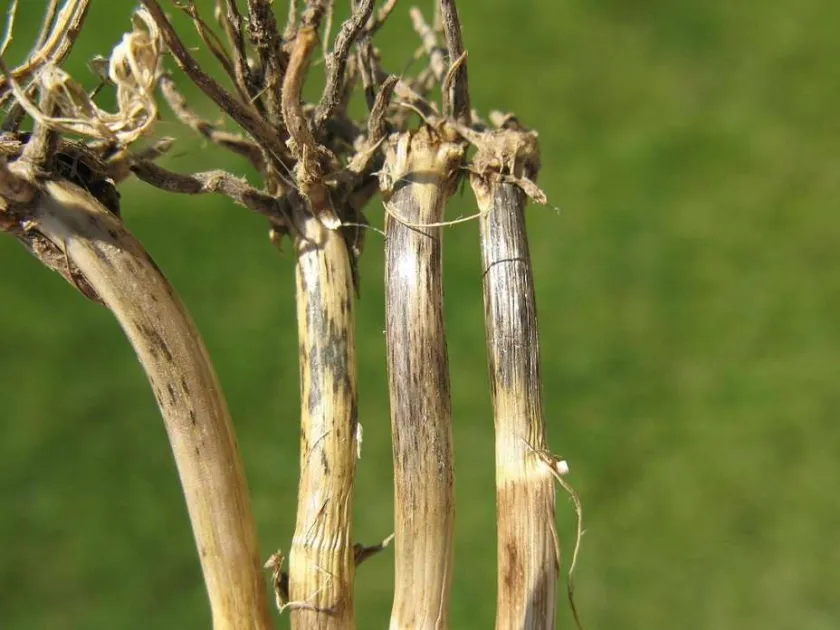
Description
Symptoms
The first signs are usually patchy growth in the field, with infected plants appearing stunted and prematurely yellowing. These patches tend to expand over successive growing seasons.
A diagnostic feature is the presence of an inky-black fungal mat (hyphae) on the roots and the lower internodes of the stem. When pulled up, the roots of infected plants often appear black and brittle.
During the heading stage, infected plants exhibit whiteheads—empty or poorly filled ears—as the damaged root system can no longer supply the necessary water and nutrients for grain development.
Lodging is a common consequence of take-all, as the decaying root system loses its ability to anchor the plant in the soil, making it susceptible to wind and rain.
Microscopic examination of the roots reveals characteristic runner hyphae, which are critical for identifying the pathogen in laboratory settings.
Pathogen
Take-all disease is caused by the soil-borne fungus Gaeumannomyces graminis (formerly Gaeumannomyces radicicola). This pathogen specifically targets the roots and stem bases of cereal crops.
The fungus develops as a dark brown to black mycelium that blankets the roots, effectively strangling the plant's nutrient uptake mechanism. It persists in the soil on crop residues for several years.
Spread occurs primarily through mycelial growth from infected plant debris to healthy roots. While spores are produced, the soil-dwelling hyphae are the main cause of field infections.
The biological cycle is strongly influenced by soil moisture and temperature. The fungus remains active across a broad spectrum but favors moist, cool conditions during the germination and tillering phases.
The pathogen is highly specialized and relies on the presence of susceptible grass hosts. Once it establishes in the soil, it becomes a chronic issue for continuous cereal cultivation.
Conditions for development
Take-all development is most aggressive in neutral to alkaline soils. Acidic soils tend to naturally suppress the activity of the fungus due to a different microbial composition.
High soil moisture, especially during spring, significantly boosts the infection rate. Waterlogged conditions in fields with poor drainage are particularly conducive to disease outbreaks.
Continuous wheat production or short crop rotations with susceptible cereals are the primary drivers of this disease. Frequent planting of wheat allows the fungal population to explode.
Warm, mild winters followed by a wet spring provide the perfect environment for the pathogen to colonize the root systems of young winter cereals.
Lack of proper soil management, such as burning or poor incorporation of stubble, leaves the fungus with a constant food supply, maintaining its prevalence in the field.
Why it matters
The primary damage caused by take-all is a severe reduction in grain yield. In heavily infested fields, yield losses can range from 20% up to 50% or more depending on the severity.
Plants affected by the disease suffer from compromised nutrient and water uptake, which results in shriveled grains with low test weight and poor milling quality.
Increased susceptibility to other environmental stressors, such as drought or secondary infections, makes it nearly impossible for infected plants to recover or reach maturity.
The disease significantly lowers the economic viability of cereal farming, as it forces farmers to diversify rotations or invest in expensive chemical treatments.
Over time, the disease degrades the overall health of the field, making it difficult to achieve high yields even when environmental conditions are optimal.
Protection
Crop rotation is the most effective cultural control method. Planting non-host crops like oilseed rape, legumes, or fallow periods disrupts the pathogen's life cycle.
Good soil preparation, including proper management of stubble, helps to decrease the amount of inoculum available in the topsoil before the next crop is sown.
Seed treatment with specific fungicides can protect seedlings during the critical early growth stages, although these offer limited protection for the mature root system.
Adjusting soil fertility and pH management—such as the use of ammonium-based nitrogen fertilizers—can help create a localized acidic environment that inhibits fungal growth.
- Implement a rotation of at least 3 years away from cereals.
- Control grassy weeds which act as alternative hosts.
- Ensure balanced fertilization to boost plant resilience.
- Use certified disease-free seeds and fungicides.
- Monitor fields early in the season to identify patches.
Discussion
No discussions yet — be the first.