
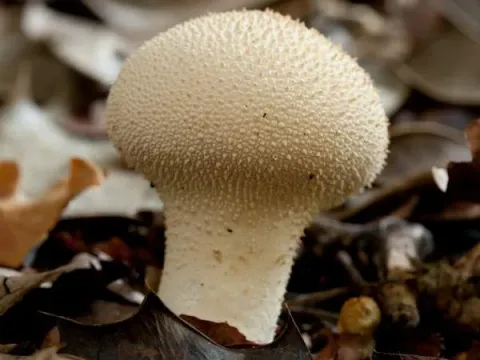
Puffball
Lycoperdon
The puffball fungus, belonging to the Lycoperdon genus, is primarily known as a soil saprotroph, but in agronomic contexts, it can act as an opportunistic pathogen under stressed conditions.
What the section contains
Puffball
The pathogen spreads through microscopic spores produced in massive quantities, which can travel through wind or water to contaminate new areas of a farm or garden.
The mycelium of the fungus colonizes the substrate, whether it is dead organic matter or the tissues of a weakened host plant, slowly breaking down cellular structures.
As a fungus, it thrives by secreting enzymes that degrade plant tissues, which, in a pathological context, manifests as decay of roots or stems.
The biology of Lycoperdon allows for long-term survival in the soil, forming resting structures that enable it to withstand unfavorable environmental conditions for years.
The appearance of distinct, globular, or pear-shaped fruit bodies on the soil surface or plant stems is the most obvious sign of an active infestation.
Infected areas of the plant often exhibit discoloration, turning a brownish or black hue, which indicates the internal degradation caused by fungal enzymes.
Host plants typically display symptoms of wilting and reduced vigor because the fungal activity disrupts the internal transport of nutrients and water.
Upon closer inspection, a white, thread-like network of mycelium may be found underneath the bark or within the root zone of the affected plant species.
Advanced stages of the disease lead to the tissue becoming soft, spongy, and eventually collapsing, resulting in the total loss of the affected plant structure.
High moisture levels in the soil or air are essential for the rapid development of the fungus and the production of new spore masses.
Accumulation of plant debris, such as fallen leaves, old wood, or unharvested roots, provides the primary food source for the pathogen to establish itself.
Poor ventilation and overcrowded planting density prevent proper drying of the soil surface, creating a microclimate favorable for fungal proliferation.
Moderate temperatures ranging from +15 to +22 degrees Celsius are highly conducive to the growth and reproduction of these fungal organisms.
Injuries to the plant, whether caused by pests, mechanical cultivation tools, or pruning, provide direct entry points for the fungal mycelium to invade healthy tissue.
The primary damage caused by these fungi involves the decay of roots, which significantly impairs the plant's ability to absorb water and essential minerals.
In perennial crops, the infection leads to compromised structural integrity of trunks and branches, making them susceptible to wind damage and further rot.
Heavy infestation reduces the overall yield and marketability of crops, as plants show stunted growth and poor fruit or vegetative development.
Persistence of the fungus in the soil makes it difficult to cultivate certain species in the same area, requiring extensive soil treatment before replanting.
The rapid spread of spores from infected plant material to neighboring healthy plants can cause localized outbreaks if management practices are neglected.
Implementing a strict crop rotation schedule is vital to deprive the fungus of a consistent host and reduce its population density in the soil over time.
Sanitation practices, including the removal and disposal of all organic waste and infected plant material, help prevent the buildup of fungal spores.
Chemical control involving the use of appropriate fungicides can effectively inhibit the growth of the fungus in early stages of the disease.
Improving soil drainage and ensuring adequate air circulation around plants are critical cultural practices that discourage the pathogen's development.
- Sterilizing pruning tools after each use.
- Applying bio-fungicides to enhance soil health.
- Monitoring soil moisture to avoid excessive irrigation.