
Purple brittlegill
Russula atropurpurea
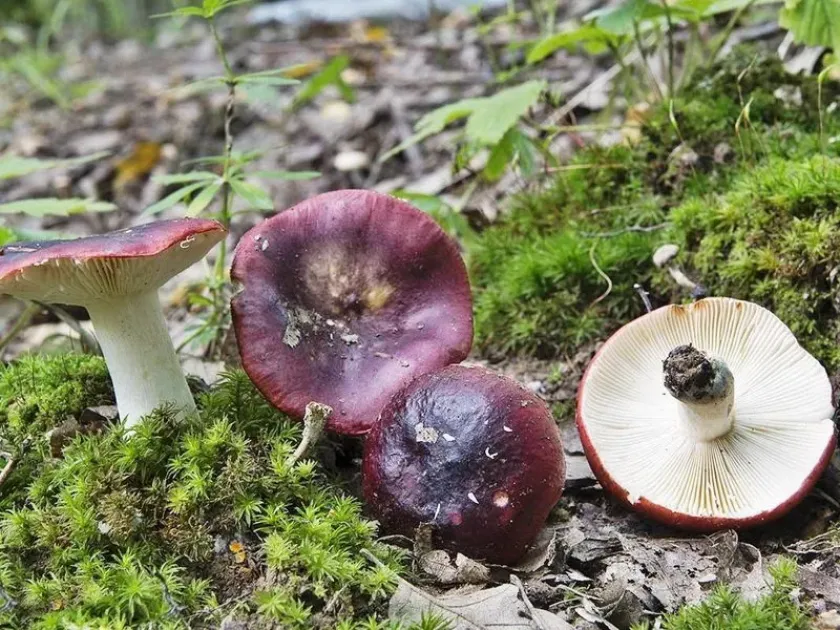
Description
Pathogen
The purple brittlegill (Russula atropurpurea) is a common basidiomycete fungus and is not classified as a plant pathogen or a disease agent. It is a mycorrhizal organism that maintains a mutualistic relationship with forest trees.
The fungus forms an ectomycorrhizal association with the roots of trees, such as beech and pine. This symbiotic relationship enhances the nutrient uptake of the host tree, contributing to its overall vitality.
It does not possess the mechanisms required to infect agricultural crops or cause rot, wilt, or necrosis in vegetables or field crops. It is strictly adapted to forest-dwelling tree species.
The fungus plays a significant role in the forest soil ecosystem, facilitating the breakdown of organic matter and strengthening the resilience of tree root systems.
From an agronomic perspective, this fungus is considered beneficial or neutral, as it supports biodiversity and ecological stability in wooded areas.
Conditions for development
The development of the fruit bodies is highly dependent on humidity levels and the health of the associated tree root systems. Peak growth typically occurs from late summer through autumn.
Ideal conditions for mycelial activity include mild temperatures and high moisture availability in the leaf litter. The fungus thrives in slightly acidic, nutrient-rich woodland soils.
Spore dispersal is facilitated by wind, which spreads the spores over large distances. Once the spores reach a compatible environment near host roots, they germinate to form new mycelial colonies.
The fungus is sensitive to environmental degradation, such as soil compaction or heavy chemical application, which can disrupt the mycorrhizal connection.
During unfavorable weather conditions, such as drought, the mycelium remains dormant in the soil, effectively surviving until the return of adequate moisture levels.
Why it matters
The purple brittlegill poses no threat to agriculture or crop production. It is not an infectious agent and causes no negative impact on the development or yield of crops.
There is no evidence of this species damaging root tissues or stems of cultivated plants, as its ecological niche is strictly confined to forest environments.
No protective measures or control strategies are implemented by agronomists to manage this species, as it is not a pest or a disease-causing organism.
The fungus does not produce any allelopathic compounds that would inhibit the growth of surrounding vegetation or agricultural plants.
Its presence in the environment is a sign of a healthy, functioning ecosystem rather than a risk factor for farmers or growers.
Discussion
No discussions yet — be the first.