
Punteliosis
Puntelia
Description
Symptoms
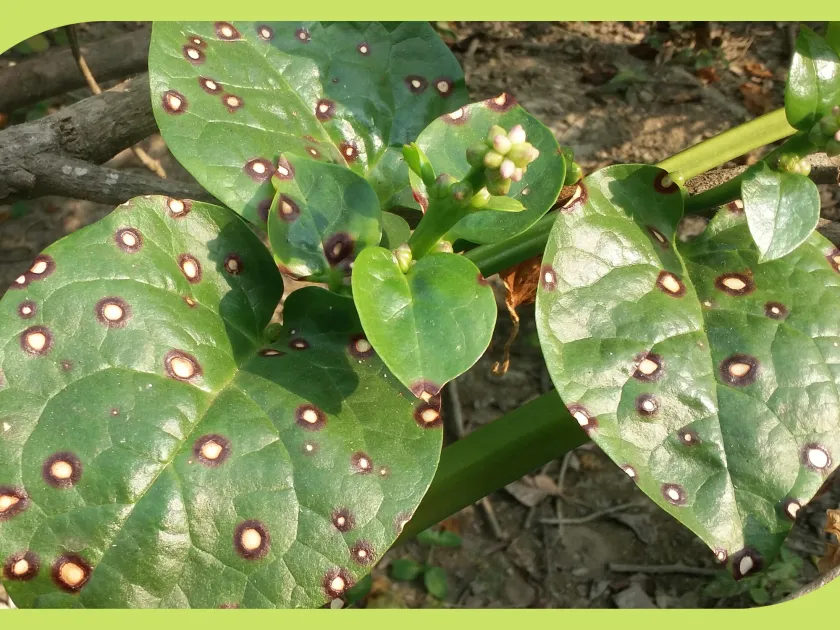
The initial appearance of the disease is marked by small, irregular spots on the leaves, which often expand and coalesce into larger necrotic areas.
These spots frequently exhibit a distinct color pattern, often showing a dark margin surrounding a lighter, necrotic center.
A diagnostic characteristic is the formation of small, black, pin-head-sized fruiting bodies called pycnidia on the surface of the lesions.
As the infection progresses, the leaves may show signs of yellowing (chlorosis) followed by premature leaf drop, which significantly weakens the plant.
Stem lesions can also occur, which may cause wilting or stunted growth of the distal portions of the branches due to disrupted transport of nutrients.
Pathogen
Punteliosis is a plant disease caused by fungi of the genus Puntelia, which primarily affects foliage and woody stems in various botanical species.
The pathogen persists in the environment by surviving on decaying plant debris, dormant buds, or within the bark of infected host plants over the winter season.
Once conditions become favorable, the fungus produces conidia, which act as primary inoculants for the next generation of plant infections.
The infection mechanism involves the colonization of plant tissue, where the fungus secretes enzymes that break down cell walls, leading to localized tissue death.
Genetic variability within the Puntelia genus makes management challenging, as different strains may exhibit varying levels of virulence across different host plants.
Conditions for development
The spread of Punteliosis is heavily dependent on specific climatic factors, primarily prolonged periods of high humidity and rainfall.
Optimal temperatures for the development of this fungal pathogen typically range between 18 and 24 degrees Celsius, facilitating rapid mycelial growth.
Poor ventilation within the plant canopy, caused by high planting density or lack of pruning, creates an ideal microclimate for infection.
Wet weather during the spring and early summer seasons significantly accelerates the release and dispersal of fungal spores.
Excessive nitrogen fertilizer application can create succulent growth that is more prone to invasion by the fungus compared to properly hardened tissue.
Why it matters
The primary economic impact of Punteliosis is the reduction in photosynthetic capacity due to premature defoliation, leading to lower overall yields.
Plants affected by chronic infections show reduced vigor, making them less capable of accumulating energy reserves for winter survival.
In fruit-bearing plants, the disease can negatively affect the quality, size, and shelf life of the fruit, reducing marketability.
In extreme cases, particularly in nurseries and young plantations, the disease can lead to the death of the entire plant.
Repeated yearly infections can cause long-term damage, leading to the decline and eventual replacement of entire crop stands.
Protection
Cultural practices are essential for control, starting with the thorough removal and destruction of all fallen leaves at the end of the season.
Maintaining proper canopy structure through regular pruning helps to improve airflow and reduce humidity levels around the foliage.
Chemical control involves the timely application of fungicides, specifically targeting the period before sporulation begins in the spring.
Balanced plant nutrition, focusing on adequate potassium and phosphorus levels, helps improve the plant's natural resistance to fungal pathogens.
- Applying preventive copper-based fungicides before new growth begins.
- Monitoring crops frequently for the emergence of early necrotic spots.
- Selecting disease-resistant varieties where available in the market.
- Proper disposal of infected plant material by burning or deep burial.
Discussion
No discussions yet — be the first.