
Description
Symptoms
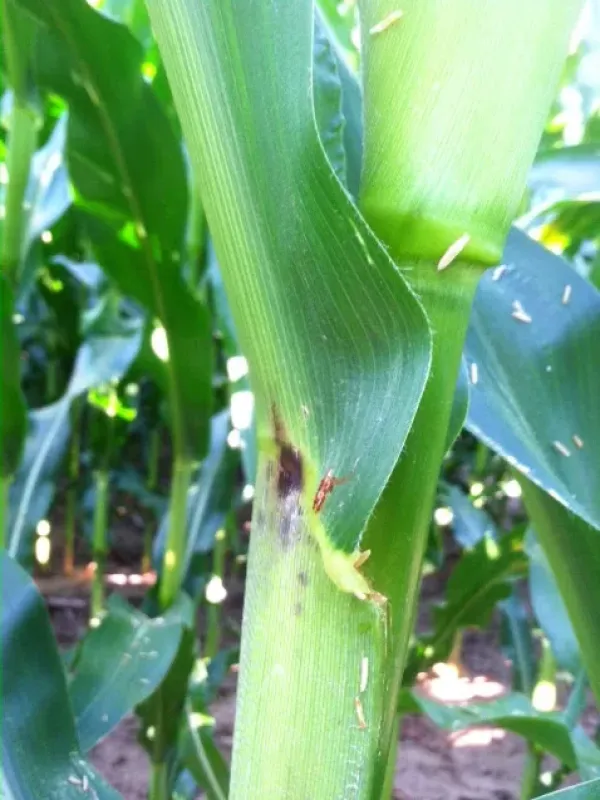
The primary symptom is the development of a distinct purple or dark reddish-violet discoloration on the leaf sheaths, often extending to the stalk.
This discoloration is most frequently observed during the early vegetative growth stages when the young corn plants are establishing their root systems.
The intensity of the purple color can vary significantly, ranging from faint streaks to a deep, dark pigment, depending on the severity of the environmental stress.
It is important to observe that the discoloration is generally uniform across the leaf sheath area, rather than manifesting as irregular spots or blotches.
Unlike true plant diseases caused by fungal or bacterial pathogens, the affected tissue remains firm and does not exhibit necrotic lesions or decay.
Pathogen
There is no specific pathogen, such as a fungus, bacterium, or virus, responsible for the development of purple leaf sheaths in corn plants.
The phenomenon is purely a physiological expression caused by the accumulation of anthocyanins, which are natural plant pigments produced under stress.
Genetic factors inherent in certain corn hybrids play a significant role, as some varieties are more prone to producing high levels of anthocyanin in cold conditions.
The underlying biological mechanism involves an imbalance in nutrient metabolism, specifically related to the restriction of phosphorus uptake during rapid growth.
Consequently, this condition is treated as a metabolic indicator rather than an infectious disease, meaning traditional fungicides are ineffective for control.
Conditions for development
Cool nighttime temperatures combined with warm, sunny days are the most common trigger for the purple discoloration in young corn plants.
A deficiency in available phosphorus, even when soil levels are adequate, often occurs because cool temperatures restrict root activity and nutrient uptake.
Compacted or waterlogged soils prevent proper root aeration, which inhibits the plant's ability to metabolize nutrients efficiently, leading to pigment buildup.
Soil structure and previous crop residues can also influence the local temperature and moisture availability, impacting the plant's physiological status.
As soon as warmer weather stabilizes the environment and promotes active root development, the purple color typically fades as the plant resumes normal growth.
Why it matters
In most cases, the appearance of purple leaf sheaths is a temporary aesthetic condition that does not cause long-term damage to the plant or yield.
However, if the symptoms are prolonged due to severe nutrient limitations, they may signal a delay in development that could reduce overall crop vigor.
Stunted growth during the initial vegetative phases can make the corn plant less competitive against early-season weeds and more susceptible to pests.
While the condition itself is not fatal, it highlights that the plants are currently struggling with environmental stress, which may warrant closer monitoring.
If phosphorus deficiency is the primary cause, long-term yield potential might be impacted unless the soil nutritional profile is corrected.
Protection
The most effective strategy is to ensure adequate phosphorus availability in the root zone during the planting phase through proper starter fertilizers.
Selecting corn hybrids known for their tolerance to cool-weather stress can minimize the frequency and intensity of the purple leaf sheath symptom.
Improving soil aeration and drainage reduces the risk of root health issues, allowing plants to access necessary nutrients even during less-than-ideal weather.
Monitoring field soil fertility levels through routine testing helps in adjusting fertilizer programs to meet the specific requirements of the hybrid being grown.
- Apply phosphorus-based starter fertilizer at planting.
- Monitor root health to prevent insect or nematode damage.
- Avoid planting too early into cold, wet soil conditions.
Pathogens and affected parts
Affects crops · 1
Discussion
No discussions yet — be the first.