
Punctelia
Punctelia
Description
Symptoms
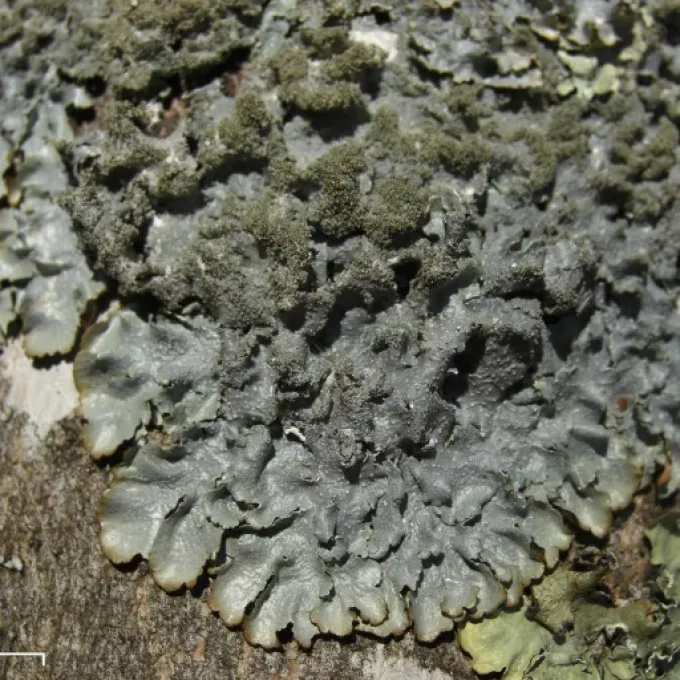
Punctelia is a genus of foliose lichens that frequently inhabits the bark of various fruit and ornamental trees. Visually, it appears as a flat, gray-green thallus that adheres tightly to the surface of the tree trunk or branches.
A key identifying feature is the presence of small, light-colored spots on the upper surface of the thallus, known as pseudocyphellae. As the lichen matures, the edges of the lobes may curl upwards, exposing the darker underside.
Many Punctelia species develop soredia on their surface, which look like fine, powdery patches. These structures are vital for vegetative reproduction, allowing the lichen to colonize new sections of the bark rapidly.
Unlike pathogenic fungi, Punctelia does not penetrate deep into the tree's tissues; it relies on the bark solely as a physical substrate. However, it significantly alters the visual appearance of the tree, making it look aged or neglected.
Over time, expanding colonies can cover large surface areas of the bark, obstructing natural ventilation and light exposure, which creates an environment that may interfere with the tree's superficial physiological processes.
Pathogen
Punctelia is a lichen, a symbiotic organism composed of a fungus and an alga. It is not a disease in the strict sense, as it does not parasitize the tree's internal systems, but rather lives as an epiphyte on the exterior.
The tree serves as a stable anchor for the lichen, which derives its moisture and minerals from rain, dew, and atmospheric dust. Thus, it is more accurate to classify it as an epiphytic occupant rather than a destructive disease pathogen.
Belonging to the Parmeliaceae family, Punctelia reproduces via spores or through the fragmentation of its thallus. These structures are easily dispersed by wind or birds, facilitating the colonization of neighboring trees in an orchard.
Because lichens are sensitive to air quality, the presence of Punctelia can be a bioindicator of a clean environment. However, for a gardener, it often signals that the tree’s growth rate may be insufficient to shed the lichen naturally.
The lifecycle of Punctelia is heavily dependent on moisture. During dry periods, the lichen may become dormant, resuming its metabolic activities and growth as soon as humidity levels rise, using its entire surface to absorb water.
Conditions for development
The most favorable conditions for Punctelia proliferation are high atmospheric humidity and dense, poorly ventilated tree canopies. Lack of regular pruning creates sheltered, humid microclimates that are ideal for lichen establishment.
Older or weakened trees with slower bark turnover are primary targets for colonization. The stagnant surface of the bark on these trees allows the lichen to anchor itself firmly and expand its range over several growing seasons.
The northern, shaded sides of trunks are the preferred habitats for Punctelia. These areas retain moisture longer and avoid the dehydrating effects of direct sunlight, providing a steady environment for the lichen to thrive.
Overall tree vigor is a critical factor; healthy, fast-growing trees often naturally shed lichens as their bark expands and exfoliates. Conversely, trees in poor health or suffering from nutritional deficiencies are more prone to heavy infestations.
The lack of standard orchard maintenance, such as removing dead bark or managing the pruning schedule, significantly speeds up the colonization of the garden. Even in rural areas with clean air, Punctelia can spread quite aggressively.
Why it matters
The primary concern regarding Punctelia is the environment it creates for pests. The layers of the lichen provide an excellent refuge for scale insects, mites, and other harmful organisms, protecting them from predators and pesticides.
Lichens can retain excessive moisture against the bark surface, which, in some cases, may lead to localized rot or create a favorable niche for secondary fungal infections and bacterial pathogens to enter through bark cracks.
The presence of large colonies indicates a reduction in the tree's metabolic vitality. While the lichen itself isn't killing the tree, it suggests that the bark’s normal gas exchange and surface health are being compromised.
Aesthetically, trees covered in Punctelia appear neglected. In nurseries and ornamental gardens, this is considered undesirable as it negatively impacts the commercial value and overall visual health of the stock.
Although it rarely causes immediate tree death, it is a marker of underlying horticultural issues. If the root cause of the tree's weakness is not addressed, Punctelia will continue to thrive as a secondary symptom of a declining orchard.
Protection
The most effective management strategy is mechanical cleaning. Trunks and skeletal branches should be carefully scraped or brushed using a stiff-bristled tool during damp weather to avoid damaging the underlying healthy cambium layer.
Following mechanical removal, applying a disinfectant treatment is recommended. Spraying with a lime wash or a solution of iron sulfate helps sanitize the bark surface and prevents the quick return of lichen spores.
Regular crown thinning and pruning are essential for prevention. Increasing sunlight and air circulation creates an environment that is hostile to lichen growth, as they cannot thrive in dry, exposed conditions.
Promoting tree health through proper fertilization and irrigation is a long-term solution. Encouraging vigorous bark growth will naturally help the tree stay clear of epiphytes, as the bark surface will remain dynamic and clean.
- Mechanical removal using stiff wire brushes.
- Application of 5% iron sulfate solution.
- Whitewashing trunks with lime-based mixtures.
- Systematic sanitary pruning to improve air circulation.
- Optimizing orchard fertilization to boost tree vitality.
Discussion
No discussions yet — be the first.