
Punctelia hypoleucites
Punctelia hypoleucites
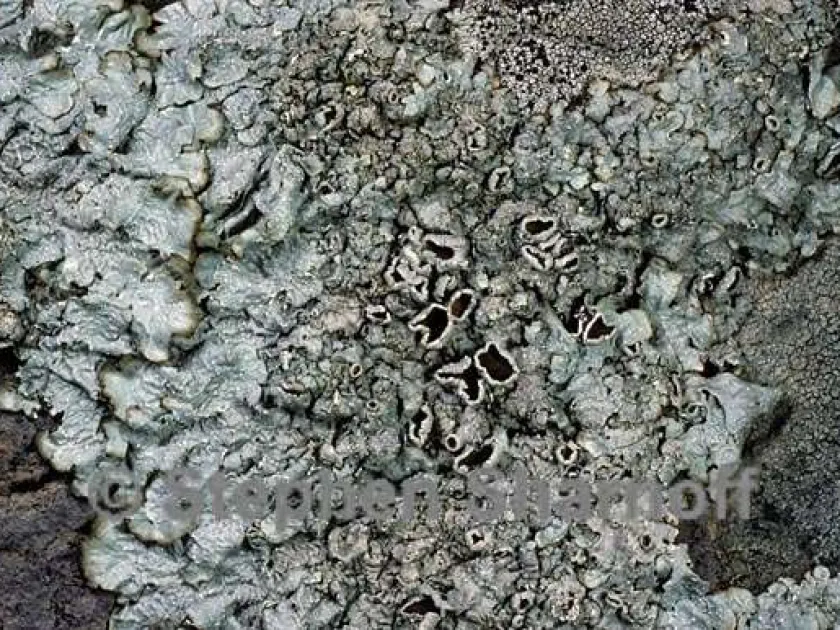
Description
Symptoms
The primary symptom of Punctelia hypoleucites colonization is the appearance of grayish-green or whitish-gray foliose structures on the bark. The thallus features distinct lobes that are typically appressed to the substrate.
Upon closer inspection, rhizines (root-like attachment structures) can be seen securing the lichen to the bark. Many specimens display fine, granular outgrowths known as isidia on the upper surface of the thallus.
Unlike actual tree diseases like cankers or rots, there is no discoloration or tissue necrosis around the area where the lichen attaches. The bark beneath the lichen remains intact and functional.
Changes in moisture availability cause color shifts, with the lichen appearing greener during high-humidity periods due to the activation of the algal symbionts within the thallus.
When colonization is extensive, the lichen mats can obscure lenticels, which are essential for gas exchange, potentially leading to physiological stress if the tree is already struggling.
Pathogen
Punctelia hypoleucites is a foliose lichen belonging to the Parmeliaceae family. It is a symbiotic organism comprised of a fungal component (mycobiont) and an algal partner (photobiont), allowing it to colonize the bark of trees as an epiphyte.
From an agronomical perspective, this organism is not a parasite that feeds on the plant's vascular system. It uses the tree surface exclusively as a substrate, relying on atmospheric deposition for its essential mineral nutrients.
The lichen establishes itself on the bark through the dispersal of spores or vegetative propagules. Over time, it forms characteristic rosette-like thalli that expand across the bark surface if environmental conditions remain favorable.
Taxonomically, it is often confused with fungal diseases, but it lacks the destructive mycelial threads that penetrate the cambium or wood of the host plant. It acts as a colonizer rather than a pathogen.
Its life cycle is closely linked to moisture levels. Dispersal typically occurs through vegetative fragments like soredia or isidia, which are easily transported to neighboring trees by wind or rainwater splashes.
Conditions for development
High relative humidity is the most critical factor for the development of this organism. Trees located in shaded, poorly ventilated areas of the orchard or landscape are significantly more prone to colonization.
Rough bark texture on mature trees provides an ideal environment for the lichen to anchor itself. Consequently, older trees are much more frequently affected than younger, smooth-barked saplings.
Stagnant air and poor canopy management create a microclimate that allows the lichen to thrive. Regular pruning is necessary to maintain an environment that discourages lichen growth.
The lichen is relatively sensitive to heavy air pollution, making its presence a bioindicator of healthy, clean air. However, in an agricultural context, it still reflects a need for better orchard sanitation.
Moderate temperatures throughout the growing season provide the consistency needed for the lichen to spread. It does not require high-intensity light and can colonize branches even in the mid-canopy.
Why it matters
The main danger posed by Punctelia hypoleucites is the creation of a micro-habitat for common pests. The complex structure of the lichen thallus provides shelter for overwintering stages of scale insects and mites.
By covering the bark, the lichen can interfere with lenticel function, effectively reducing the tree's gas exchange. While not lethal on its own, it contributes to the overall decline of a tree's vitality.
The presence of significant lichen coverage often indicates that the tree is in a weakened or slow-growing state, which may necessitate an evaluation of the tree's overall nutrient status and care regime.
In winter, excessive lichen growth on branches can trap excessive moisture against the bark. During sudden temperature drops, this moisture can increase the risk of bark cracking or frost damage.
From an aesthetic and management perspective, it is viewed as a sign of neglected maintenance, prompting agronomists to recommend cleaning or canopy thinning to improve tree health.
Protection
Mechanical cleaning of the bark is the most direct control method. During the dormant season, trunks can be carefully scraped with a stiff brush to remove the lichen without damaging the living bark tissues.
Whitewashing the trunks with a lime-based mixture containing copper sulfate is a proven preventive measure. The alkaline environment and copper residues discourage the settlement and growth of lichens.
Improved canopy management, including regular pruning, is essential. Thinning the branches increases sunlight and airflow, creating a drier, less suitable environment for lichen establishment.
Applying copper-based fungicides before bud break serves as a dual-purpose treatment, helping to sanitize the bark surface and eliminate lichen spores present on the wood.
- Inspect trees regularly for signs of bark colonization.
- Maintain tree vigor through proper fertilization and irrigation.
- Prune branches regularly to ensure good light penetration.
Discussion
No discussions yet — be the first.