
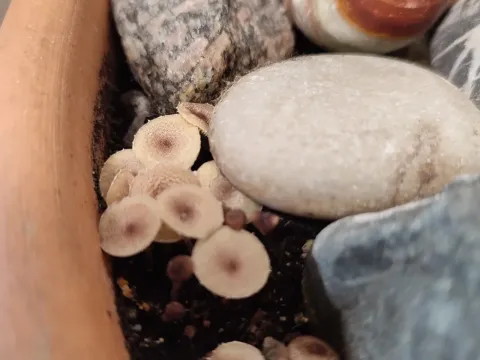
Leucocoprinus brebissonii
Leucocoprinus brebissonii
Leucocoprinus brebissonii is a species of gilled mushroom belonging to the Agaricaceae family. In an agronomic context, it is not classified as a plant pathogen but as a saprotrophic fungus that thrives in nutrient-rich, organic-heavy environments.
What the section contains
Leucocoprinus brebissonii
The fungus acts as a decomposer, feeding on dead organic matter found within potting soil. While it does not attack living plant tissue, its presence indicates a specific ecological state of the substrate which is often overly humid and rich in undecomposed material.
The mycelium of the fungus spreads extensively through the potting medium, forming a dense network. This network can physically alter the structure of the soil, often making it more compact and reducing the efficiency of root respiration.
Spores are the primary method of transmission, often entering indoor environments via contaminated potting mixes, bark-based mulches, or through organic fertilizers that have not been properly sterilized or matured.
Biologically, the fungus is well-adapted to container gardening conditions where humidity levels are kept consistently high. It functions as an indicator organism for the biological composition of the growing medium used in horticulture.
High moisture levels are the most critical requirement for the growth of Leucocoprinus brebissonii. If the substrate remains constantly wet, the spores will germinate, leading to the rapid development of mycelium and eventually mushrooms.
The fungus thrives in warm environments, with temperatures between 20°C and 25°C being ideal for its growth. Such conditions are typical in homes and greenhouses, allowing the fungus to colonize pots relatively quickly.
A potting medium rich in raw organic components, such as non-composted wood chips, bark, or low-quality peat, provides an abundant food source for the fungus, fueling its growth and subsequent sporulation.
Poor ventilation and the lack of proper drainage within the container lead to water stagnation, which in turn promotes fungal activity. Without sufficient oxygen in the soil, the balance shifts in favor of saprotrophic fungi.
The absence of sterilization protocols during the manufacturing or storage of potting soil is the leading cause of contamination. Spores are hardy and can survive in dormant states until the right moisture and temperature conditions trigger their growth.
While the fungus is not a direct parasite, it can negatively impact plant health by competing for moisture and essential nutrients. This nutrient depletion can stunt the development of sensitive houseplants.
The density of the mycelium can interfere with the physical properties of the soil, potentially leading to drainage issues. Compacted soil restricts airflow to the root zone, creating hypoxic conditions that can weaken the plant.
From a safety standpoint, the mushrooms produced by Leucocoprinus brebissonii are not considered edible and may contain toxins harmful to pets or young children. Immediate removal is advised to prevent ingestion.
The presence of this fungus often signals that the watering regime is overly generous, which is a major risk factor for the development of true pathogenic root rots like Pythium or Phytophthora that can kill the host plant.
In addition to physiological impact, the aesthetic appeal of the plant is diminished when mushrooms start appearing. Furthermore, the metabolic byproducts of the fungus may alter the pH level of the substrate, affecting nutrient uptake.
The most effective strategy for control is to modify the watering habits. Allowing the upper layer of the soil to dry out significantly between waterings inhibits the further development of the mycelium and prevents mushroom formation.
Replacing the top layer of contaminated soil with a fresh, high-quality, and sterilized potting mix can help remove the initial colony. Adding perlite or pumice improves soil aeration and prevents excessive moisture retention.
Regularly remove any fruit bodies (mushrooms) as they appear. This practice prevents the release of new spores, reducing the likelihood of future outbreaks and limiting the spread of the fungus within the room.
Applying biological control agents, such as beneficial bacteria like Bacillus subtilis or the fungus Trichoderma, can help establish a healthy microbial balance that suppresses the growth of saprotrophic fungi.
Always source reputable potting soil and, if concerned about potential contamination, treat the substrate through heat sterilization before using it for repotting. This simple preventative measure is the best way to ensure a sterile growing environment.