
Leucocoprinus
Leucocoprinus
Leucocoprinus is a genus of saprotrophic mushrooms belonging to the Agaricaceae family. In indoor gardening, it is commonly encountered as a fungal presence in potting soil.
What the section contains
Leucocoprinus
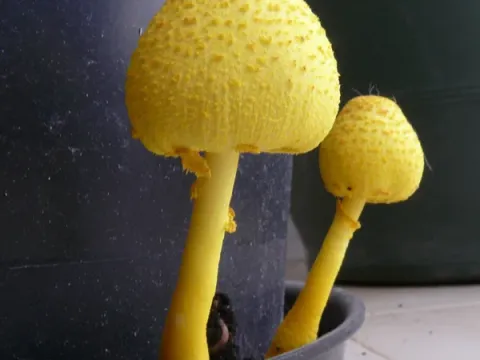
The most frequent species found in household plants is Leucocoprinus birnbaumii, recognizable by its distinct bright yellow color when it fruits.
This fungus is not a pathogen in the sense that it does not attack living plant tissues directly, but rather feeds on decaying organic matter within the soil mix.
It acts as a decomposer, breaking down peat, bark, and other organic components. However, its presence indicates that the environmental conditions in the pot are optimal for fungal growth.
The lifecycle of the fungus involves a hidden network of mycelium that permeates the substrate, only producing visible mushrooms when environmental conditions are ideal.
The primary symptom is the sudden appearance of small, yellow, or white mushrooms on the surface of the soil, often emerging in clusters.
White, thread-like mycelium may be visible upon close inspection of the soil surface or around the base of the plant stem, resembling a fine web.
The plant may exhibit signs of stress, such as yellowing leaves or wilting, which is primarily due to the root system being unable to access oxygen in waterlogged soil.
The soil itself may develop an earthy, musty odor and feel slippery or overly compacted, which indicates that the potting mix is decomposing too quickly.
Rapid growth is a hallmark of this species, as the fruiting bodies can fully develop and release spores within just a few days of appearing.
The development of Leucocoprinus is strictly linked to moisture. Constant high humidity in the substrate is the main trigger for spore germination.
Warm indoor temperatures, typically between 22 and 28 degrees Celsius, provide the perfect climate for the mycelium to proliferate throughout the pot.
Organic-rich soil mixes, especially those containing high levels of peat or wood debris, provide an unlimited food source for the fungal colonies.
Poor aeration is a major contributing factor. If the soil remains saturated for too long due to lack of drainage or airflow, the fungus will thrive.
Reduced sunlight exposure can also slow down the drying process of the substrate, allowing the fungus more time to establish itself within the soil profile.
While not inherently parasitic to the plant, the fungus competes with roots for essential nutrients and limits the space available for healthy root growth.
By consuming organic matter, the fungus can alter the soil structure and pH levels, potentially leading to nutrient imbalances that affect plant development.
The excessive moisture required by the fungus increases the risk of anaerobic conditions, which can lead to actual root rot and secondary bacterial infections.
The fruiting bodies of Leucocoprinus birnbaumii are known to be toxic if ingested, posing a significant risk to pets and small children in the household.
The presence of large amounts of fungal spores in the air may also trigger allergic reactions in sensitive individuals, making it an indoor air quality issue.
The first step in management is to remove the visible mushrooms and the top layer of contaminated soil to physically reduce the spore count.
Adjusting your watering routine is crucial. Allow the top few inches of the soil to dry out completely before providing water to the plant.
If the infection is widespread, the most effective solution is to repot the plant in fresh, sterile soil and trim away any rotted root sections.
Improving the pot's drainage system and adding perlite or other inorganic amendments can significantly improve aeration and discourage fungal growth.
- Ensure adequate drainage holes in all pots.
- Increase air circulation around your indoor plants.
- Use high-quality, commercial-grade potting mixes.
- Avoid over-fertilizing with organic amendments.