
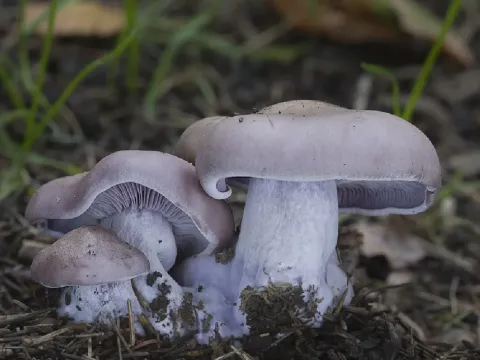
Wood blewit
Lepista nuda
The Wood blewit (Lepista nuda) is not a plant disease or a pathogen. It is a well-known edible saprophytic fungus belonging to the Tricholomataceae family.
What the section contains
Wood blewit
As a saprotroph, its biological role is strictly limited to feeding on dead organic matter like leaf litter, woody debris, and humus.
It lacks the parasitic structures or enzymes required to infect living plant tissues, making it harmless to crops.
In agronomy, it is categorized as a beneficial decomposer rather than an agricultural pest or disease agent.
Therefore, its presence in a garden or field should not be interpreted as a sign of infection or pathological plant distress.
The growth and development of Lepista nuda require a moist, cool environment with significant levels of decaying organic material.
This fungus thrives in areas with high humidity, often appearing in woodlands, gardens, or near compost heaps where organic matter accumulates.
The optimal temperature range for the development of its fruiting bodies is generally between 10°C and 18°C (50°F to 64°F).
Shaded environments are preferred, as intense direct sunlight can desiccate the mycelium and inhibit its vegetative growth.
Soil composition is also a factor, as these fungi often establish themselves in soils with moderate organic content and stable moisture levels.
There is no economic or physiological harm caused by the Wood blewit to agricultural crops or ornamental plants.
It does not induce wilting, necrosis, rot, or any other symptom associated with plant diseases in living hosts.
Its role is exclusively centered on the nutrient cycle, helping to recycle carbon and nitrogen by breaking down complex plant remains.
The mycelium does not compete with the root systems of healthy plants for nutrients, as it targets non-living organic matter.
Any observation of this fungus in a field indicates healthy soil biological activity rather than a threat to productivity.
As the Wood blewit is not a plant disease, there are no specific control measures, chemical applications, or eradication protocols required.
If its fruiting bodies are deemed unwanted for aesthetic or practical reasons, physical removal is sufficient to manage the situation.
Improving field drainage, promoting air circulation, and removing excessive raw organic debris can minimize favorable growth conditions.
Standard agronomic practices, including soil aeration and proper crop residue management, naturally discourage the spread of this fungus.
We recommend viewing Lepista nuda as a beneficial element of the soil microbial community that aids in natural soil enrichment.