
Wood Ear
Auricularia auricula-judae
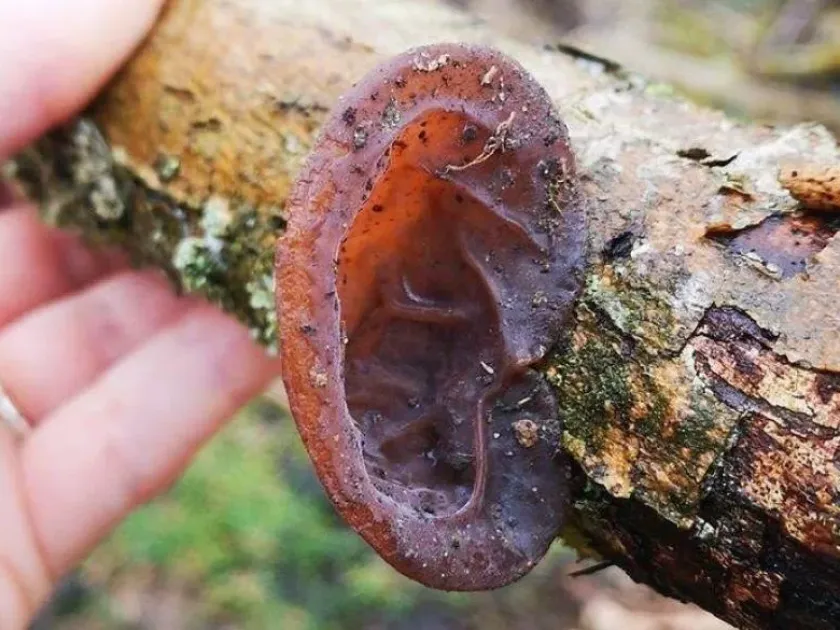
Description
Symptoms
The primary symptom of Auricularia auricula-judae infestation is the appearance of distinct, ear-shaped fruiting bodies on tree trunks, branches, or stumps. These bodies have a gelatinous, cartilaginous texture.
Young fruiting bodies exhibit a reddish-brown or yellowish-tan hue. As they mature and lose moisture, they become dark brown to nearly black, hardening into a texture that can be difficult to spot against the rough bark of the host tree.
During periods of high humidity or rainfall, the fungus absorbs water, swelling and becoming elastic. In dry conditions, it shrinks significantly, often appearing as a small, wrinkled, or leathery patch, which allows it to persist through harsh weather.
Infected wood undergoes structural decay, typically associated with white rot. The tissue loses its mechanical strength, becoming spongy and brittle, which ultimately weakens the structural integrity of the branches or the entire tree.
Late stages of infection show the bark peeling away from the wood. Beneath the bark, one can often find a network of mycelium, confirming the deep penetration of the fungus and the breakdown of the tree's internal transport system.
Pathogen
The causative agent is the fungus Auricularia auricula-judae, a basidiomycete. While primarily a saprotroph that feeds on dead organic matter, it frequently acts as a opportunistic parasite on weakened deciduous trees, including elders, maples, and fruit trees.
The fungus reproduces via spores dispersed by wind and rain. These spores enter the tree through mechanical wounds, pruning cuts, or frost cracks, where they germinate to form a mycelial network that spreads throughout the wood.
It possesses powerful enzymes capable of breaking down complex plant polymers, specifically lignin and cellulose. This enzymatic degradation is what leads to the characteristic softening of the wood and the eventual formation of heart rot.
The biological cycle of the fungus is closely linked to environmental conditions. It remains dormant during unfavorable weather, storing energy in the wood, and produces fruiting bodies only when humidity levels are sufficient for spore release.
Unlike some highly specialized pathogens, this fungus has a broad host range, allowing it to easily colonize various woody plants in damp, shaded environments or neglected orchard areas.
Conditions for development
The development of Auricularia auricula-judae is heavily dependent on moisture. It thrives in environments with high ambient humidity, frequent rainfall, or persistent morning fogs that keep the bark surface damp for extended periods.
The optimal temperature range for mycelial growth and fruit body production is typically moderate, between 15 and 25 degrees Celsius. However, the fungus is highly resilient and can withstand temporary temperature fluctuations.
Mechanical injury is the most critical factor for infection. Wounds caused by improper pruning, hail, sunscald, or farming machinery act as entry points for spores, providing direct access to the nutrient-rich inner wood tissues.
Poor orchard management, such as overcrowding, excessive shade, and lack of pruning, creates a conducive microclimate. Dense canopies trap moisture, preventing bark surfaces from drying and significantly increasing the risk of spore colonization.
Accumulation of deadwood, including fallen branches, twigs, and old stumps, provides a continuous reservoir for the fungus. This constant presence of spores in the air makes nearby healthy trees more susceptible to infection.
Why it matters
The danger of this fungus lies in the gradual degradation of the tree's structural foundation. As the wood decays, the tree loses its stability, creating a high risk of branch breakage or total tree failure during storms or heavy snow.
In fruit-bearing trees, the infection causes a decline in overall vigor and yields. As the fungus consumes the heartwood, the tree’s ability to transport water and nutrients from roots to leaves is severely impaired, leading to branch dieback.
The presence of the fungus often leads to the formation of cavities within the trunk or branches. These cavities become havens for wood-boring insects and secondary rot-causing pathogens, further accelerating the tree's decline.
From an agricultural standpoint, heavy infestation often necessitates the premature removal of trees, leading to economic losses and the loss of mature plantings that are difficult to replace in the short term.
While often appreciated in culinary arts, in a garden or forest setting, the wood ear is a sign of underlying host weakness. Ignoring it allows the decay to progress to a point where the tree becomes a safety hazard.
Protection
The primary control measure is rigorous sanitary maintenance. Infected branches should be pruned back to healthy wood, and all dead or diseased trees should be removed, including their stumps, to eliminate the source of spores.
All pruning cuts and accidental wounds should be immediately sealed with specialized protective pastes or wound dressings to create a physical barrier against spore infiltration.
Promoting good airflow and light penetration through strategic crown thinning is essential. A well-ventilated canopy ensures that bark and wood tissues dry quickly after rainfall, making the environment unfavorable for fungal growth.
Maintaining tree health through balanced fertilization and proper irrigation helps strengthen the tree’s natural defense mechanisms, making it more resistant to invasion by fungal mycelium.
Recommended preventive actions include:
- Disinfecting pruning tools with alcohol after every cut to prevent cross-contamination.
- Applying white latex-based paints to trunks to prevent sunscald and bark cracking.
- Conducting regular visual inspections of all woody plants to detect early signs of decay.
- Removing and destroying all woody debris that could harbor fungal spores.
Discussion
No discussions yet — be the first.