
Wood woolly-foot
Gymnopus peronatus
Description
Symptoms
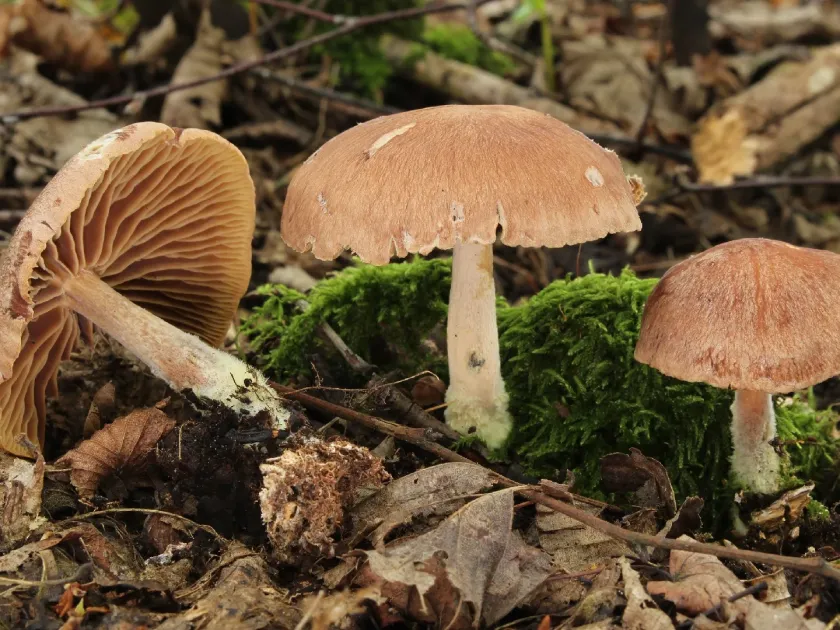
The fruiting body is characterized by a yellowish-brown to ochre cap, usually measuring between 2 and 6 centimeters in diameter.
The most diagnostic feature is the base of the stem, which is covered in a dense, yellow or white shaggy mycelium, referred to as the woolly-foot.
Its gills are widely spaced, creamy-white in color, and may be adnate or slightly decurrent along the stem.
The taste of the mushroom is notoriously acrid and peppery, which serves as a reliable field identification marker for those studying mycology.
Fruiting typically occurs in clusters on damp ground, particularly where organic debris has accumulated during the late summer and autumn seasons.
Pathogen
The Wood woolly-foot, scientifically known as Gymnopus peronatus, is a basidiomycete fungus belonging to the Marasmiaceae family.
It is strictly defined as a saprotrophic organism, meaning it derives its nutrition from decaying organic matter rather than living hosts.
This fungus acts as a primary decomposer in forest ecosystems and damp environments by breaking down cellulose and lignin.
The mycelium network spreads through the leaf litter and woody debris, facilitating the mineralization of essential soil nutrients.
Because it lacks the mechanisms to infect living plant tissue, it is not considered a plant pathogen or a cause of agricultural disease.
Conditions for development
High moisture levels are the most critical factor for the growth and development of the fungal mycelium and its fruiting bodies.
The fungus thrives in shaded environments where organic substrate retains consistent humidity and protection from direct sunlight.
Temperature ranges from 15 to 22 degrees Celsius are ideal for the physiological processes of this species within the soil substrate.
Frequent rainfall patterns significantly trigger the mass emergence of mushrooms, as the fungus requires water to facilitate spore dispersal.
Acidic soil conditions found in woodland areas often promote the establishment of this species compared to neutral or alkaline agricultural soils.
Why it matters
The Wood woolly-foot is harmless to agricultural crops and does not attack living roots, stems, or leaves under any conditions.
As a saprotroph, its presence in a field or garden is a sign of a healthy decomposition cycle rather than a disease outbreak.
There is no economic damage associated with this species, and it does not compete with crops for resources that could hinder growth.
While mass proliferation might occur in unmanaged compost piles, it does not negatively impact the nutritional value of the compost.
It is strictly an environmental fungus that contributes to soil building and organic matter recycling, posing zero threat to plant health.
Protection
No control measures are necessary for this fungus, as it provides beneficial ecosystem services by processing organic waste.
For those wishing to reduce its presence on a site, simple soil cultivation and aeration are sufficient to disrupt the surface mycelium.
Proper landscape management, including the removal of excess leaf litter and ensuring good soil drainage, discourages fungal growth.
The use of fungicides to eliminate saprotrophic fungi is strongly discouraged as it damages beneficial microbial life in the soil.
Farmers and gardeners should view this species as a natural component of the environment that requires no intervention or management.
Discussion
No discussions yet — be the first.