
Wood graphiosis
Graphium penicillioides
Description
Symptoms
The primary symptom of infection is wood discoloration. Affected areas appear gray, blue-gray, or dark, penetrating deep into the sapwood and creating distinct streaks or patches.
On the surface of the wood, one can observe small, dark, bristle-like structures known as coremia. These are clear indicators of active sporulation by Graphium penicillioides.
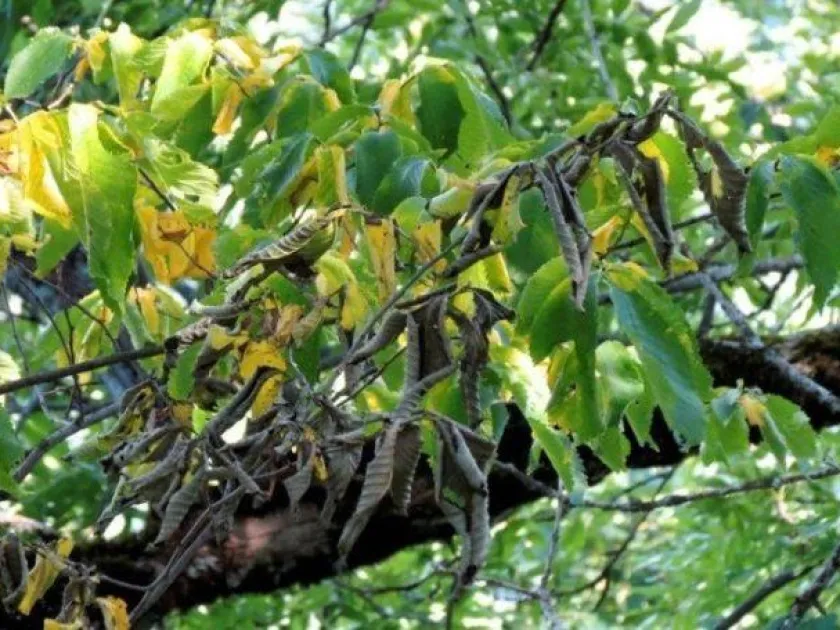
In living trees, symptoms may include premature yellowing or wilting of the canopy. This occurs because the fungus blocks the xylem, hindering the transport of water and nutrients to the branches.
Dieback of branches or the entire crown is common in advanced stages of the disease. This condition is often referred to as stag-headedness, resulting from the cumulative effect of the fungal infection.
The texture of the wood remains relatively intact at first, but its visual appeal is severely compromised. As the infection progresses, the wood may become more brittle and susceptible to cracking.
Pathogen
The causative agent of this disease is the microscopic fungus Graphium penicillioides, classified as a sapstain fungus. It primarily targets the sapwood layer of various tree species.
The fungus develops by penetrating the wood's vascular system, drawing nutrients from cell contents. Its mycelium grows rapidly, colonizing the wood tissue from within and disrupting normal physiological processes.
Reproduction occurs through the formation of structures called coremia, which support the development of conidia. These reproductive bodies are responsible for the dark, hairy appearance seen on infected surfaces.
This pathogen exhibits remarkable adaptability to different moisture levels, allowing it to persist in timber long after it has been harvested. It is considered a significant threat to wood quality worldwide.
It often works in association with other fungal organisms, creating a complex that facilitates the degradation of the wood structure and increases the susceptibility of trees to additional pests.
Conditions for development
High wood moisture content is the critical factor for the development of graphiosis. The fungus thrives in freshly harvested or improperly stored logs that have not been adequately seasoned.
Temperatures ranging from +15°C to +25°C provide an ideal climate for the growth of the fungus. During warmer months, the rate of colonization increases significantly across stored timber.
Insects, particularly bark beetles and borers, serve as the primary vectors for the pathogen. They carry spores from infected trees to healthy ones, facilitating rapid transmission in forest stands.
Wind-blown spores can also initiate new infections, especially when they land on mechanical injuries, pruning cuts, or bark cracks. Proper site management is essential to prevent these opportunities.
Poor forestry practices, such as leaving logging debris in the forest or piling green wood for extended periods, create massive reservoirs of the pathogen that threaten surrounding trees.
Why it matters
The most significant impact of wood graphiosis is the economic loss resulting from wood staining. Stained wood is downgraded and becomes unsuitable for high-value uses like furniture manufacturing.
While the fungus does not cause rapid structural decay like rot-inducing species, it serves as a gateway for other pathogens. This secondary colonization leads to accelerated breakdown of the material.
For live trees, the infection represents a significant stressor. Weakened trees become targets for secondary insect infestation, which eventually leads to the death of the tree.
The forestry industry faces substantial costs associated with managing the disease, including sanitation harvests and the loss of merchantable volume in timber inventories.
Global trade is also affected, as countries implement strict regulations to prevent the spread of forest pathogens on wood products. Certification and treatment are required to maintain export quality.
Protection
The most effective strategy is the rapid removal of harvested wood from the forest before insects can transfer the fungus. Minimizing the time between felling and processing is crucial.
Ensuring proper log storage is essential. Logs should be kept off the ground in well-ventilated stacks to promote rapid drying of the wood below the critical moisture content for fungal growth.
Chemical preservation remains a standard practice for protecting timber. Applying fungicides to the ends of logs and the surface of lumber creates a barrier against fungal infection.
Maintaining the overall health of the forest through regular monitoring and thinning operations helps reduce the prevalence of the pathogen. Removing dead or stressed trees limits the inoculum source.
- Using pheromone traps to control beetle populations.
- Debarking logs immediately after harvest to speed up drying.
- Regular inspections of wood piles for signs of discoloration.
Discussion
No discussions yet — be the first.