
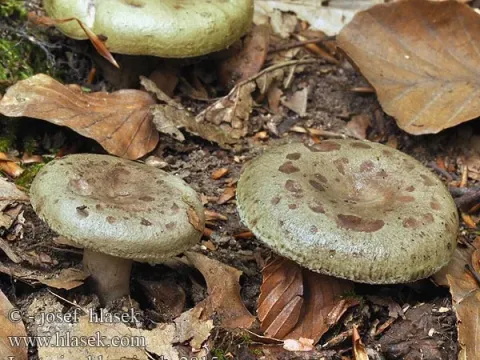
Slimy Milkcap
Lactarius blennius
The Slimy Milkcap (Lactarius blennius) is a mushroom species from the Russulaceae family. It is important to clarify that this fungus is not a plant disease or a phytopathogen in agricultural settings.
What the section contains
Slimy Milkcap
This species is defined as an obligate mycorrhizal fungus. It establishes a mutually beneficial relationship with beech trees, which is essential for the tree's uptake of minerals and water from the soil.
The fruiting body is characterized by a slimy, sticky cap, usually olive-green or grey-green in color. The flesh contains a milky latex that turns grey upon exposure to air.
It does not infect plant tissues, cause lesions, or interfere with the growth of crops. The fungus consumes nutrients from the root zone without harming the host tree's living structures.
Therefore, it occupies an ecological niche as a symbiont rather than a parasitic agent, making it benign in the context of agronomic pest management.
The primary condition for the development of Lactarius blennius is the presence of beech trees, which serve as its mandatory host. The species prefers damp, shaded forest environments.
Mycelial growth requires moist leaf litter and stable soil temperatures. It thrives in soils with an accumulation of organic matter, which supports the mycorrhizal network.
Fruiting typically occurs from mid-summer through autumn. Consistent rainfall is the most critical environmental factor for the production of sporocarps above the ground.
The fungus is highly sensitive to soil chemistry and moisture fluctuations. High soil acidification or extreme compaction can limit the expansion of the fungal colony.
Effective colonization of the forest floor also depends on the density of host trees. A continuous canopy ensures the necessary humidity levels for the survival of the fungus.
The Slimy Milkcap does not inflict any economic damage on agricultural crops or forestry plantations. It is not an infectious agent and does not threaten plant health.
On the contrary, it provides ecological benefits by enhancing the root system of beech trees. This symbiosis improves the overall resilience of the forest ecosystem to environmental stress.
There are no recorded instances of this fungus causing issues in greenhouse or field crops. It does not produce toxins that could inhibit germination or development of cultivated plants.
As a non-pathogenic organism, it does not require any protective measures, fungicides, or eradication programs. Monitoring for this species is only relevant for ecological research.
In summary, the Slimy Milkcap is a harmless natural component of woodland ecosystems and poses zero threat to agriculture or plant pathology programs.