
Smilax cercospora leaf spot
Neocercosporidium smilacis
Description
Symptoms
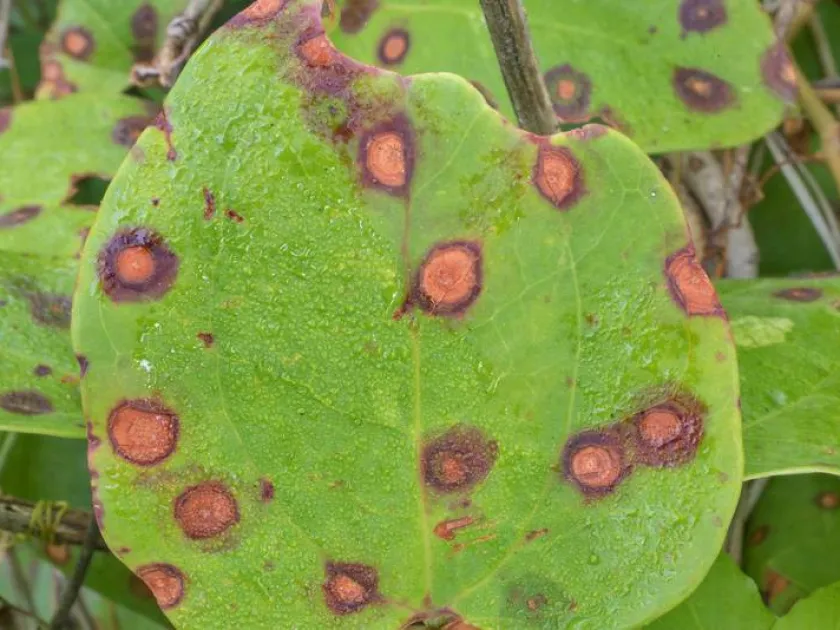
The primary visual symptom of this disease is the appearance of characteristic spots on the leaves of Smilax plants. Initially, these spots manifest as small chlorotic areas that gradually darken over time.
As the infection progresses, the lesions typically turn brown or grayish-brown, often surrounded by a distinct, darker border that separates the necrotic tissue from healthy leaf parts.
Under high humidity, a grayish or olive-colored mold often develops on the underside of these spots, which represents the sporulation of the fungal pathogen spreading across the leaf surface.
In severe cases, individual spots may coalesce, covering a significant portion of the leaf blade, which leads to premature yellowing and eventual drying of the foliage.
Heavy infection often results in premature defoliation, which significantly weakens the plant and diminishes its aesthetic value and physiological vigor.
Pathogen
The causative agent of this disease is the fungus Neocercosporidium smilacis, which belongs to the Ascomycota phylum and is specifically adapted to infect plants of the Smilax genus.
This pathogen acts as an obligate parasite, thriving on the host's nutrients and utilizing leaf tissues to complete its life cycle and produce new infectious spores.
The fungus propagates through conidia, which are easily disseminated by wind, rain splashes, or irrigation systems, facilitating the spread of the disease to healthy plants.
The pathogen survives primarily in fallen leaves and other plant debris, serving as a persistent reservoir for reinfection in subsequent growing seasons.
The development of fungal mycelium within the leaf tissue allows the pathogen to remain dormant but viable during unfavorable conditions, awaiting optimal environmental triggers.
Conditions for development
The development of Smilax cercospora leaf spot is highly dependent on temperature, with optimal growth occurring in a range of 20 to 28 degrees Celsius.
High relative humidity and the presence of free water on the leaf surface are critical factors for the germination of fungal spores and the successful penetration of leaf tissue.
Poor air circulation within dense plantings creates a stagnant microclimate that promotes fungal colonization and rapid transmission of the disease between neighboring plants.
Frequent rainfall or overhead irrigation acts as a significant contributor to the spread of the disease, moving spores from lower leaves to the upper canopy.
Plants weakened by poor cultural practices or nutrient deficiencies are significantly more susceptible to Neocercosporidium smilacis infection compared to vigorous specimens.
Why it matters
The main harm caused by this disease is the disruption of the photosynthetic process due to tissue necrosis, leading to overall plant decline and reduced growth rates.
Persistent loss of leaf surface area hampers the development of shoots and root systems, making the plant less capable of storing energy for future growth cycles.
The disease severely impacts the ornamental quality of Smilax, rendering the plants unsuitable for landscaping or nursery production purposes.
Infected plants become more prone to secondary infections and pest infestations, which can lead to rapid decline or even mortality in vulnerable specimens.
Systemic damage to perennial Smilax species can reduce their cold hardiness, potentially leading to plant loss after harsh winter conditions due to lack of reserves.
Protection
The most important control measure is the thorough removal and destruction of all fallen foliage, as this eliminates the primary source of overwintering inoculum.
It is essential to maintain proper plant spacing and ensure good air circulation to reduce leaf wetness and create an environment less favorable for fungal growth.
Applying water directly to the root zone instead of overhead irrigation significantly reduces the risk of spore transmission and leaf infection.
When symptoms are detected, the application of appropriate fungicides, particularly those containing copper or systemic triazole compounds, can help manage the infection.
- Conduct regular monitoring of plant health for early detection of spots.
- Use pruning to remove heavily infected stems and improve airflow.
- Practice proper sanitation in nurseries to prevent the spread of the fungus.
- Apply preventative fungicide treatments during periods of high humidity.
Discussion
No discussions yet — be the first.