
Slimy spiked cap
Gomphidius glutinosus
Description
Symptoms
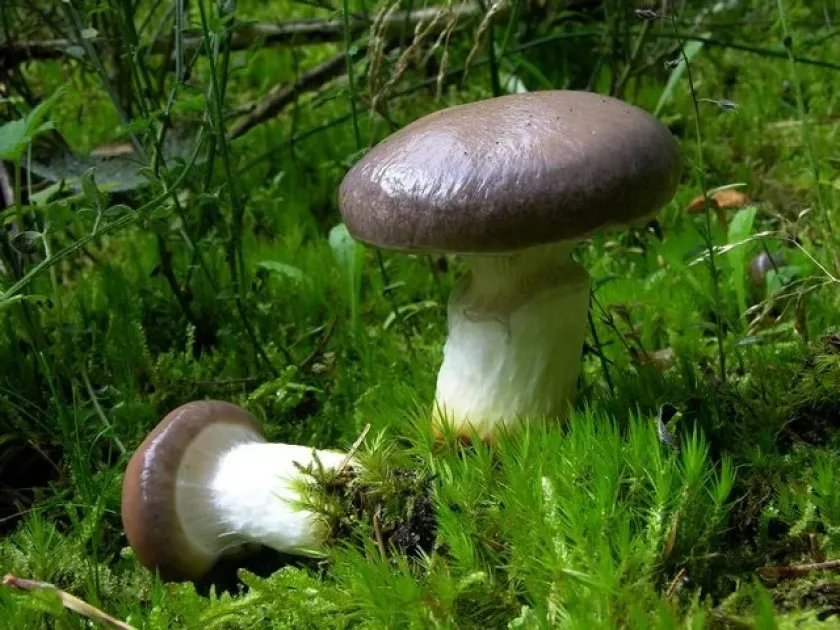
The slimy spiked cap (Gomphidius glutinosus) is an edible mushroom species, often confused with a plant pathogen due to its specific appearance. Its most notable feature is a thick, slimy coating on the cap.
The cap typically reaches 5–12 cm in diameter and ranges in color from grey-brown to chocolate-brown. The gills are pale in young specimens, turning dark grey or almost black with age.
The stem is thick and usually features a slimy ring that may disappear in older mushrooms. The flesh is white, dense, and mild in flavor, making it perfectly safe to eat after proper preparation.
This fungus is not a disease. It does not cause wilting, decay, or damage to tree tissue. Instead, it is a beneficial organism that lives in harmony with spruce trees.
Distinguishing it from pathogenic fungi is easy: look for its association with spruce root systems and its characteristic slimy texture, which is a natural feature of the species.
Pathogen
It is important to clarify that Gomphidius glutinosus is not a pathogen. It does not infect or harm plants, and it has no mechanism to attack trees or agricultural crops.
This fungus is a mycorrhizal partner. It forms a mutualistic relationship with spruce trees, where the fungus helps the tree absorb water and minerals from the soil.
The mycelium does not break down the tree’s internal structures. Instead, it forms a sheath around the root tips, which protects the tree from certain environmental stresses.
Therefore, there is no biological basis for treating this fungus as a plant disease. It is a vital component of a healthy forest ecosystem.
All scientific literature categorizes this species as a beneficial symbiote rather than a threat to forest health or timber quality.
Conditions for development
The slimy spiked cap thrives in moist spruce forests. It requires high humidity and a consistent temperature range, typically between 10 and 18 degrees Celsius.
It prefers acidic soils rich in organic leaf litter and decaying needle matter. It is most commonly found from late summer through the autumn months.
Sufficient rainfall is essential for the development of the fruiting bodies. During dry periods, the mycelium remains dormant in the soil until moisture levels rise again.
The presence of dense, mature spruce stands is the primary requirement for the fungus to establish its mycorrhizal network.
The fungus is highly sensitive to soil compaction and air pollution, which is why its presence is often used as a bioindicator for healthy forest soils.
Why it matters
The slimy spiked cap causes no harm to crops, forests, or individual trees. It is essentially harmless and contributes positively to the growth of spruce trees.
There are no negative economic impacts associated with this species. It does not compete with the tree for nutrients in a harmful way but rather facilitates their uptake.
The species does not cause wood rot, cankers, or foliage diseases. It is not listed as a pest by any forestry or agricultural protection agency.
As a mycorrhizal fungus, its absence could actually be more detrimental to the growth and resilience of a spruce plantation.
Misidentifying this fungus as a threat leads to unnecessary concern; it remains a safe and ecologically significant member of the fungal community.
Protection
No control measures are necessary because the slimy spiked cap is not a plant disease. Spraying fungicides or other chemicals is unnecessary and potentially harmful to the ecosystem.
Protecting the forest floor and minimizing soil disturbance is the best way to support the healthy mycorrhizal networks that this fungus belongs to.
If you encounter these mushrooms, treat them as a sign of a healthy, functioning forest. No intervention is required for either tree or soil health.
For those interested, the mushroom is edible, but its collection should be done sustainably to ensure the mycelium remains undisturbed in the soil.
Promoting a balanced forest microclimate will ensure that beneficial mycorrhizal species, including this one, continue to support the forest's long-term vitality.
Discussion
No discussions yet — be the first.