
Larch canker
Lachnellula occidentalis
The disease is caused by the fungus Lachnellula occidentalis. It is a fungal pathogen that specifically targets larch trees, affecting their bark and cambium layers.
What the section contains
Larch canker
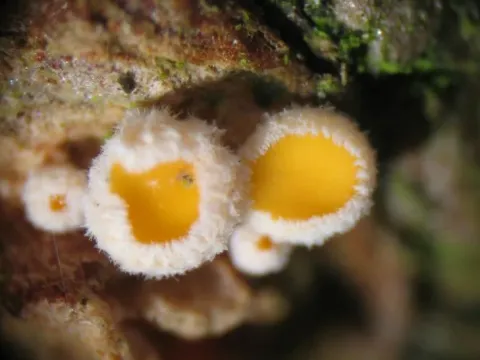
The fungus produces small, cup-shaped fruiting bodies known as apothecia. These structures are typically bright orange or yellow and are highly visible on the surface of the infected bark.
The life cycle involves the release of airborne spores during moist weather. These spores are capable of traveling significant distances, allowing the fungus to infest neighboring trees.
Upon landing on a suitable host, the spores germinate and the mycelium invades the living tissue through cracks, frost wounds, or insect feeding galleries.
Lachnellula occidentalis is known for its ability to persist within the infected wood, turning the host into a long-term reservoir for the pathogen.
Early symptoms include the yellowing and premature shedding of needles on the affected branches, leading to eventual branch dieback.
Distinct cankers form on branches and trunks. The bark typically becomes sunken, cracked, and may eventually fall away, exposing the underlying wood.
Bright orange fruiting bodies appear on or near the margins of the cankers, particularly during damp weather conditions when they become fully expanded.
Heavy resin flow is a common response by the tree. Sticky, hardened resin masses often accumulate at the site of the infection, marking the damaged areas.
Over time, the tree may develop callus tissue around the canker as a defense mechanism, but if the infection encircles the trunk, the upper part of the tree will die.
High humidity and frequent rainfall are the primary drivers of fungal development. The spores require moisture to germinate and establish infection on the tree surface.
The fungus thrives in cool, moist climates, which makes it particularly prevalent in regions with long, damp springs or autumns.
Trees that are under stress, such as those planted in poor soil or suffering from competition, are significantly more susceptible to successful fungal colonization.
Mechanical damage to the bark, especially from frost cracks or insect damage, provides easy entry points for the pathogen to penetrate deep into the tree's vascular system.
Poor airflow within dense stands keeps the humidity high and prevents the bark from drying quickly, creating an ideal micro-environment for the spread of the disease.
The disease causes significant economic loss in forestry by reducing wood quality and growth rates, making timber unsuitable for many commercial uses.
Structural damage from cankers weakens the tree, making it prone to breakage during strong winds, which can lead to further losses in the stand.
In ornamental larch plantings, the infection causes severe disfigurement, destroying the aesthetic value of the trees and requiring costly maintenance.
Young trees in nurseries are particularly vulnerable and can be killed outright by the disease, impacting forest regeneration efforts and nursery operations.
The presence of the fungus often makes trees more attractive to secondary pests, such as bark beetles, which can finish off a tree already struggling with canker.
The most effective management strategy is the prompt removal of infected trees to reduce the overall spore load within the forest stand.
Promoting good airflow through proper spacing and regular thinning of young stands helps keep the bark dry and reduces the chances of infection.
Sanitation practices, such as disinfecting pruning tools, are essential when working in affected areas to prevent the accidental spread of the fungus.
In parkland settings, surgical removal of small cankers can be performed, followed by proper wound treatment to prevent re-infection and encourage healing.
Selection of resistant genotypes and choosing appropriate sites for planting (avoiding frost-prone hollows) are key to preventing the disease from taking hold in new areas.