
Laricifomes officinalis
Laricifomes officinalis
Description
Symptoms
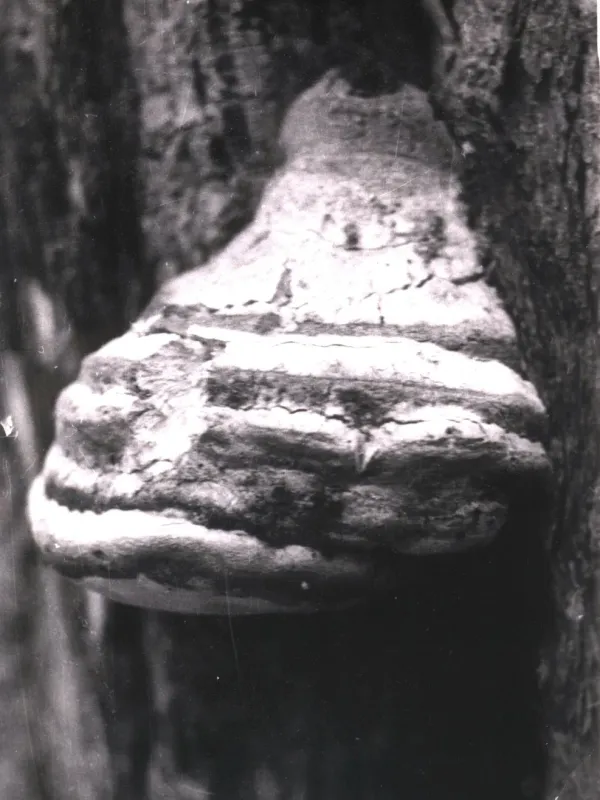
The most visible symptom is the presence of hard, woody conks attached to the trunk. These conks often display a chalky, white, or yellowish surface and can have a cracked, aged appearance.
The interior of the affected tree shows advanced brown rot. The wood becomes brittle, crumbly, and loses its structural strength, often breaking into cubical blocks due to the degradation of cellulose.
In advanced stages of the disease, white mycelial mats can be found within the cracks of the decaying heartwood. These mats indicate active fungal growth and continuous digestion of the wood fibers.
Externally, the tree may show signs of stress, such as thinning foliage or yellowing needles. However, these symptoms often appear only when the internal decay is already severe and extensive.
Structural failure is common as the tree loses its core stability. Trees infected with the fungus are highly prone to breakage or windthrow even during moderate weather conditions.
Pathogen
The disease is caused by the perennial basidiomycete fungus Laricifomes officinalis, also known as the quinine conk. This fungus is a significant wood-decay pathogen that specializes in attacking various coniferous tree species.
The mycelium grows within the woody tissue, slowly breaking down complex cellulose and lignin molecules. This process of decay is internal and can remain hidden for years while the fungus matures inside the tree.
Distinctive perennial fruiting bodies, known as conks, emerge on the tree trunk. They are typically hoof-shaped or elongated, very woody in texture, and can persist on the host for decades, continuously releasing spores.
The pathogen is an obligate parasite, primarily found in mature or overmature forest stands. It is highly adapted to the internal environment of coniferous wood, where it competes effectively against other microorganisms.
Reproduction occurs through airborne spores released from the conks. These spores require open wounds or bark fissures to enter the tree and initiate a new infection cycle.
Conditions for development
The fungus thrives in mature, dense forest ecosystems with high relative humidity. It is particularly prevalent in old-growth coniferous forests where trees have been exposed to environmental stress for many decades.
Mechanical damage to the trunk acts as a primary entry point for the fungal spores. Injuries from forest management activities, wildlife, or extreme weather events facilitate the infection process.
Accumulation of dead wood and forest debris provides a stable reservoir for the pathogen. The fungus can persist in stumps and fallen logs, maintaining an infection source for surrounding healthy trees.
Optimal conditions for sporulation occur during moist and moderate temperature periods. High humidity levels are essential for the production of viable spores that can travel long distances to new hosts.
Poor forest management, such as the absence of sanitary harvesting, creates a favorable environment for the pathogen to spread unchecked. Dense stands with limited airflow also contribute to higher infection rates.
Why it matters
The primary economic impact is the severe devaluation of timber resources. Wood decayed by this fungus loses its structural integrity, rendering it useless for standard lumber or industrial wood products.
The disease significantly shortens the lifespan of individual trees and can reduce the overall productivity of a forest stand. Premature tree mortality leads to gaps in the canopy, altering the local ecosystem.
Infected trees become safety hazards in recreational or managed forest areas due to the high risk of trunk breakage. This necessitates additional monitoring and sometimes costly tree removal programs.
The decay process disrupts the nutrient cycling within the forest, although it creates habitats for specific wood-dwelling insects. However, from a silvicultural perspective, the loss of timber volume is the dominant concern.
Restoring a forest affected by Laricifomes officinalis requires a long-term strategy, as the pathogen persists in the soil and remaining wood for years, complicating reforestation efforts.
Protection
Sanitary harvesting is the most effective control method. Identifying and removing infected trees before the conks reach maturity drastically reduces the local spore concentration.
Proactive management of forest wounds is crucial. Care must be taken during thinning or harvesting operations to avoid wounding healthy trees, which prevents new entry points for the fungus.
Clearing forest debris and removing old, heavily infected stumps can help decrease the potential source of infection. Maintaining forest hygiene is essential to limit the pathogen's spread.
Promoting diverse and resilient forest structures helps mitigate the risk of mass infections. Ensuring adequate spacing between trees improves airflow and prevents a microclimate conducive to fungal growth.
In cases of severe infestation, reforestation with less susceptible or resistant species might be necessary. Integrating forest monitoring programs allows for early detection, which is vital for effective disease management.
Discussion
No discussions yet — be the first.