
Laricifomes
Laricifomes
Description
Symptoms
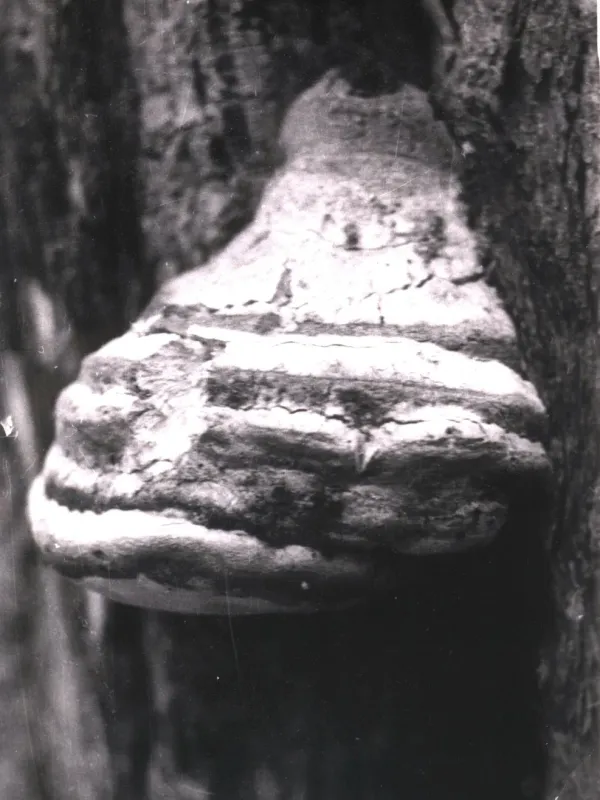
The most visible diagnostic sign is the presence of the fungus's perennial fruit bodies on the trunk. These are usually found on older trees, emerging from cracks or scars in the bark where the interior wood is exposed.
Affected wood displays a characteristic reddish-brown or yellowish-brown discoloration. In the advanced stages of decay, the wood becomes brittle and tends to break into small, distinct cubes, a phenomenon often referred to as cubical rot.
Mycelial mats, which are white, felty sheets of fungus, may be found filling the cracks within the decaying wood. This is a clear indicator that the fungal network has extensively colonized the internal structure of the tree.
General tree decline is often observed, manifesting as sparse crown foliage, yellowing needles, and premature needle drop. Since the fungus destroys the heartwood, the tree’s water-conducting efficiency is significantly impaired.
Top-dying (dieback) is a common symptom in infected larch trees. As the rot progresses internally, the affected trees become increasingly vulnerable to wind-throw and mechanical breakage, especially during severe weather events.
Pathogen
The causative agent of this disease is the wood-decay fungus Laricifomes officinalis, also known as Fomitopsis officinalis. It is a perennial fungus belonging to the Polyporaceae family, primarily attacking the heartwood of older conifer species.
The fungus produces extensive mycelium within the tree trunk, secreting enzymes that decompose cellulose and lignin. This process leads to the formation of brown crumbly rot, which structurally compromises the timber of infected trees.
Fruit bodies are typically hoof-shaped, cylindrical, or columnar, often growing quite large. The surface of young fruiting bodies is white and chalky, but as they mature, they become hard, woody, and greyish-brown with distinct cracks.
The life cycle of the pathogen is centered inside the tree host, where it remains active for decades. Propagation occurs via basidiospores that are wind-dispersed, allowing the fungus to colonize new hosts through bark wounds or broken branches.
Because the fungus is a saprotroph in its later stages, it persists in dead standing timber and woody debris, ensuring a continuous supply of spores to infect surrounding healthy trees within the forest ecosystem.
Conditions for development
The fungus thrives in old-growth or over-mature coniferous stands where trees are naturally older and less vigorous. High humidity levels and poor air circulation facilitate the germination of basidiospores on potential infection sites.
Mechanical damage to the bark, caused by logging operations, animal activity, or weather events, provides an easy entry point for fungal spores. Without these entry wounds, the fungus has difficulty colonizing healthy, intact trees.
Temperature plays a crucial role in fungal metabolism; while the fungus is quite resilient and survives cold winters, the most rapid growth occurs during warmer seasons. However, its overall activity is relatively slow, often taking many years to become noticeable.
Dense stand structures and high humidity levels in forest understories create optimal microclimates for infection. When trees are spaced too closely, the risk of transmission increases, including the potential for contact-based spread between root systems.
Accumulated woody debris on the forest floor, along with lack of sanitation, provides a continuous reservoir for spores. This makes neglected forests significantly more prone to widespread infection compared to actively managed stands.
Why it matters
The primary impact of Laricifomes officinalis is the degradation of timber quality. Once infected, the wood loses its structural integrity and commercial value, making it useless for construction or industrial purposes.
Ecologically, the fungus causes premature tree mortality, which disrupts the natural age structure of forests. While it acts as a decomposer, its presence in managed plantations is considered highly detrimental to forest productivity.
Trees weakened by internal rot become susceptible to secondary pests, including bark beetles and other wood-boring insects. This creates a cumulative effect that hastens the decline of the individual host and the overall stand health.
There is a significant safety risk associated with infected trees due to their susceptibility to breakage. This creates hazards for forest workers and the public, especially in recreational areas or near forest infrastructure.
By impairing the tree's physiological processes, the fungus reduces the tree's resilience to other environmental stressors like drought and frost. Consequently, infected stands show a marked decrease in growth rates and biomass production.
Protection
Sanitation cutting is the most effective management strategy. Removing infected trees and disposing of their fruit bodies is essential to reduce the local spore load and prevent further spread within the stand.
Care must be taken during forest operations to minimize mechanical damage to the bark of healthy trees. Protecting the integrity of the tree bark is the first line of defense against fungal entry.
Regular thinning of dense stands helps improve air circulation and sunlight penetration, which keeps the environment less favorable for fungal growth. This promotes overall tree health and higher natural resistance.
All logging debris and woody slash should be cleared promptly to eliminate potential breeding grounds for the fungus. Proper disposal prevents the buildup of inoculum within the forest area.
Routine forest monitoring and phytosanitary inspections are critical. Identifying and isolating infected trees at an early stage is the only way to successfully curb the impact of this long-term pathogen.
Discussion
No discussions yet — be the first.