
Larch Needle Cast
Exutisphaerella laricina
Description
Symptoms
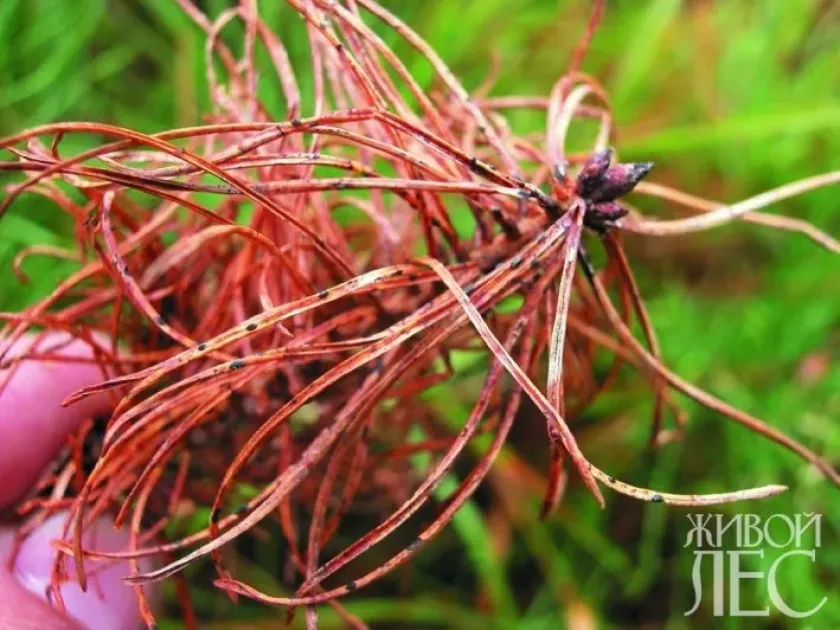
The primary symptom of this disease is the premature yellowing and browning of needles on one-year-old and two-year-old larch branches.
Small, black, raised fruiting bodies of the fungus appear on the surface of infected needles, making them visible upon close inspection.
The disease causes needles to drop prematurely, resulting in thin, sparse foliage that lacks the typical healthy appearance of a larch.
Infected tissue shows characteristic necrosis, which impairs the tree's ability to perform photosynthesis effectively during the growing season.
Over time, the infection spreads across the crown, giving the tree a scorched or distressed appearance which progresses to branch dieback.
Pathogen
The disease is caused by the fungus Exutisphaerella laricina, an ascomycete specifically adapted to parasitize larch species.
The fungus functions by colonizing the needle tissues, where it establishes its mycelium and absorbs vital nutrients from the host plant.
The pathogen survives the winter in fallen, infected needles scattered around the base of the tree, serving as a reservoir for the next season.
In the spring, spores are released and dispersed by wind currents or splashing rain onto new, healthy needles to initiate fresh infection cycles.
Its biological cycle is highly synchronized with the growth of larch, often peaking when new needles begin to emerge during the spring flush.
Conditions for development
High humidity and frequent rainfall are the most critical environmental factors that promote the development and spread of this fungal disease.
Overcrowded larch plantations with poor air circulation create stagnant microclimates that allow the fungus to thrive and infect neighboring trees.
Trees that are already stressed due to drought, poor soil quality, or nutrient deficiencies exhibit lower resistance to fungal attack.
Temperatures ranging from 15 to 20 degrees Celsius provide the optimal window for rapid spore germination and successful needle penetration.
The presence of old, uncleared needle litter under the trees significantly increases the risk of early-season infection for new foliage.
Why it matters
The disease results in significant growth reduction due to the loss of needles, which reduces the tree's overall photosynthetic capacity.
Persistent infection weakens the trees, making them susceptible to secondary infestation by bark beetles and other wood-boring insects.
In forestry nurseries, the pathogen can cause substantial mortality among seedlings, leading to severe economic losses for growers.
The aesthetic value of larch trees in ornamental gardens and parks is severely compromised when the canopy becomes thin and discolored.
Left untreated over several years, the disease can weaken entire stands, causing branch dieback and overall decline in tree health.
Protection
The most important preventive measure is the regular removal and burning of fallen needles, which eliminates the primary source of inoculum.
Maintaining proper spacing between trees during planting ensures adequate airflow, which keeps the foliage dry and inhibits fungal growth.
Applying copper-based fungicides or other approved systemic agents can effectively curb the disease if applied at the first signs of symptoms.
Promoting tree vigor through balanced fertilization and adequate water supply helps the larch maintain a strong immune response against the fungus.
Regular monitoring of the plantations is recommended to identify the outbreak early and take immediate action before the infection becomes severe.
Discussion
No discussions yet — be the first.