
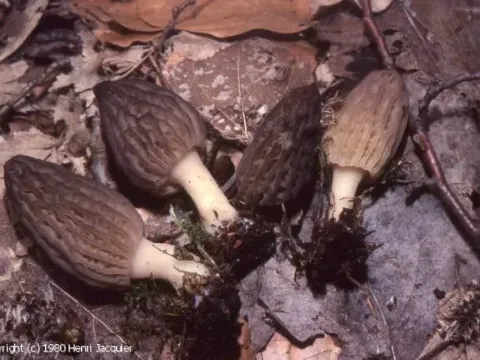
Intermediate morel
Morchella intermedia
Intermediate morel (Morchella intermedia) is a fungus species that, while primarily a saprotroph in forest ecosystems, can act as an opportunistic pathogen when introduced into agricultural soil environments.
What the section contains
Intermediate morel
The pathogen reproduces via airborne and soil-borne spores, allowing it to colonize agricultural fields rapidly under favorable conditions.
Its mycelial network grows vigorously within the upper soil horizons, effectively competing with crop root systems for nutrients and water resources.
The fungus is characterized by the production of resilient sclerotia, which ensure its survival through harsh winter conditions or periods of severe drought.
As an ascomycete, its biological cycle is highly adaptive, allowing it to transition between feeding on decaying organic matter and actively attacking weakened root tissues of crops.
Early symptoms include a visible decline in plant vigor, with lower foliage exhibiting chlorosis and drooping even in the presence of adequate soil moisture.
Examination of the root system often reveals the presence of a white or greyish filamentous mycelium layer covering the roots and the base of the stem.
Necrotic lesions frequently develop at the root collar, leading to tissue softening and a distinct, putrid odor in advanced stages of infection.
Plants affected by the pathogen typically show stunted growth compared to healthy neighboring plants, often resulting in patchy field stands.
During humid periods, the appearance of small fruiting bodies near the base of the crop serves as a diagnostic feature of a severe infestation.
The pathogen thrives in high-moisture environments with soil saturation levels typically between 70% and 85% and temperatures ranging from 12°C to 18°C.
Soils rich in organic matter and decaying plant residues provide the necessary substrate for the fungus to establish its initial infection centers.
Poor soil drainage and high humidity levels contribute to the accelerated development and spread of Morchella intermedia across a field.
Frequent, non-rotated cropping systems without adequate sanitation allow for the buildup of fungal biomass, increasing the severity of annual outbreaks.
Dense planting configurations that restrict airflow and decrease the rate of soil surface evaporation create a favorable microclimate for mycelial growth.
The primary economic impact is the reduction in crop stand density, which leads to significant yield losses in affected agricultural fields.
Root damage compromises the plant's nutrient uptake, causing severe physiological stress and potentially leading to premature crop death during critical growth stages.
The fungus may produce phytotoxic secondary metabolites that degrade soil quality and inhibit the germination of subsequent crop cycles.
Weakened root integrity makes crops significantly more susceptible to secondary infections, such as bacterial soft rots, further exacerbating the initial damage.
Control measures and soil remediation efforts post-infestation represent a considerable increase in operational costs for farmers.
Implementing a strict crop rotation schedule is essential to disrupt the pathogen's lifecycle and reduce the available inoculum in the soil.
Deep plowing techniques should be employed to bury crop residues and fungal spores, moving them away from the immediate rhizosphere of the next season's crops.
Application of systemic fungicides targeting soil-borne pathogens can be effective when applied preventively in high-risk areas.
Improving soil drainage and optimizing fertilizer applications can significantly boost plant health, allowing crops to resist initial fungal colonization.
Maintaining field hygiene by removing symptomatic plant debris helps minimize the spread of spores and preserves long-term soil health.