
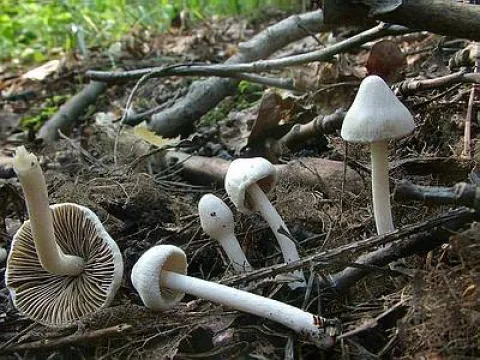
Inocybe geophylla
Inocybe geophylla
Inocybe geophylla, commonly known as the earthy inocybe, is not a plant pathogen or a disease agent for agricultural crops. It is a soil-dwelling saprotroph and a mycorrhizal fungus belonging to the Inocybaceae family.
What the section contains
Inocybe geophylla
Biologically, this organism is a cap-bearing mushroom often mistakenly identified as a plant pathogen due to its common occurrence in root zones of trees and shrubs.
The mycelium of the fungus develops actively within leaf litter and soil horizons, producing fruiting bodies in forests, parks, and home gardens with humus-rich soils.
This fungus does not infect plant tissues and does not cause rots, necrosis, or wilting associated with true infectious diseases of agricultural crops.
Unlike parasitic fungi, this species obtains nutrients by decomposing organic matter or through symbiotic relationships with woody plant species.
External signs of the presence of Inocybe geophylla appear as small, conical-shaped caps that are white or cream-colored, often exhibiting a silky sheen.
Fruiting bodies usually emerge in late summer and autumn, typically found on the ground around tree roots or in shaded, damp areas of the garden.
The gills of the mushroom are initially pale but turn grayish-brown as the spores mature, reflecting the color of the spore print.
The stem is slender, fibrous, and often bulbous at the base, which serves as a key diagnostic feature for field identification of the species.
The presence of this fungus does not affect the health of cultivated plants; leaves, fruits, and roots remain unaffected unless other external factors are present.
Mycelial development is favored by high soil moisture levels and moderate temperatures, typical of the autumn season or prolonged rainy weather.
The fungus prefers areas with high concentrations of organic matter, damp shaded parts of the garden, and locations where the soil is rarely disturbed.
Symbiosis with tree roots allows the fungus to successfully colonize root zones, where a stable microclimate is consistently maintained.
Fruiting is triggered by a combination of sufficient substrate moisture and the absence of direct sunlight, which would otherwise dry the soil surface.
Excessive use of mulching materials can sometimes promote spore dispersal and the development of the fungus in the top layers of the soil.
The primary danger associated with Inocybe geophylla is not agricultural loss but its high toxicity to humans and animals if ingested.
This species contains significant amounts of muscarine, which causes acute poisoning if consumed, necessitating immediate medical attention.
The fungus poses no direct threat to plants, making any control efforts for the sake of crop preservation biologically unnecessary and unjustified.
In rare instances, excessive fungal growth may indicate poor soil aeration or an over-accumulation of undecomposed organic material.
The presence of these mushrooms requires only basic safety precautions to prevent accidental contact by children or pets.
There are no specialized chemical fungicides for Inocybe geophylla, as it is not a pest of agricultural crops.
Preventive measures involve maintaining optimal soil moisture levels and removing accumulated plant debris that serves as a substrate for the mycelium.
Regular cultivation of the soil in root zones and providing adequate light exposure can help reduce the frequency and number of fruiting bodies.
If the presence of the mushrooms is undesirable, manual removal of fruiting bodies while wearing gloves is recommended, followed by disposal in a secure area.
Maintaining the health of the garden ecosystem and proper horticultural practices eliminate the need for fungicide application against this harmless species.