
Inocybe rimosa
Inocybe rimosa
Description
Symptoms
The most visible sign of Inocybe rimosa is the emergence of fruiting bodies during the growing season, typically from early summer through autumn.
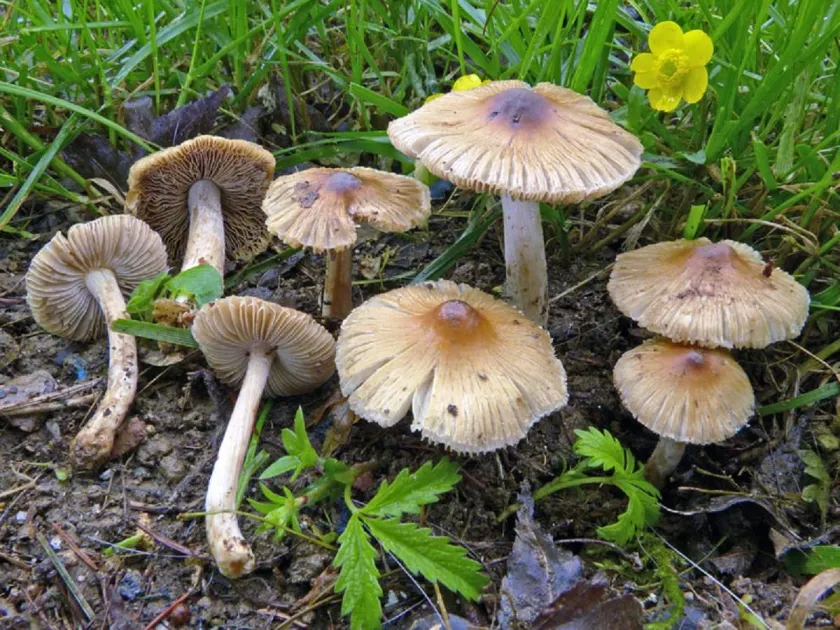
Key identification features include a straw-yellow or brownish-yellow cap with a diameter of up to 8 cm, characterized by prominent cracks radiating from the center to the margin.
The stipe is solid and fibrous, lacking a ring (annulus), which is a crucial feature to distinguish it from many other mushroom species found in agricultural fields.
The odor is often distinctively earthy, mealy, or slightly musty, which is frequently cited in field guides as a primary characteristic for identification.
They often appear in small clusters or arcs in the vicinity of trees, benefiting from the moisture retained by the root zones and leaf litter in these areas.
Pathogen
Inocybe rimosa, commonly known as the split-fiber cap, is not a plant pathogen and does not cause crop diseases. It is a mycorrhizal fungus belonging to the Inocybaceae family, naturally occurring in soil.
This fungus typically associates with trees, living in a symbiotic relationship in the rhizosphere. It is a saprotrophic organism that relies on organic matter decomposition rather than infecting living plant tissues.
Morphologically, it is defined by a conical or campanulate cap that displays distinct radial splitting as it matures. The gills are initially pale and become brownish with age.
It propagates via airborne spores that thrive in moisture-rich forest floors, gardens, and park areas. It does not penetrate roots to parasitize them; rather, it aids in nutrient exchange.
From an agronomical perspective, its presence is an indicator of soil ecological status rather than a sign of pathological infection or a need for fungicide application.
Why it matters
The primary concern regarding Inocybe rimosa is its high toxicity to humans and animals. It contains significant amounts of muscarine, a potent alkaloid toxin.
Ingestion causes rapid-onset poisoning symptoms, including excessive salivation, perspiration, miosis (constricted pupils), and severe gastrointestinal distress.
There is no economic harm caused to agricultural crops by this fungus. It does not reduce yield, affect fruit quality, or cause structural damage to plant vascular systems.
The risk is strictly restricted to health hazards for individuals who might mistake this fungus for edible species. Education on identifying toxic mushrooms is the best mitigation.
In a farm setting, the presence of these mushrooms requires warning signs for personnel and the exclusion of grazing animals from areas where the fungus is dense.
Protection
There is no standard control protocol for Inocybe rimosa as it does not constitute a disease threat to plants. Chemical control is neither necessary nor recommended.
Managing soil moisture levels to ensure proper drainage and avoiding excessive surface organic debris can reduce favorable conditions for its fruiting body formation.
If removal is necessary for safety reasons, manual collection and disposal of the fruiting bodies before they release spores can help mitigate future population spikes.
Regular soil cultivation and aeration can disrupt the development of the mycelium, making the environment less hospitable for the fungus to fruit effectively.
Safety management is the most effective approach: ensuring that all field workers are trained to identify and avoid touching or consuming mushrooms found in the field.
Discussion
No discussions yet — be the first.