
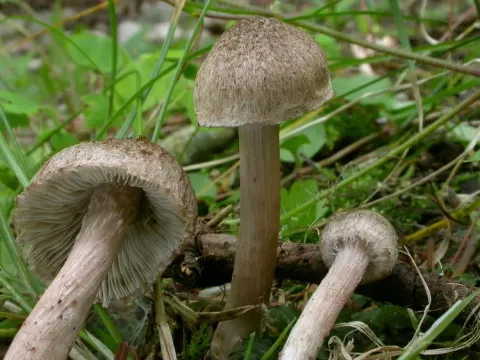
Inocybe cervicolor
Inocybe cervicolor
Inocybe cervicolor is a fungal species belonging to the Inocybe genus, commonly found in forested habitats.
What the section contains
Inocybe cervicolor
It is crucial to clarify that this fungus is not a plant disease or a pathogen that attacks agricultural crops.
The organism functions as a saprotroph or a mycorrhizal partner, contributing to the decomposition of organic matter in the soil.
It lacks the parasitic capabilities required to infect living plant tissues, distinguishing it from true agricultural pathogens.
Any classification of this fungus as a crop disease is incorrect from both a biological and agronomic perspective.
The growth of Inocybe cervicolor is typically associated with moist forest soils enriched with decomposing plant debris.
Fruiting bodies generally appear during periods of high humidity and moderate temperatures throughout late summer and autumn.
The mycelium thrives in environments with high organic content, often forming associations with the roots of specific tree species.
Spore dispersal occurs primarily through wind and water, allowing the fungus to colonize suitable microhabitats within woodlands.
The fungus is adapted to temperate climatic conditions and is rarely found in open agricultural fields or managed farmland.
The primary concern regarding Inocybe cervicolor is its toxicity to humans, as it contains muscarine, a potent neurotoxin.
It poses no threat to farming, horticulture, or forestry, as it does not cause lesions, decay, or physiological damage to plants.
There are no control measures or prevention strategies required for this fungus in an agricultural or farming setting.
Farmers do not need to apply fungicides or implement quarantine measures, as the presence of this mushroom is ecologically harmless.
The species should be recognized as a wild mushroom of toxicological interest rather than an agricultural pest or pathogen.