
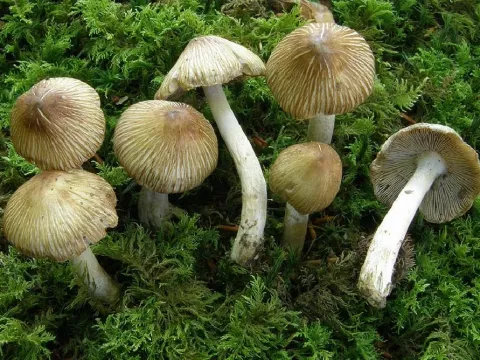
Inocybe
Inocybe
The genus Inocybe, commonly known as fiber caps, comprises a large group of gilled mushrooms within the Inocybaceae family. It is critical to clarify that these fungi are not plant pathogens and do not cause diseases in crops.
What the section contains
Inocybe
These organisms primarily function as mycorrhizal symbionts. They establish mutually beneficial relationships with the root systems of trees and shrubs, facilitating the exchange of nutrients and water between the soil and the host plant.
The mycelium of Inocybe species explores the soil substrate, contributing to the decomposition of organic matter. Their presence is generally a sign of high soil organic content and biological activity.
Morphologically, they are characterized by a fibrillose or scaly cap structure. They do not parasitize living plant tissues, nor do they secrete toxins that interfere with plant physiological processes.
While they are beneficial to ecosystem health, many members of this genus contain muscarine, a potent toxin. Therefore, they are considered dangerous for human consumption, though they pose no threat to agricultural productivity.
Inocybe species typically thrive in moist environments. They are most commonly observed during periods of high rainfall, when the upper layers of the soil remain consistently damp.
They prefer soils rich in organic matter, such as those found in orchards, garden perimeters, and near forest edges. Optimal temperature ranges for fruiting body development are generally between 15°C and 22°C.
The proximity of host plants is essential, as the mycorrhizal network relies on chemical signals from roots. They are rarely found in the center of monoculture fields that lack wood-based organic matter.
Soil pH plays a significant role in their distribution, with most species favoring slightly acidic to neutral soils. Excessive compaction or poor drainage can limit their mycelial spread.
Cultivation practices that disturb the soil surface often disrupt the mycelial network, explaining why these fungi are less common in intensively managed agricultural rows.
There is no direct harm posed by Inocybe to agricultural crops. They are not agents of plant disease, and their presence does not lead to wilting, rot, or yield reduction.
The risk associated with this genus is strictly related to accidental ingestion. Given their potential toxicity due to muscarine, they represent a risk to humans, livestock, and pets if consumed.
In agricultural settings, no economic loss is attributed to these fungi. They do not trigger plant defensive mechanisms or require any form of chemical management or intervention.
Farmers should not confuse these soil-inhabiting mushrooms with destructive fungal pathogens like rusts or blights. Their presence is an ecological indicator rather than a pest infestation.
No agricultural products or yields are affected by the growth of these mushrooms, making them neutral entities in the context of commercial crop production.
No specific control measures are recommended for Inocybe because they are not considered pests or disease-causing organisms. Chemical fungicides are unnecessary and discouraged.
Management of these fungi, if desired for aesthetic or safety reasons, is purely mechanical. Regular removal of woody debris and clearing of heavy mulch layers can discourage fruiting.
Improving soil drainage and surface aeration can reduce the localized humidity that these fungi require for the development of their fruiting bodies.
Safety training is the primary management strategy. Workers should be informed about the dangers of consuming unknown wild mushrooms found within the farm boundaries.
- Mechanical removal of fruit bodies near high-traffic areas.
- Maintaining proper soil drainage to avoid excessive moisture.
- Safety education regarding the toxicity of wild mushrooms.