
Inocybe bongardii
Inocybe bongardii
Description
Symptoms
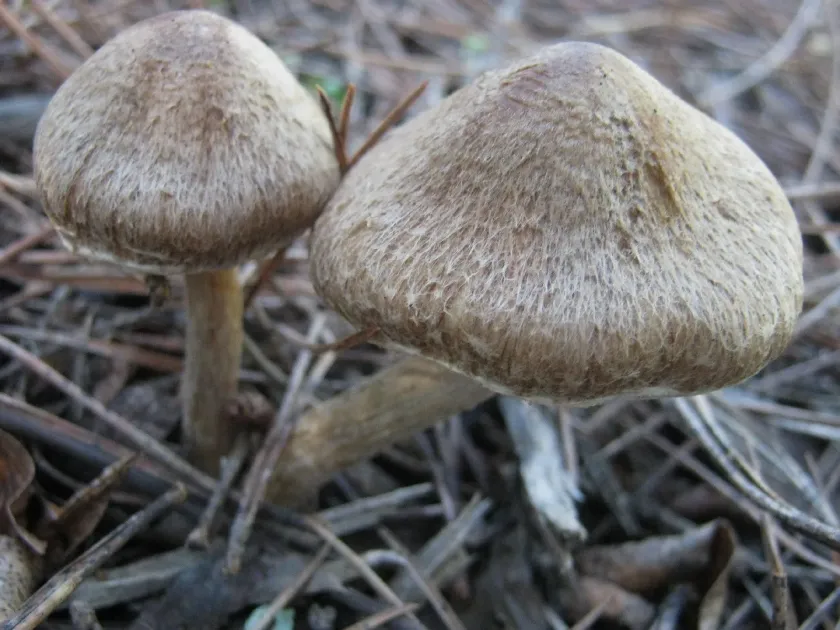
The fruit body features a conical to bell-shaped cap that eventually flattens, often retaining a distinct central umbo.
The cap surface is characteristically fibrillose or scaly, featuring brown to ochre tones typical for its taxonomic group.
The gills transition from light colors to a deep tobacco-brown hue as the spores mature and are released.
The stem is typically cylindrical and solid, often displaying a reddish or pinkish discoloration near the base.
A distinctive feature of this species is its strong, fruity odor, which is frequently likened to ripening pears or peaches.
Pathogen
Inocybe bongardii is not a plant pathogen; it does not cause diseases in agricultural or forest crops.
It is a gilled mushroom in the Inocybaceae family, which exists primarily as a mycorrhizal symbiont in forest environments.
The fungus forms symbiotic relationships with the roots of various broad-leaved trees, aiding in nutrient and water uptake.
In agronomy, this organism is categorized as a beneficial component of forest soil ecology rather than a threat to vegetation.
Its biological cycle is centered on saprotrophic activity and mycorrhizal support, contributing to the decomposition of organic matter.
Conditions for development
This fungus thrives in deciduous and mixed forest habitats, where it can establish connections with host tree roots.
Moderate soil moisture and high humidity levels are essential for the development and emergence of the fruit bodies.
It prefers well-drained soils rich in leaf litter and humus, providing necessary organic substrates for the mycelium.
The growing season is typically concentrated during the warmer, wetter months of late summer through autumn.
Stable soil temperatures provided by forest cover create an ideal micro-environment for its underground vegetative growth.
Why it matters
The fungus is harmless to crops, as it does not parasitize living plant tissues or interfere with harvest yields.
The primary concern regarding this mushroom is its toxicity to humans, as it contains muscarine, which can cause severe illness.
There is no economic damage associated with this species; in fact, its presence supports the health of forest trees via mycorrhizae.
Misidentification is the only real risk, as people might mistakenly consume it, believing it to be an edible forest species.
Ecologically, the fungus is beneficial, aiding in the nutrient cycle and maintaining the biological integrity of the forest soil.
Protection
No agricultural control measures are required, as the fungus does not negatively impact farm or plantation productivity.
Management in recreational areas involves educating the public about the dangers of consuming toxic wild mushrooms.
Mechanical removal of fruit bodies can be performed in public parks if ingestion by children or pets is a concern.
No chemical fungicides or specialized eradication strategies are appropriate for this non-pathogenic, ecologically functional fungus.
Preservation of balanced soil health is the recommended approach to maintaining a productive and diverse forest ecosystem.
Discussion
No discussions yet — be the first.