
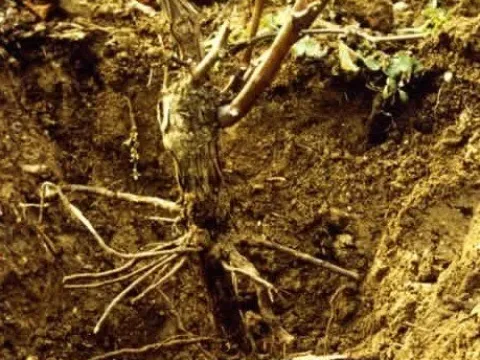
Ilyonectria root rot
Ilyonectria
The disease is caused by fungi of the genus Ilyonectria, formerly classified within the Cylindrocarpon complex. These are soilborne pathogens that persist as mycelium or resistant spores in the soil for several seasons.
What the section contains
Ilyonectria root rot
Ilyonectria destructans is identified as the primary species responsible for significant root rot, particularly in ginseng, apple orchards, and various grapevine cultivars.
The fungus acts as a hemibiotroph, invading the plant's root system through natural openings or mechanical injuries caused by nematodes and soil insects.
Due to its ability to survive in both soil and plant debris, it establishes permanent reservoirs, making it a persistent challenge in nursery and field environments.
Dissemination occurs primarily through movement of infested soil, contaminated planting material, and irrigation water, facilitating the spread of the pathogen across plots.
Symptoms typically include stunted growth of the canopy, wilting, and yellowing of foliage, as the damaged roots fail to supply adequate nutrients to the plant.
Root inspection reveals necrotic, brown to black lesions that eventually girdle the main root, leading to complete tissue decay and root system collapse.
Under high humidity, white or pinkish fungal mycelium may appear on the roots, which serves as a definitive sign of the active colonization phase.
In mature perennial plants, secondary root proliferation may occur above the site of the infection, but this is often insufficient to sustain the plant’s health.
The vascular tissue often exhibits browning when sliced, confirming that the pathogen has successfully invaded the deeper layers of the root cortex.
Optimal conditions for Ilyonectria development include high soil moisture levels and temperatures ranging from 18°C to 25°C, favoring aggressive mycelial growth.
Poor drainage systems in fields or nurseries significantly exacerbate the risk of infection by promoting stagnant water conditions around the root zone.
Soil pH levels that deviate from the neutral range can stress the plant, making it more susceptible to penetration by fungal hyphae.
Increased soil insect pressure, such as wireworms, directly facilitates the infection process by providing an entry point for the fungus to bypass plant defenses.
Long-term monoculture prevents natural suppression of the fungus by diverse microbial communities, allowing the pathogen density to increase exponentially.
The pathogen is particularly insidious because by the time visible above-ground symptoms appear, the root system is often already compromised beyond recovery.
It causes significant yield reductions, stunted development, and high mortality rates in young seedlings, leading to severe economic losses in the nursery industry.
Infected crops show decreased vigor, making them significantly more vulnerable to environmental stresses like winter cold and extreme seasonal droughts.
Field infestation renders the soil unsuitable for susceptible host crops for many years, necessitating costly crop rotations and soil remediation practices.
The presence of Ilyonectria complicates international trade, as infested nursery stock acts as a vector for transmitting the disease to new regions.
Integrated disease management begins with the use of certified, disease-free planting material and rigorous inspection of roots prior to transplanting.
Strict adherence to crop rotation cycles (minimum 5 years) is essential to reduce the inoculum levels and break the life cycle of the soilborne fungus.
Biological control agents, particularly Trichoderma species, have shown success in suppressing Ilyonectria populations through competition and antagonism.
Fungicide treatments applied as soil drenches or root dips at the time of planting can offer protective barriers to minimize the risk of initial infection.
Managing soil-dwelling pests and improving soil structure through better drainage remain the most effective long-term strategies for preventing disease outbreaks.