
Impatiens rust
Puccinia komarovii
Description
Symptoms
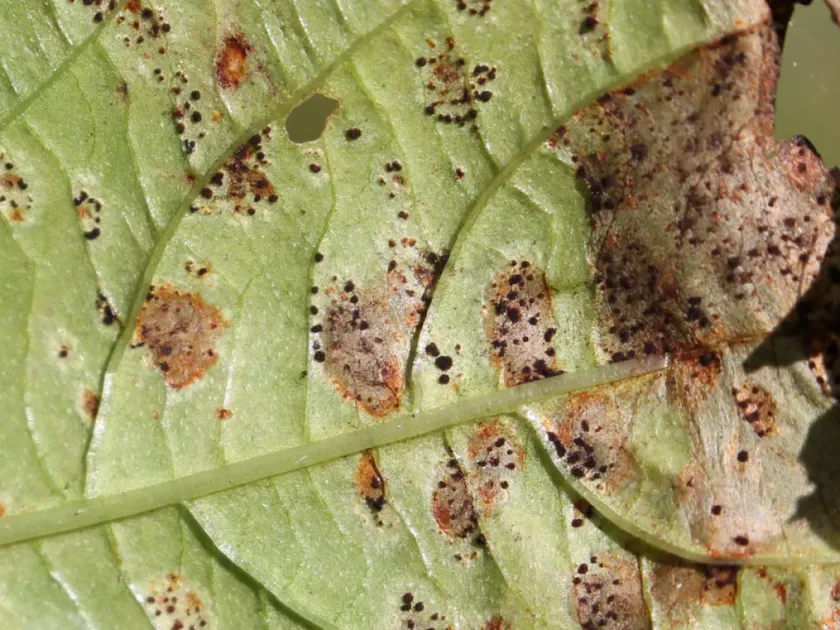
Initial symptoms manifest as small, yellowish or light brown spots appearing on the upper surface of the leaves.
As the infection progresses, rusty-brown pustules develop on the undersides of leaves, containing thousands of fungal spores.
Heavily infected leaves turn yellow, curl up, and drop prematurely, severely hindering the plant's ability to produce flowers.
In advanced cases, the fungal pustules may also appear on stems and flower stalks, causing visible plant distortion.
The affected plant shows signs of general stunted growth, loss of vigor, and a significant decrease in aesthetic appeal.
Pathogen
The causative agent of the disease is the specialized fungal pathogen Puccinia komarovii, which exclusively targets members of the Impatiens genus.
This rust fungus is an obligate parasite, meaning it requires living host tissue to complete its complex biological life cycle.
The pathogen utilizes several spore stages to survive in varying environments, making it a persistent threat to impatiens crops.
The fungus absorbs nutrients from the host plant's cells, leading to a severe depletion of the plant's metabolic energy.
Spore dispersal occurs primarily via wind currents, splashing water, or movement of contaminated gardening tools.
Conditions for development
High relative humidity and moderate temperatures are the most critical factors favoring the germination of rust spores.
Crowded planting conditions prevent proper airflow, creating a localized humid microclimate that fosters disease development.
Overhead irrigation, which leaves foliage wet for extended periods, significantly increases the risk of successful spore colonization.
Poor ventilation in greenhouses or indoor environments often triggers rapid outbreaks of this fungal infection.
Fluctuating temperatures and condensation on leaf surfaces overnight provide perfect conditions for the pathogen to thrive.
Why it matters
Impatiens rust causes significant damage by stripping the plant of its photosynthetic capacity, leading to eventual death.
The infection significantly reduces the market value of ornamental plants, leading to financial losses for nurseries and growers.
An infected plant becomes significantly more susceptible to secondary stressors, such as pests and environmental extremes.
Within a greenhouse environment, the disease can spread rapidly, potentially wiping out entire batches of impatiens.
The requirement for frequent fungicide applications and labor-intensive plant removal increases the overall cost of crop maintenance.
Protection
Effective management begins with strict environmental control, specifically focusing on lowering humidity and improving air circulation.
Sanitation is paramount: immediately remove and destroy all infected plant material to prevent the spread of spores.
Disinfect all gardening tools and greenhouse surfaces regularly to eliminate dormant spores from the growing environment.
Systemic fungicides, particularly those containing triazoles or strobilurins, can be effective in suppressing the disease.
- Maintain proper spacing between plants to enhance airflow.
- Water at the base of the plant to keep foliage dry.
- Monitor plants frequently for early signs of rust.
- Use certified disease-free seeds or cuttings for propagation.
Discussion
No discussions yet — be the first.