
Hydnobolites
Hydnobolites
Hydnobolites is a genus of fungi belonging to the Pezizales order. In agricultural and mycological contexts, it is recognized as a significant competitor or pathogen that interferes with the mycorrhizal systems essential for truffle-producing trees.
What the section contains
Hydnobolites
The fungus operates primarily as a soil-borne organism. It colonizes the root systems of host plants, such as oak or hazel, competing directly with the symbiotic mycelium of commercially valuable truffle species for space and nutrients.
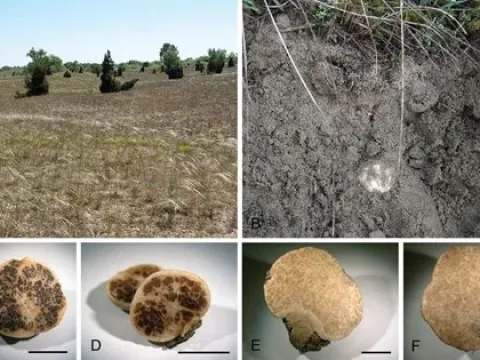
Biologically, it is an ascomycete that produces hypogeous (underground) fruiting bodies. These fruiting bodies can mimic the appearance of true truffles, making them deceptive to both farmers and researchers during initial plantation inspections.
The pathogen forms resilient spores that can persist in the soil for several years. This longevity makes the fungus exceptionally difficult to eradicate once a plantation becomes infested.
By disrupting the natural mycorrhizal association, Hydnobolites prevents the host tree from receiving essential nutrients, effectively weakening the foundation of a successful truffle orchard.
The primary symptom of a Hydnobolites infestation is a significant and sudden decline in the yield of cultivated truffles, often despite the host trees appearing vigorous and healthy in their canopy.
During soil inspections, mycologists may discover fruiting bodies of the parasite. These bodies are characterized by an irregular, lumpy surface and a distinct color, which differentiates them from high-quality marketable truffles.
Root system analysis reveals the destruction of healthy mycorrhizal sheaths. The roots often appear necrotic or lack the characteristic branching pattern associated with a healthy symbiotic relationship.
In advanced stages, the area around the host tree becomes a "barren zone" where the growth of desirable truffle species is completely suppressed and replaced by the development of the parasite.
Because the fungus is subterranean, growers often fail to detect its presence until substantial damage has already occurred across the plantation, as there are no obvious foliar symptoms on the trees themselves.
High soil moisture levels and poor aeration are the primary conditions that facilitate the germination of Hydnobolites spores and the subsequent rapid colonization of the rhizosphere.
The fungus thrives within a temperature range of 15 to 22 degrees Celsius, coinciding with the peak growing seasons of many host plant species, which allows the parasite to actively compete for space.
The introduction of contaminated nursery stock is the most frequent cause of infection in new plantations. If seedlings are not certified as pathogen-free, they can introduce spores directly into the soil.
Soil management practices, particularly those involving excessive organic additives, may inadvertently create a chemical environment that favors Hydnobolites over desirable truffle species.
The physical movement of equipment or tools between infested and clean areas of a plantation without proper sterilization acts as a major vector for the dissemination of spores.
The most severe impact of this pathogen is economic loss, as it effectively terminates the production of valuable truffles, turning a productive plantation into an unproductive piece of land.
The fungus harms the host tree by diverting nutrients that would otherwise support tree growth and mycorrhizal health, potentially reducing the long-term viability of the orchard.
Biodiversity is severely impacted, as the pathogen outcompetes beneficial fungi, leading to a simplified and less resilient soil microbiome that cannot support the growth of gourmet fungi.
Once the soil is heavily infested with spores, the land may remain unsuitable for future truffle cultivation for many years, as no effective chemical treatment exists to fully clear the pathogen.
The rapid spread of the fungus makes it a high-risk factor for any commercial-scale truffle operation, requiring constant vigilance and rigorous management practices to keep the orchard safe.
The cornerstone of management is strict phytosanitary control. Only certified, laboratory-tested seedlings should be used when establishing or expanding a truffle plantation.
Tools and machinery used in the field must be regularly disinfected with appropriate fungicidal solutions to prevent the mechanical transfer of spores between different sectors.
If small localized outbreaks are identified, immediate excavation and removal of the affected soil and roots are necessary to prevent further spread of the pathogen.
- Monitoring soil pH to ensure it remains within the optimal range for truffles.
- Promoting proper soil drainage through cultivation techniques to reduce humidity.
- Utilizing biological antagonists if available to control the soil environment.
Regular soil sampling and microscopic identification are critical for early detection, as they allow for targeted intervention before the parasite dominates the entire root system.