
Hydnoporia
Hydnoporia
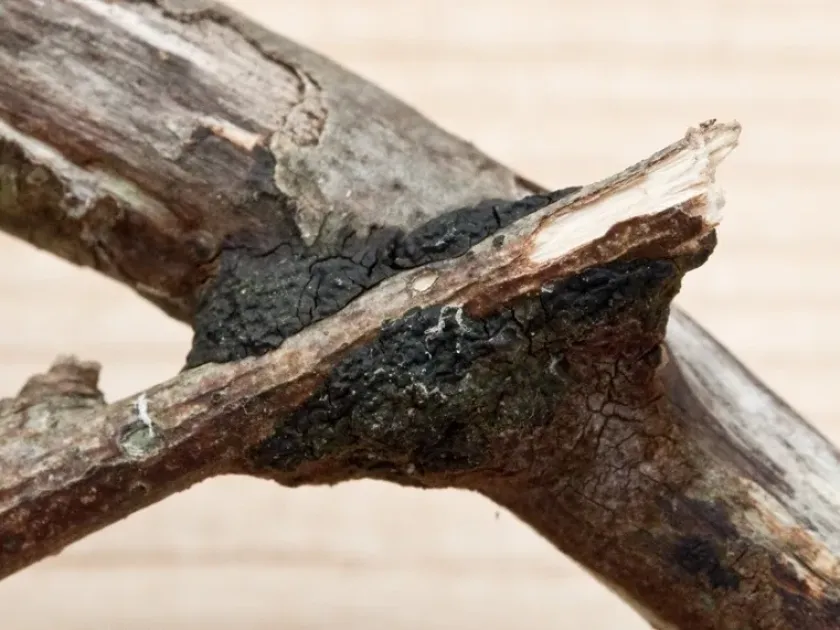
Description
Symptoms
The primary symptom of this disease is the appearance of specific fruiting bodies on the surface of tree bark or wood. These bodies often exhibit a hydnoid structure, characterized by small, tooth-like projections or bumps.
Internal tissues of the infected plant undergo active degradation, leading to wood rot. Affected wood often becomes brittle, losing its structural integrity as the fungal mycelium consumes the cellular components.
Visible changes in wood color and texture are common, often presenting as a mottled or marbled pattern on cross-sections. This is a direct result of the breakdown of lignin and cellulose by the fungal enzymes.
Infected areas are frequently centered around old wounds, bark fissures, or pruning cuts, which serve as entry points for the fungal spores.
In advanced stages, the bark may peel away, exposing the decayed wood beneath, where the mycelial mat or active fruiting bodies are clearly visible to the naked eye.
Pathogen
The disease is caused by fungi of the genus Hydnoporia (e.g., Hydnoporia tabacina), which are wood-decaying basidiomycetes. These fungi are specialized in breaking down woody matter.
The fungus functions by secreting enzymes into the host's tissues, allowing it to penetrate and dissolve cell walls. This digestive process converts sturdy wood into a decayed mass.
Reproduction is facilitated by basidiospores, which are dispersed by wind currents. Upon landing on a suitable, damaged surface, these spores germinate to establish a new infection site.
The mycelium can persist in a latent state within the wood, waiting for favorable environmental conditions to resume active growth and colonization.
The fungal life cycle is highly adaptable, allowing it to survive throughout the year and persist on dead wood, effectively acting as both a parasite and a saprotroph.
Conditions for development
High humidity and poor ventilation are the most critical factors for the development of the disease. These conditions create a favorable microclimate for spore germination on bark surfaces.
Trees that are already stressed due to drought, insect infestations, or nutrient deficiencies exhibit reduced natural resistance, making them significantly more susceptible to infection.
Open wounds on the tree trunk are the most common entry points for the pathogen. Injuries caused by wildlife, machinery, or severe weather are primary catalysts for disease transmission.
Dense, unthinned stands often suffer more frequently from Hydnoporia because the canopy prevents trunks from drying out quickly after rainfall.
While the fungus prefers moderate temperatures, it is hardy enough to remain viable across various climates, thriving in damp, sheltered forest environments.
Why it matters
The primary impact of Hydnoporia is the degradation of timber quality, rendering the wood commercially worthless due to the development of extensive rot.
The disease weakens the host tree, leading to a significant reduction in growth rates and increasing the likelihood of tree mortality over time.
Infected trees often become structural hazards, as internal decay drastically reduces their resistance to wind and snow loads, leading to potential stem breakage.
The presence of infection centers poses a risk to surrounding trees, as the constant production of spores from established fruiting bodies creates a perpetual risk of spread.
Financial losses in forestry arise not only from timber devaluation but also from the increased management costs associated with sanitation efforts and restoration.
Protection
Effective management begins with strict forest hygiene, including the prompt removal and disposal of infected trees to eliminate sources of further infection.
Minimizing mechanical injury to the bark during thinning and harvesting operations is essential, as these wounds are the entry points for most infections.
Maintaining proper stand density is a key silvicultural measure that ensures good airflow and prevents the localized humidity spikes that favor fungal growth.
Regular monitoring of forest stands allows for the early detection of fruiting bodies, enabling targeted interventions before the infection becomes widespread.
- Sanitary logging of infected trees.
- Protection against bark wounds.
- Optimization of stand density.
- Systematic forest pathology monitoring.
Discussion
No discussions yet — be the first.