
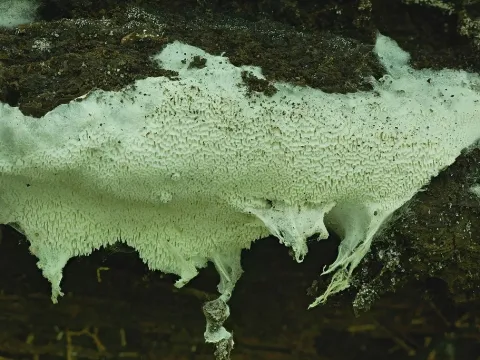
Hydnodontaceae
Hydnodontaceae
The family Hydnodontaceae belongs to the order Tremellochetales and comprises fungi that can act as opportunistic pathogens in agricultural environments. These fungi are often characterized by resupinate or hydnoid basidiocarps.
What the section contains
Hydnodontaceae
The pathogen spreads through spores that persist in the soil and on plant debris for extended periods. The fungus colonizes root systems, gradually replacing healthy tissue with its mycelium.
Hydnodontaceae fungi are primarily saprotrophic but can shift to a parasitic lifestyle when the host plant is weakened by environmental stress or poor soil conditions.
These fungi produce extracellular enzymes that effectively break down plant cell walls. This enzymatic activity is the primary cause of tissue degradation and the subsequent loss of root function in the host plant.
Genetic plasticity allows these fungi to survive across various environmental conditions, making them persistent residents in cultivated soils and a continuous threat to susceptible crop rotations.
The early symptoms of infection are often subtle, manifesting as a lack of vigor and stunted growth. The foliage may show signs of yellowing or wilting, particularly during the hottest parts of the day.
Detailed examination of the root system reveals characteristic necrotic lesions. The roots turn from a healthy white color to brown or dark brown, often becoming soft and watery due to decay.
A white, creamy fungal mat is frequently visible at the base of the stem or on the soil surface immediately surrounding the infected plant, indicating active mycelial growth.
A significant reduction in the fine, lateral root mass is observed. The plant loses its ability to uptake essential nutrients and water, leading to a visible decline in the overall health of the crop.
In advanced stages of infection, the entire root system may collapse, and the plant can be easily pulled from the soil. The decaying tissues may emit a distinct odor associated with microbial decomposition.
High soil moisture is the most critical condition favoring the development of Hydnodontaceae. Saturated soils create an anaerobic environment that weakens roots and stimulates fungal spore germination.
The optimal temperature range for the rapid expansion of the fungal mycelium is between 18 and 25 degrees Celsius. Within this window, the infection progresses at its maximum potential rate.
Soil pH plays a significant role in disease susceptibility. Acidic soils (low pH) are known to exacerbate the development of these fungi, making the host plants more vulnerable to colonization.
Poor soil aeration and dense crop spacing contribute to high humidity around the root zone and plant base, creating a favorable microclimate for the pathogen to thrive and spread.
The presence of abundant untreated plant residues from previous seasons provides the necessary substrate for the fungus to persist and build up its infectious pressure in the field.
The primary impact of Hydnodontaceae is a substantial reduction in total crop yield due to widespread plant death and failure of the root system to support the vegetative growth.
Infected plants that survive often produce lower quality fruit or seeds, reducing the market value of the harvest and potentially introducing contaminated seeds into the next season.
There is a significant economic cost associated with land remediation. Once a field is heavily infested, it may require fallowing or costly chemical interventions to restore productivity.
Reduced vigor makes plants highly susceptible to secondary pathogens, which can complicate diagnostics and lead to severe, mixed-infection scenarios in the field.
The disruption of uniform crop stands increases mechanical harvesting difficulties and results in patchy field development, which prevents efficient management of irrigation and fertilization.
Crop rotation is the most effective cultural practice for managing Hydnodontaceae. By alternating susceptible crops with resistant ones, the pathogen population in the soil can be significantly reduced.
Liming acidic soils to reach a neutral pH is an essential strategy. This practice creates a hostile environment for the fungus while promoting the health of beneficial soil microorganisms.
Seed treatment with systemic fungicides is recommended to provide a protective barrier for young seedlings. This prevents the initial colonization of roots during the most susceptible growth stage.
Improving field drainage is vital. Implementing subsoiling or raised beds can prevent waterlogging, thereby maintaining root health and reducing the likelihood of fungal infection.
- Sanitation: Remove and destroy all heavily infected plant material.
- Use of biological control agents such as Trichoderma species.
- Optimization of irrigation to maintain soil moisture within ideal levels.
- Deep plowing to bury crop residues and promote decomposition.