
Hendersonula australis
Hendersonula australis
The causal agent of this disease is the fungus Hendersonula australis, which belongs to the group of deuteromycetes or imperfect fungi. This pathogen is a specialized parasite affecting mainly woody and shrubby plants in regions with hot and arid climates.
What the section contains
Hendersonula australis
The life cycle of the pathogen is closely tied to the infection of bark and cambium. The fungus enters the plant through mechanical wounds, sunscalds, or cracks left by insects, and then begins active colonization of the inner layers of the tree.
The fungal mycelium spreads within the vascular tissues, causing obstruction of the vessels and disrupting the normal flow of nutrients. This leads to a gradual decline in the plant's vital functions at a systemic level.
Reproduction of the fungus occurs through the formation of pycnidia, where conidia are produced. These spores are easily carried by wind, rain splashes, or insects to healthy bark surfaces, ensuring further spread of the infection.
The biological resistance of the pathogen to high temperatures allows it to remain viable in dry wood even during periods of extreme drought, making it highly dangerous for forests and orchards.
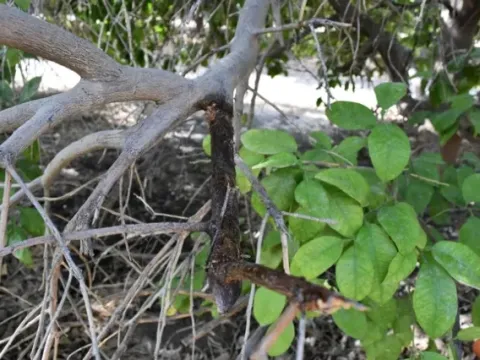
The first noticeable sign of the disease is the appearance of characteristic necrotic spots on the bark of the trunk and main scaffold branches. In the areas where the infection is localized, the bark begins to crack, turning brown or dark.
Under the affected bark, necrosis of the cambium and darkening of the wood are observed, often accompanied by an unpleasant rotting odor. In severe cases, the infected areas sink, forming deep cankers, which is a hallmark symptom of the disease.
Leaves on the affected branches begin to yellow, curl, and drop prematurely, indicating a disruption in water and mineral transport. The tree starts to lose its ornamental value and productivity declines.
In the late stages of the disease, small black dots—pycnidia—may appear on the bark surface, where the fungus produces spores. This is the most visible sign of active spore dispersal.
Prolonged infection leads to the death of individual branches (dieback) and, eventually, to the total death of the entire plant if intervention is not undertaken.
The development of Hendersonula australis is directly dependent on environmental conditions. Maximum fungal activity is observed in regions with hot summers and significant moisture deficits, where plants are weakened by environmental stress.
Sunscalds on the bark serve as "entry gates" for the pathogen. High air temperatures cause overheating of exposed trunk areas, which leads to tissue ruptures and facilitates the penetration of fungal spores.
Poor agricultural practices, such as improper watering or lack of trunk protection for young trees, significantly increase the risk of infection. Weakened trees cannot produce sufficient defensive compounds to contain the mycelium.
Spore dispersal intensifies during periods of high humidity, as dew or light rain facilitates the germination of conidia on the bark surface. After successfully establishing, the pathogen continues to develop even under low humidity levels.
The presence of insect-infested trees in the orchard creates a favorable background for epiphytotics, as insects often transport fungal spores between plants, increasing the size of the infected area.
The main danger of this disease lies in its hidden development during the initial stages. By the time symptoms are detected, the fungus has usually penetrated deep into the wood, making treatment ineffective.
The disease causes premature drying of branches, leading to crown imbalance and loss of structural integrity. This is particularly dangerous for fruit crops, as both quantity and quality of the yield drop sharply.
Massive infection of woody plants by this pathogen can lead to the total death of an orchard or forest stand. The damage involves not only the loss of production but also the costs of removing and destroying the infected material.
Affected wood loses its strength, making trees more vulnerable to windthrow and mechanical damage. Weakened plants also become targets for secondary pests, such as bark beetles.
The lack of quarantine measures in infected regions promotes the rapid spread of the infection to neighboring plots, creating a threat to surrounding agricultural lands and private gardens.
Prevention is a key element in fighting this disease. The primary method of protection is whitewashing tree trunks with a lime solution to prevent sunscalds, which serve as entry points for the infection.
Sanitary pruning is a mandatory procedure. All infected branches must be removed immediately and burned, as spores can remain viable in dead wood for a long time.
When the first signs of the disease are detected on the trunks, it is recommended to scrape off the infected bark down to healthy tissue, followed by disinfecting the wounds with copper sulfate or specialized fungicides.
It is important to maintain high standards of cultivation: providing timely irrigation and fertilization, which strengthens the plants' immunity. Healthy trees are much better at resisting pathogenic fungal attacks.
Applying preventative fungicides during the growing season or after pruning helps to prevent infection. The use of high-quality, pathogen-free planting material is the key to a long-lived orchard.