
Henningsomyces candidus
Henningsomyces candidus
Description
Symptoms
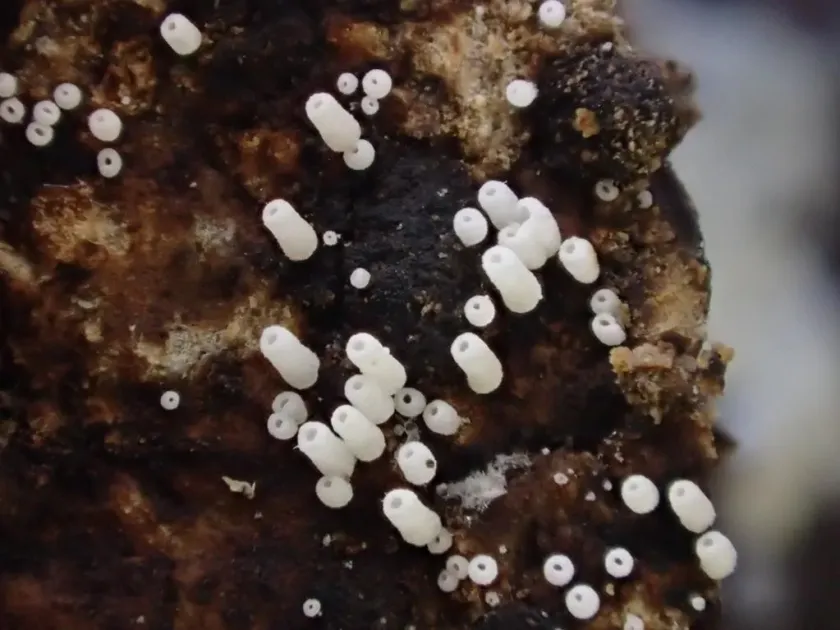
The primary symptom of infection is the appearance of small white growths on the surface of stems or wood. These structures typically resemble tiny, densely packed tubes or cylinders.
Colonies of the fungus appear as a whitish, sometimes velvety layer. When the population density increases, these small fruiting bodies merge to form a continuous, crust-like white coating over the affected plant area.
Plant tissues affected by the fungus often lose their natural integrity, becoming softer and prone to damage. Color changes, typically a bleaching or whitening of the cortex or bark, are common in the colonized areas.
Unlike many virulent plant pathogens, Henningsomyces candidus does not usually cause sharp, necrotic lesions. Its presence is characterized more by a gradual degradation of the surface tissue rather than rapid systemic rot.
Detection is often achieved through close inspection of the plant base or low-lying branches. Using a magnifying glass reveals the characteristic tubular architecture of the fungal fruiting bodies.
Pathogen
Henningsomyces candidus is a basidiomycetous fungus belonging to the Pterulaceae family. In a botanical context, it is primarily recognized as a wood-decaying fungus that thrives on dead or decaying organic matter.
This organism produces small, tubular or club-shaped basidiocarps, which are typically white or cream-colored. Within agricultural systems, it acts as an opportunistic pathogen that colonizes weakened plant tissues.
The fungal mycelium is highly effective at penetrating plant residues, where it degrades structural polymers like cellulose and lignin. This biological activity is essential for nutrient cycling in forest and garden ecosystems.
Under specific agricultural conditions, the fungus can shift from saprotrophic growth on debris to colonizing stressed or wounded living plants. Its metabolic activity allows it to break down complex organic compounds, weakening the plant's surface structures.
Reproduction occurs via spores, which are disseminated by wind, water splashes, and insect movement. Spore dispersal is most vigorous during periods of high humidity and moderate temperatures.
Conditions for development
The growth of Henningsomyces candidus is highly dependent on high moisture levels. It thrives in shaded environments where airflow is restricted and humidity remains consistently high.
Optimal development occurs in temperate climates with temperatures ranging from +15°C to +25°C. Intense heat and direct solar radiation generally inhibit its development and desiccate the fruiting bodies.
The presence of abundant plant debris on the soil surface provides an essential reservoir for the fungus to establish and accumulate inoculum before attacking nearby living plants.
In greenhouse environments, poor irrigation management that leads to constant dampness on stems creates ideal conditions for the colonization and proliferation of this pathogen.
Mechanical injuries, such as cracks in the bark or pruning wounds, serve as major entry points for the mycelium to establish itself on otherwise healthy or slightly stressed plants.
Why it matters
The main danger posed by this fungus is the destruction of outer plant tissues, which reduces the plant's structural strength and overall vigor over time.
By compromising the plant's surface integrity, the fungus facilitates the entry of secondary pathogens, including aggressive bacteria and other fungi that cause significant rot and systemic disease.
For ornamental and woody species, infestation significantly reduces aesthetic value and can jeopardize the plant's long-term survival if the colonization becomes too extensive.
Young plants or seedlings affected by this fungus experience metabolic stress, leading to stunted growth as energy is redirected toward defense and tissue recovery rather than development.
In enclosed cultivation systems, heavy infestation can lead to poor air quality and high spore loads, which creates an unhealthy environment for both the crops and the workers.
Protection
The foundation of effective management is strict sanitation, which involves the removal and proper disposal of all dead plant residues from the field or greenhouse at the end of the season.
Improving cultural practices such as spacing plants correctly ensures adequate airflow, which is critical for reducing humidity levels in the plant canopy and at the base.
If local outbreaks occur, immediate removal of the infected plant parts is necessary to stop the spread of spores to healthy areas of the crop.
Proactive application of fungicides, particularly copper-based or systemic products registered for specific crops, can prevent the initial establishment of the fungus.
- Proper water management and drainage;
- Balanced fertilization to improve host resistance;
- Use of mulch to separate plant tissues from soil-borne spores;
- Regular monitoring for early signs of fungal growth.
Discussion
No discussions yet — be the first.