
Hendersonula dieback
Hendersonula
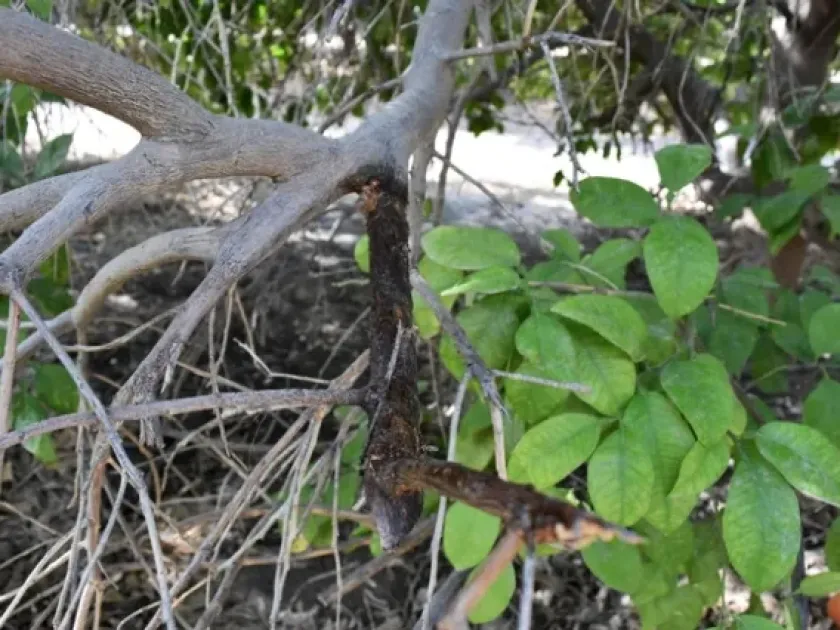
Description
Symptoms
The most characteristic symptom is the development of sunken, darkened spots on the bark, which gradually turn black as the disease progresses.
When peeling back the bark of an affected area, one can observe a distinct black, sooty fungal layer consisting of spores and mycelium.
As the infection spreads, the bark often cracks, revealing dead wood that may show deep necrosis and a charcoal-like appearance.
Foliage on infected branches typically exhibits chlorosis, wilting, and premature dropping due to the disruption of water and nutrient transport.
- Sunken dark lesions on the bark.
- Black sooty spores beneath the bark surface.
- Cracking and peeling of infected bark.
- Gradual wilting and death of branches.
Pathogen
The disease is caused by the fungus Hendersonula toruloidea (also known as Nattrassia mangiferae), which is a serious plant pathogen.
This fungus acts as a facultative parasite, capable of invading woody tissues through physical wounds, pruning cuts, or damage caused by sunscald.
Once inside, the mycelium colonizes the plant's vascular system, specifically attacking the cambium and the inner layers of the bark.
The pathogen produces conidia, which serve as the primary inoculum for spreading the infection to healthy parts of the tree or surrounding plants.
Its biological properties allow the fungus to remain viable within infected wood for extended periods, even after the death of the host branch.
Conditions for development
High environmental temperatures significantly favor the growth and activity of Hendersonula, making it a major threat in warm climate zones.
Cycles of drought followed by high humidity provide the necessary moisture for spores to germinate and colonize the host tissues effectively.
Trees that are under stress, particularly those lacking adequate irrigation or proper nutrition, are far more susceptible to infection.
Physical wounds on the trunk or branches serve as entry points; therefore, improper care or storm damage creates perfect conditions for an outbreak.
The use of contaminated pruning tools is a major factor in the rapid transmission of the pathogen throughout an orchard or garden.
Why it matters
The primary impact of the disease is the dieback of branches, which can eventually lead to the death of the entire tree if left untreated.
In fruit production, the disease significantly reduces yields and can ruin the aesthetic value of ornamental garden specimens.
Infected trees become permanent sources of inoculum, facilitating the spread of the fungus to neighboring plants during favorable weather conditions.
Chronic infection weakens the tree's overall defense mechanisms, inviting secondary infestations by wood-boring insects and other opportunists.
Economic damage is high due to the costs associated with curative pruning, disposal of infected material, and the replacement of mature trees.
Protection
The most effective strategy involves the surgical removal of all symptomatic branches, ensuring cuts are made well into healthy green tissue.
Strict hygiene protocols, including the sterilization of all pruning equipment with alcohol or bleach, are essential to prevent cross-contamination.
Wounds and pruning cuts should be sealed immediately with specialized wound dressings or fungicidal pastes to prevent new infections.
Maintaining vigorous tree health through optimal irrigation and balanced fertilization helps the tree withstand potential fungal attacks.
Regular prophylactic application of copper-based fungicides during the dormant season helps suppress the fungal population and protect the bark.
Discussion
No discussions yet — be the first.