
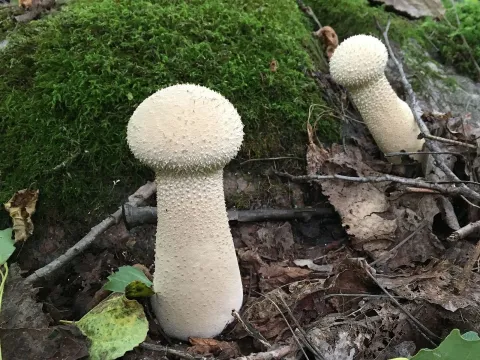
Handkea excipuliformis
Handkea excipuliformis
Handkea excipuliformis, commonly known as the long-stemmed puffball, is strictly a saprotrophic fungus. It does not act as a pathogen or a disease agent for agricultural crops.
What the section contains
Handkea excipuliformis
The fungus functions primarily as a decomposer, breaking down complex organic matter such as fallen leaves, wood debris, and decaying grass into simpler nutrients.
Its biological cycle is entirely independent of living plant hosts. It does not possess the pathogenic mechanisms required to infect or damage the tissues of cultivated plants.
In agricultural ecosystems, this fungus is beneficial rather than harmful. It contributes to the mineralization process, which helps recycle nutrients back into the soil profile.
Because it lacks the ability to colonize living plant tissues, there is no risk of infestation, and it poses no threat to crop productivity or agricultural yields.
The fungus thrives in environments with high moisture levels and a steady supply of decaying plant material. It is typically found in well-structured, nutrient-rich forest soils.
Development of the fruit bodies is highly dependent on rainfall. Extended periods of moisture allow the mycelium to mature and produce spores efficiently.
Moderate temperatures, generally between 15°C and 23°C, are ideal for the rapid development of the fungal fruiting bodies during late summer and autumn.
The physical composition of the soil, specifically the presence of humus and organic layers, is the primary driver for its establishment and colonization in a habitat.
Since the species is ecologically neutral to farming, no protective measures or fungicides are required, as its presence is often a sign of good biological soil activity.