
Hapalopilus rutilans
Hapalopilus rutilans
Description
Symptoms
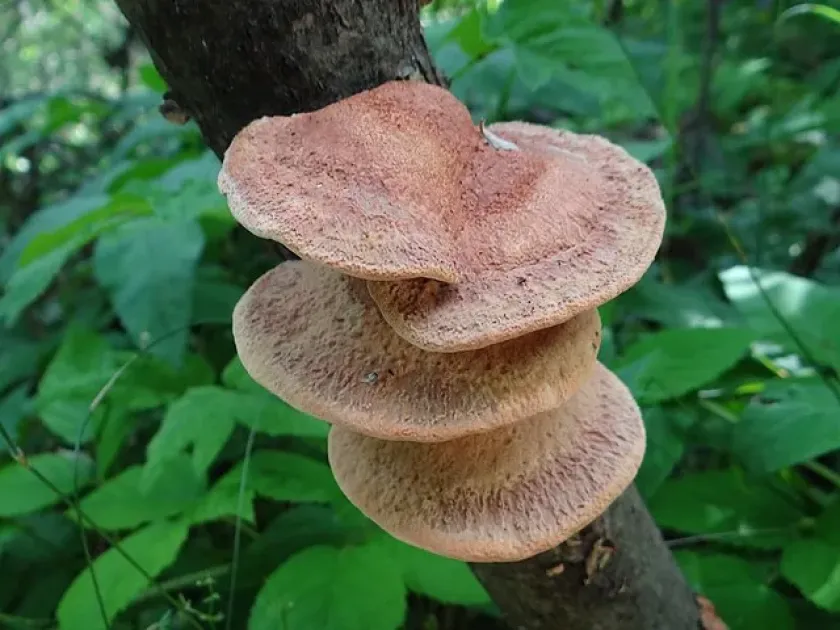
Hapalopilus rutilans is recognized by the presence of annual, bracket-like fruiting bodies that grow on the trunks or branches of infected host trees. These fruiting bodies often cluster together in small, overlapping groups.
The cap surface is typically velvety or hairy, displaying vibrant shades of ochre, orange, or reddish-brown. The margins of the fungus are usually lighter in color, providing a key identification characteristic for the species.
Internally, the fungus causes significant white rot, breaking down both lignin and cellulose. This process transforms the dense wood structure into a bleached, soft, and brittle material, significantly compromising the tree's internal strength.
Initial stages of the infection are often invisible externally, making it difficult to detect until the fruiting bodies emerge. By the time the fungus is visible, the internal colonization of the wood is usually extensive.
A definitive diagnostic test involves applying a 10% KOH solution to the flesh of the fungus. This chemical reaction causes the tissue to turn an immediate, deep violet or lilac color, which is a unique trait of Hapalopilus rutilans.
Pathogen
The pathogen is a wood-decay basidiomycete fungus known as Hapalopilus rutilans. It functions as a saprotrophic parasite that specifically targets the components of tree cell walls.
The fungus enters the host through wounds, pruning cuts, sunscalds, or frost cracks in the bark. Once inside, it begins to develop a mycelial network that systematically colonizes the heartwood and sapwood.
The biological cycle of the pathogen is highly adapted to broad-leaved trees, particularly oak, beech, birch, and hazel. It propagates through basidiospores that are dispersed by wind or insects, landing on exposed tree wounds.
Once established, the mycelium secretes powerful enzymes capable of dissolving complex wood polymers. This allows the fungus to gain nutrients while structurally degrading the living tree from the inside out.
The fungus can remain dormant or slowly progress for years until favorable conditions trigger the formation of reproductive structures on the surface of the bark, signaling an advanced stage of infestation.
Conditions for development
High levels of moisture in the wood are essential for the germination of spores and the development of the fungal mycelium. The fungus thrives in moderate temperatures, typically ranging from 15 to 25 degrees Celsius.
Densely planted areas with poor air circulation create a microclimate that promotes fungal growth. Trees already stressed by drought, poor soil quality, or other pathogens are significantly more susceptible to infection.
Mechanical damage to the bark serves as the primary entry point. Failure to seal large pruning wounds or neglecting to treat bark cracks provides an open door for the fungus to establish its colony.
The accumulation of dead wood, stumps, and fallen branches in a forest or orchard serves as a major reservoir for the fungus. These sources continuously release spores into the environment, increasing the risk of infection for neighboring trees.
Improper gardening practices, such as using unsterilized equipment, can transfer the pathogen from an infected tree to healthy ones. Maintaining good orchard hygiene is crucial to limiting the spread.
Why it matters
The primary danger posed by Hapalopilus rutilans is the extensive structural decay it causes. As the wood becomes brittle and hollow, the tree becomes a hazard, prone to breaking or falling during high winds.
In orchards, the infection directly impairs the tree's health by interfering with nutrient and water transport systems. This leads to a decline in vigor, poor yields, and eventually the death of the plant.
Infected trees act as hubs for disease transmission. If left untreated, the fungus can spread to neighboring healthy specimens, potentially causing large-scale damage within a single plantation or garden.
Once internal decay has reached a critical level, the tree is essentially lost. It cannot be healed, and the cost of removal, site remediation, and replacement becomes a significant burden for the owner.
The hazard extends beyond the tree itself, as falling branches or collapsing trees pose a serious safety risk to surrounding infrastructure and personnel working in the vicinity.
Protection
Sanitation is the most effective management strategy. Infected trees should be removed, including the stumps, and all organic debris must be disposed of correctly to prevent further spore production.
All pruning must be done with sanitized equipment, and any wounds must be treated immediately with wound dressings or antifungal sealants to prevent colonization.
- Monitor trees regularly for the emergence of fruiting bodies.
- Disinfect all pruning tools with alcohol or a copper-based solution between trees.
- Ensure trees are provided with adequate nutrients and water to boost their natural defenses.
- Remove and burn any wood showing signs of decay to reduce the local spore load.
- Avoid practices that damage the bark, such as rough weeding or improper machinery use.
While chemical treatments are not a cure for established internal rot, preventative copper-based fungicide sprays on pruning cuts can offer a protective barrier against incoming fungal spores.
Early intervention is key. If the fungus is detected on a small branch, prompt surgical removal of the branch well into healthy tissue may save the rest of the tree if the infection has not reached the main trunk.
Discussion
No discussions yet — be the first.