
Gomphidiaceae
Gomphidiaceae
Gomphidiaceae is a family of basidiomycete fungi that does not act as a plant pathogen for agricultural crops.
What the section contains
Gomphidiaceae
In mycological classification, they are part of the order Boletales, which includes many beneficial symbiotic fungi.
These fungi form an obligatory mycorrhizal association with conifer trees, primarily within the Pinaceae family.
The mycelium connects with the roots of trees to facilitate the exchange of water and nutrients for carbohydrates produced by the tree.
Therefore, labeling them as a disease is biologically incorrect, as they support forest health rather than causing plant decay.
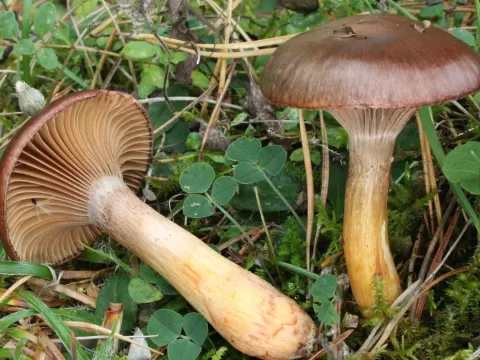
Fruiting bodies of Gomphidiaceae are characterized by a mucous or viscid cap, which helps prevent dehydration in moist forest conditions.
The gills of the mushrooms are often decurrent, meaning they run down the stem, and become dark as the spores mature.
Many species exhibit a persistent or cobweb-like partial veil that leaves a ring-like zone on the stipe of the mushroom.
Coloration ranges widely depending on the specific genus, often displaying striking pink, red, or chocolate-brown shades.
Their presence is strictly tied to the root zones of specific coniferous trees, which act as their essential nutrient hosts.
The development of these fungi peaks during cool and humid autumn months when moisture availability in the soil is optimal.
They thrive in acidic forest soils that are rich in organic matter and leaf litter, which provides a stable substrate for their mycelium.
Symbiosis with a healthy living host tree is a critical requirement for their growth; without the host, the fungus cannot persist.
Soil temperature stability is essential for the mycelial network to expand and produce seasonal fruiting bodies successfully.
Environmental disturbances, such as logging or drastic changes in soil moisture, typically result in the immediate decline of these populations.
Gomphidiaceae pose no threat to agricultural productivity, as they are not parasitic to crops, vegetables, or garden plants.
They do not produce phytotoxins or enzymes that could degrade living plant tissues or interfere with crop metabolic processes.
Their impact on forest ecosystems is entirely beneficial, contributing to tree resilience and nutrient absorption efficiency.
No agricultural economic damage has ever been attributed to this family, making them ecologically harmless to human activities.
They are highly valued by foragers and forest enthusiasts for their role in the natural cycle of the forest floor.
There are no chemical or biological control methods for Gomphidiaceae because they are not considered a plant disease.
Applying fungicides would be counterproductive, as it would destroy beneficial soil mycorrhiza and disrupt forest stability.
If mushroom clearance is desired for landscaping, manual removal of the fruiting bodies before sporulation is the only necessary action.
Maintaining a healthy ecosystem and balanced soil conditions is the best way to manage any forest area where these fungi exist.
Gomphidiaceae should be preserved as part of the natural flora that enhances the overall vitality and growth potential of conifers.