
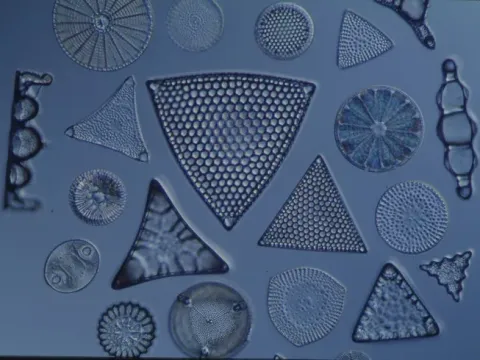
Gomphonema
Gomphonema
Gomphonema is a genus of stalked, wedge-shaped diatom algae that can proliferate in aquatic environments and hydroponic nutrient solutions.
What the section contains
Gomphonema
While not a traditional parasite, these diatoms act as opportunistic colonizers that form biofilm-like structures on various surfaces within cultivation systems.
These organisms consist of single cells attached to surfaces via extracellular mucilage, which creates a habitat for other microorganisms.
In a controlled agricultural environment, they are considered biological contaminants that interfere with the intended functioning of growing systems.
They reproduce primarily through vegetative division, allowing them to rapidly occupy space in nutrient-rich aquatic settings.
The primary symptom of a Gomphonema infestation is the appearance of brownish, rust-colored, or golden coatings on roots, pipes, and tank walls.
Affected roots often appear slimy or covered in a dusty layer, which significantly hinders their ability to uptake oxygen and nutrients efficiently.
In systems with high light penetration, algal mats can become thick and physically visible to the naked eye, indicating a severe imbalance.
Plants may exhibit symptoms of nutrient deficiency even when adequate fertilizer is provided, as the algae outcompete the crop for resources.
The water may appear slightly discolored or carry a musty, organic odor due to the decomposition of older algal colonies.
The proliferation of Gomphonema is heavily dependent on the availability of soluble silica and phosphate levels within the water supply.
Sufficient light intensity combined with stagnant water conditions creates an ideal environment for their colonization and expansion.
Optimal temperatures for development typically range between 18°C and 25°C, common in many greenhouse production environments.
Poor water circulation or dead zones within the system allow for the accumulation of nutrients, fostering rapid algal growth.
Fluctuations in the nutrient solution pH can sometimes trigger localized blooms if the environmental balance is disrupted.
Gomphonema poses a significant risk by physically coating roots, leading to hypoxia and potentially predisposing the plant to root rot pathogens.
They consume vital mineral nutrients, creating an indirect deficiency that stunts crop growth and reduces the quality of final produce.
The accumulation of algae in irrigation lines can lead to clogs and malfunctions in precision feeding equipment, increasing maintenance costs.
Large colonies can alter the chemical composition of the nutrient solution, making it difficult to maintain precise EC and pH levels.
Their presence complicates the management of greenhouse hygiene and increases the risk of contamination from secondary microorganisms.
Mechanical removal and thorough cleaning of all surfaces are essential first steps in managing Gomphonema populations in hydroponics.
Implementing ultraviolet (UV) sterilization units within the irrigation loop effectively neutralizes algae spores and prevents re-colonization.
Ensuring constant movement and circulation of the nutrient solution minimizes the likelihood of algal settlement and growth.
Optimizing the fertilizer regimen to avoid nutrient excess and maintaining good light control are key preventive strategies.
- Use opaque reservoirs to limit light.
- Perform regular system disinfection.
- Monitor water circulation efficiency.