
Gomphillus calycioides
Gomphillus calycioides
Description
Symptoms
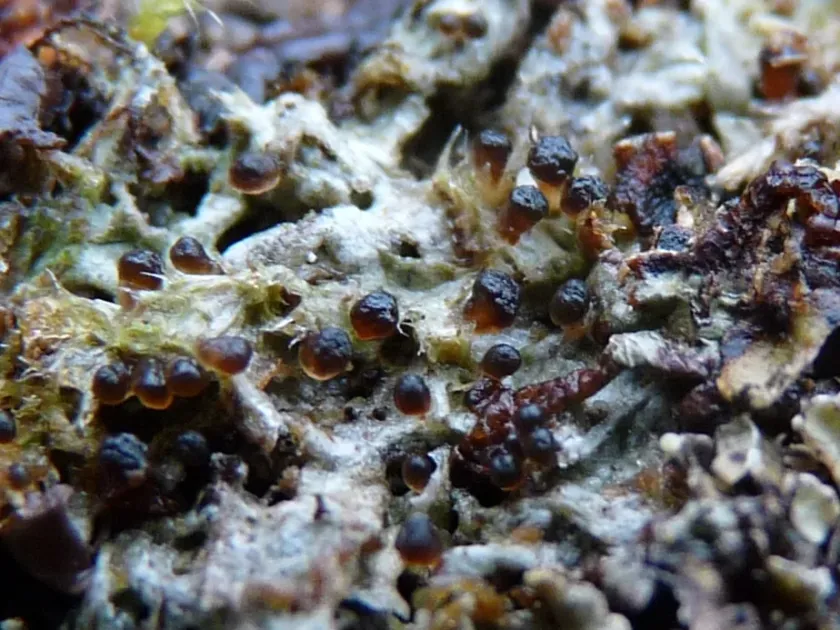
The most diagnostic sign of Gomphillus calycioides is the presence of small, cup-shaped fruiting bodies known as apothecia on the leaf blade.
These structures are often light-colored, appearing as distinct white or pale-cream dots against the green background of the leaf surface.
In cases of heavy colonization, the area beneath the lichen may show slight chlorosis due to the localized interference with light absorption.
The lichen is firmly attached to the cuticle and can form small, scattered groups or patches across the leaf surface.
Visually, the leaf may appear speckled, and the texture of the surface changes significantly where the lichen structures are present.
Pathogen
Gomphillus calycioides is a notable species of foliicolous (leaf-inhabiting) lichen, which typically establishes itself on the surface of living leaves.
As a lichen, it exists as a symbiotic partnership where the fungal component provides the physical structure and protects the internal algal or cyanobacterial partner.
The fungus is categorized within the Gomphillaceae family and is highly specialized for life on the surface of evergreen foliage.
It does not function as a classical parasite that invades plant tissues to extract nutrients, but rather uses the leaf primarily as a physical substrate.
The structure is characterized by distinct apothecia that resemble miniature cups, which is reflected in the specific epithet of the scientific name.
Conditions for development
This lichen thrives in environments with persistently high humidity and low-light conditions, typical of the tropical understory.
Stable climatic conditions are essential, as the lichen requires moisture to remain metabolically active and to support the algal partner.
Direct exposure to strong sunlight is generally avoided by the species, as it leads to rapid desiccation and the potential death of the lichen thallus.
Propagation occurs through the dispersal of spores, which are carried by water droplets, rain splashes, or humid air currents within the canopy.
The presence of long-lived, evergreen leaves is critical for the lichen to complete its slow growth cycle and produce visible reproductive structures.
Why it matters
The primary harm caused by Gomphillus calycioides is the partial covering of stomata, which can hinder the gas exchange necessary for photosynthesis.
By shading the leaf surface, the lichen reduces the amount of solar energy available to the plant, potentially slowing down growth in highly colonized leaves.
For ornamental plants, the aesthetic impact is significant, as the presence of lichen growth reduces the overall visual quality of the foliage.
Dense colonies may also create a micro-environment that retains moisture, potentially increasing the risk of secondary opportunistic infections.
While usually not fatal to the host plant, extensive colonization can cause physiological stress, particularly in younger or less vigorous specimens.
Protection
Improving air circulation and ventilation within the canopy is the most effective way to inhibit the establishment of foliicolous lichens.
Regular maintenance pruning helps to eliminate stagnant air pockets and allows for better evaporation, creating a less favorable habitat for the lichen.
In high-value ornamental crops, manual removal or careful washing of the foliage can be used to manage the population if growth becomes excessive.
Chemical control specifically targeting lichens is generally unnecessary and impractical, emphasizing the importance of cultural and environmental management.
Maintaining high plant vigor through proper fertilization and irrigation helps the host plant resist colonization by epiphylls like Gomphillus calycioides.
Discussion
No discussions yet — be the first.