
Gloeoheppiaceae
Gloeoheppiaceae
The Gloeoheppiaceae family represents a group of fungi that exist in symbiotic relationships with cyanobacteria. In phytopathology, they are classified as lichenized fungi that typically inhabit the bark of trees, stones, and exposed soil substrates.
What the section contains
Gloeoheppiaceae
Belonging to the order Lichinales, these organisms are characterized by a thallus structure that is often squamulose or foliose. Their biological identity is closely tied to the photobiont, which is commonly the cyanobacterium Gloeocapsa.
Their life cycle depends on the ability of the cyanobacterial partner to perform nitrogen fixation, which provides a competitive advantage in nutrient-poor environments where other organisms struggle to survive.
Unlike aggressive parasitic fungi, Gloeoheppiaceae grow relatively slowly. They are considered epibionts rather than true pathogens, as they do not directly invade living plant tissues for nutrition.
Their ecological role is significant in natural ecosystems, but in managed orchards or nurseries, their presence is often viewed as a symptom of environmental conditions favoring non-target growth.
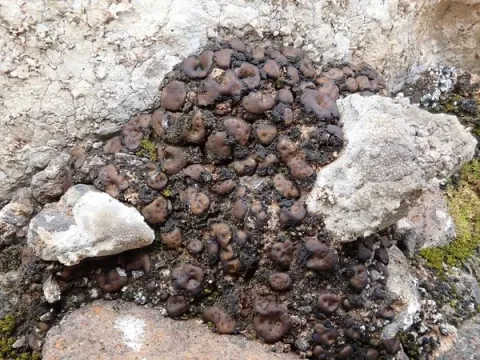
The primary visual sign of Gloeoheppiaceae colonization is the appearance of small, crust-like or squamulose patches on the bark of trees. The colors typically range from olive green to dark brown or charcoal black.
A distinctive diagnostic feature is the texture of these colonies during humid weather. Upon hydration, they often become soft, swollen, and gelatinous, which helps distinguish them from other lichen or moss species.
The growth is most frequently observed on the shaded sides of trunks or on older, less vigorous branches. The colonization process usually starts as scattered spots that eventually coalesce.
When examined closely, one may observe small apothecia (fruiting bodies) embedded within the thallus, appearing as tiny dots on the surface of the bark.
These signs are generally localized to the outermost layers of the bark. Unlike necrotic diseases, they do not cause deep-seated rot or significant discoloration of the inner woody tissue.
Development is heavily dependent on moisture levels. These organisms thrive in environments with high ambient humidity and limited sunlight, where water remains on bark surfaces for extended periods.
Temperature is a less critical factor, as these lichens are highly tolerant to temperature fluctuations. They are adapted to survive long periods of drought, entering a state of dormancy until moisture returns.
They act as sensitive indicators of air quality. Their presence often suggests a lack of air pollutants, as they are rarely found in heavily industrialized or urban areas with poor air quality.
In terms of agricultural management, dense canopy structures and poor pruning practices are the primary factors that facilitate the spread of these organisms by maintaining a humid microclimate.
The accumulation of debris, dust, and organic matter on the bark surface serves as the necessary foundation for the initial spore attachment and colony formation.
The primary concern regarding Gloeoheppiaceae is their competition with the tree for surface space. A thick coating of lichen can interfere with normal bark respiration and gas exchange.
By retaining water against the bark, these colonies create a perpetually damp micro-environment that can harbor secondary pathogens, including harmful fungi and bacteria that cause bark rot.
Although they do not feed on the host, their presence can lower the aesthetic quality of ornamental plants and saplings, which can impact their commercial marketability.
In high-intensity orchards, heavy colonization is often linked to an overall decline in tree vigor, partly because the trees themselves are often neglected or suffering from stress.
Their interference with the tree's physiological processes, while not immediately lethal, contributes to a gradual weakening that makes the tree more susceptible to opportunistic pests.
The most effective strategy is proactive canopy management. Regular pruning ensures proper ventilation and sunlight penetration, which naturally creates a dry environment unsuitable for lichen growth.
Mechanical removal is a standard control method. Carefully scraping the bark with soft brushes or wooden scrapers can remove established colonies without causing damage to the living cambium.
- Application of copper-based fungicides to disinfect the bark surface.
- Annual trunk whitewashing to discourage the settling of spores.
- Balanced fertilization to promote rapid bark growth and tree health.
While chemical treatments exist, they should be used sparingly, as cultural practices and environmental control remain the most sustainable and effective means of management.
Maintaining high overall vitality through irrigation and nutrient management helps the tree outgrow colonization attempts, ensuring that the bark surface remains clean and healthy.