
Gloeoporus
Gloeoporus
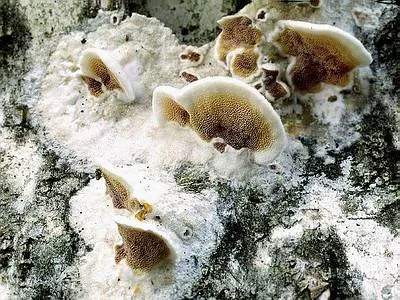
Description
Symptoms
The most distinctive sign of a Gloeoporus infection is the appearance of fleshy or gelatinous fruiting bodies on the trunk or branches of the tree.
Internally, the wood loses its hardness and strength, eventually turning into a fibrous or spongy mass as the decay process advances.
Cracks in the bark can often be observed near the infection sites, allowing spores to escape and spread the fungus to surrounding trees.
Affected trees may show foliage wilting or early leaf drop because the fungal damage disrupts the xylem transport system, preventing water flow.
In advanced cases, the tree exhibits noticeable mechanical instability, making it susceptible to breaking or snapping under stress.
Pathogen
Gloeoporus is a genus of fungi belonging to the order Polyporales, primarily known for causing wood decay in various tree species.
The fungus acts as a white rot pathogen, efficiently breaking down lignin and cellulose components of the woody tissue through enzymatic activity.
It propagates via basidiospores produced by its characteristic fruiting bodies, which appear on the surface of infected wood or bark surfaces.
The fungal mycelium permeates the host tissue, gradually creating internal decay and compromising the structural integrity of the affected plant.
While often found on dead timber, the species can also attack living trees that have been weakened by environmental stress or physical injuries.
Conditions for development
High levels of humidity are the primary requirement for the development of Gloeoporus, as it thrives in damp, cool environments.
Poorly pruned or injured surfaces on trees serve as ideal entry points for the pathogen to colonize the exposed woody tissues.
The presence of water-logged soil or inadequate drainage around the roots can stress the tree, making it more vulnerable to infection.
Shaded and poorly ventilated areas in a canopy create the perfect microclimate for the fungus to establish its fruiting bodies.
Mild temperatures during the growing season facilitate the active spread of spores and the subsequent colonization of new host surfaces.
Why it matters
The primary harm caused by Gloeoporus is the irreversible destruction of the internal woody architecture of the tree.
This decay significantly reduces the tree's health and lifespan, often leading to the eventual death of the entire plant if untreated.
The presence of the fungus creates a dangerous situation, as structurally weakened trees can collapse and cause damage to property or surrounding plants.
Gloeoporus also acts as a reservoir for infection, as the spores can be spread by wind, rain, or insects to neighboring healthy specimens.
The economic impact is substantial, especially in fruit orchards or managed forest stands, where infected trees represent a total loss of investment.
Protection
Effective management focuses on proactive care, ensuring trees remain vigorous enough to resist fungal colonization through proper nutrition.
Sanitation is paramount, involving the removal of all deadwood and infected branches to reduce the amount of inoculum present in the area.
When performing maintenance pruning, all cuts must be clean and treated with appropriate protective sealants to prevent spore entry.
Monitoring for signs of decay should be a regular practice, especially in areas with a history of fungal outbreaks in the orchard or garden.
- Regular inspection of bark and stem health.
- Disinfection of pruning tools between uses.
- Removal and destruction of infected timber.
Discussion
No discussions yet — be the first.