
Gloeophyllum
Gloeophyllum
Gloeophyllum species are basidiomycete fungi primarily known for causing destructive brown rot in wood. The most prevalent species, Gloeophyllum sepiarium, is a notorious wood-decay agent found worldwide.
What the section contains
Gloeophyllum
These fungi are classified as saprotrophs that specifically target cellulose and hemicellulose. By breaking down these structural components, they significantly compromise the integrity of wooden objects.
The fungus produces airborne basidiospores that colonize exposed timber surfaces efficiently. Once established, the mycelium penetrates the cellular structure, secreting enzymes that lead to rapid degradation.
Gloeophyllum is highly specialized to thrive in environments where wooden structures are exposed to the elements. Its ability to colonize softwood and hardwood makes it a major concern in forestry and construction.
The fungus exhibits remarkable resilience, capable of entering a dormant state when moisture levels drop, only to resume aggressive decay when environmental conditions improve.
The initial sign of infection is a distinct color change in the wood, which turns dark brown or rusty. The material begins to lose its natural hardness and tactile strength.
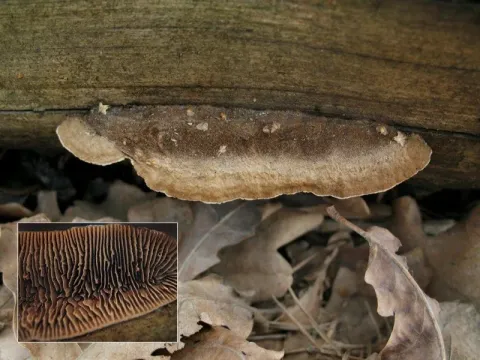
Visible fruiting bodies appear on the surface of the infected timber. These are typically leathery or corky brackets with a gill-like or lamellate underside, often colored in shades of brown.
As decay progresses, the wood develops deep cross-grain cracks, leading to a brittle, cuboidal fracture pattern. This specific decay pattern is a hallmark of brown rot fungi like Gloeophyllum.
In advanced stages, the wood becomes extremely fragile and can be crushed into a fine powder with minimal mechanical pressure. The structural load-bearing capacity is effectively destroyed.
Mycelial mats, which appear as thin, white, or yellowish web-like filaments, may be visible in cracks or under peeling wood layers. These mats signify active colonization and nutrient transport.
High moisture content in wood, typically above 20%, is the primary prerequisite for Gloeophyllum development. Materials exposed to rain, condensation, or ground dampness are most at risk.
The fungus prefers temperatures between 20°C and 30°C for optimal growth. However, it can remain active across a wider range of conditions, provided that humidity levels are sufficiently high.
Poor ventilation is a critical factor that facilitates the spread and establishment of the fungus. Enclosed, humid spaces provide the perfect microclimate for spores to germinate and colonize wood.
Direct contact between timber and soil or concrete foundations without a moisture barrier creates a constant supply of water, encouraging the fungal mycelium to flourish.
Mechanical damage to the wood surface, such as scratches or cracks, allows the fungus to bypass the natural protective layers, making it easier for the mycelium to penetrate deeper.
Gloeophyllum poses a severe threat to structural timber, including bridge supports, roof beams, and floor joists. Its rapid decay rate can lead to catastrophic structural failure if left untreated.
Stored lumber and processed wood products are highly susceptible. Large stockpiles of wood can be rendered completely worthless within a few months if humidity is not controlled.
Infrastructure assets such as railway ties (sleepers) and wooden poles are frequent targets, leading to significant maintenance costs and potential safety hazards for public utilities.
The fungus is highly infectious; sporulating fruiting bodies can spread spores to nearby healthy structures, initiating a cascade of decay within a local area.
Economic losses are substantial, stemming from the need for premature replacement of building components and the costs associated with remediation and professional structural surveys.
The most effective strategy is moisture control. Ensuring wooden structures remain dry through proper design, including rain screens and ventilation gaps, is the first line of defense.
Pressure-treated lumber, infused with fungicides and preservatives, is significantly more resistant to fungal attack. Regular re-application of protective sealants is recommended for outdoor timber.
If an infestation is detected, infected sections must be removed immediately, cutting back into healthy, unaffected wood to ensure no hidden mycelium remains in the structural element.
Eliminating direct ground contact by using metal or stone footings helps prevent moisture migration from the soil into the wooden parts of the structure.
- Apply professional-grade wood preservatives.
- Maintain proper air circulation to keep wood dry.
- Use moisture barriers between wood and foundations.
- Remove and destroy infected timber immediately.