
Gloeophyllales
Gloeophyllales
Gloeophyllales is an order of basidiomycete fungi belonging to the class Agaricomycetes. These organisms are highly specialized xylotrophs responsible for causing brown rot in wood.
What the section contains
Gloeophyllales
A typical representative of the order is Gloeophyllum sepiarium. The fungus mycelium penetrates deep into the wood structure, secreting specific enzymes that break down plant cell walls.
The nutritional strategy of these fungi is based on the degradation of cellulose and hemicellulose. Lignin is mostly left intact, which gives the infected wood its characteristic dark brown color.
The biology of these fungi is characterized by exceptional resilience. They can survive harsh environmental conditions, including significant temperature fluctuations and low substrate moisture.
Dissemination occurs via spores dispersed by air currents over long distances. Upon landing on suitable timber, spores germinate to form new infection foci.
The initial symptom of infection is a change in wood color to dark brown or reddish-brown. The texture of the timber gradually becomes brittle, friable, and loses structural integrity.
As the decay progresses, the wood cracks both longitudinally and transversely. This results in the formation of cubical blocks that crumble into powder under mechanical stress.
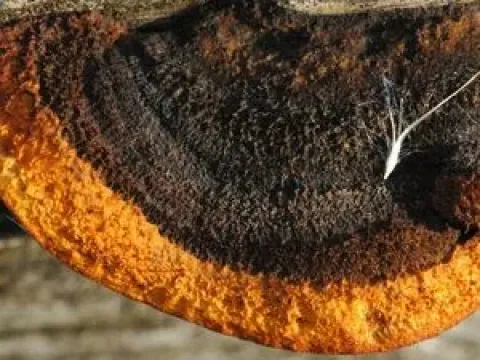
Fruiting bodies develop on the surface of the substrate. They typically appear as leathery or corky lamellate structures with a distinct radial arrangement.
The color of these fruiting bodies ranges from rusty brown to dark chocolate. The undersides of the fruiting bodies contain lamellae where the spores mature.
In advanced stages of decay, the wood loses all load-bearing capacity, which poses a significant safety risk for any structures built from the infected material.
The development of fungi within the Gloeophyllales order requires stable temperature conditions, typically ranging from +15°C to +30°C, with an optimum near +25°C.
Moisture content is a critical factor for growth. While these fungi are drought-tolerant, active mycelial spread occurs when the wood moisture level exceeds 20–25%.
Gloeophyllales often affect coniferous species exposed to outdoor environments. They are frequently found on fence posts, railway ties, and various structural roofing elements.
Good aeration of the substrate favors the spread of the fungus. This is why these fungi are common on wooden structures that are directly exposed to rain and atmospheric moisture.
The presence of prior physical damage or cracks in the wood significantly accelerates spore penetration and the subsequent colonization of the entire wooden member.
The primary danger lies in the total loss of the wood's mechanical properties. The material becomes entirely unsuitable for use in load-bearing applications.
In agricultural practice, Gloeophyllales infections lead to the destruction of barns, greenhouses, and storage facilities, resulting in substantial financial losses.
These fungi can attack both old, weathered timber and freshly cut lumber if stored improperly, causing significant damage to the forestry industry.
The rate of wood destruction is high; under optimal conditions, a solid wooden beam can become completely decayed within just a few seasons.
Infected timber acts as a continuous source of secondary contamination for healthy structures, necessitating immediate removal and disposal of all diseased material.
The primary preventive measure is sound structural design. It is essential to prevent direct contact between timber and soil and to ensure proper ventilation of all wooden components.
The application of modern wood preservatives can effectively prevent spore colonization. Deep impregnation or pressure treatment is considered the most effective method.
Regular inspection of wooden elements for signs of fruiting bodies or color changes is vital, as early detection allows for the effective containment of the infection.
In cases of deep infestation, affected areas must be removed, ensuring that an additional 50–100 cm of apparently healthy wood is cut away to ensure the removal of the fungal mycelium.
Infected waste wood must be burned immediately. Reusing or recycling decayed timber for secondary construction purposes is strictly prohibited.