
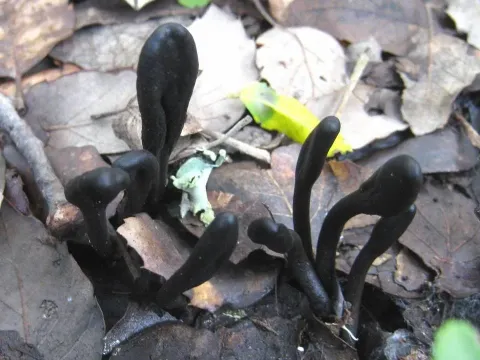
Geoglossales
Geoglossales
The order Geoglossales, commonly known as earth tongues, consists of fungi within the Ascomycota division. It is scientifically inaccurate to classify them as plant diseases, as they do not infect or harm agricultural crops.
What the section contains
Geoglossales
These fungi function primarily as saprotrophs, living on decomposing organic matter. They do not possess the specialized structures required to parasitize living plant tissues or disrupt physiological processes in crops.
From an agronomical standpoint, they are beneficial or neutral components of the soil microbiome. They do not cause lesions, wilting, or stunted growth in cultivated plants.
The confusion regarding their status often stems from their unusual appearance, which can be mistaken for symptoms of fungal infection by non-specialists. However, they lack any phytopathogenic mechanism.
In modern agricultural research, they are categorized as part of the soil biodiversity that contributes to nutrient cycling rather than as a threat to plant health.
Geoglossales thrive in environments characterized by consistently high moisture levels. They are typically found in undisturbed soils, such as forest edges, meadows, and shaded garden areas.
Unlike parasitic fungi, they do not require a host plant to survive. Instead, they depend on the availability of rich organic material and a stable, humid soil microclimate.
Human activities, such as heavy tilling and the application of broad-spectrum fungicides, significantly inhibit the growth of these organisms. They are highly sensitive to soil disturbance.
Their distribution is localized and largely dependent on micro-environmental factors, including stable shading and the composition of soil organic matter.
- Requires high atmospheric humidity.
- Prefers stable, non-cultivated soil structures.
- Sensitive to synthetic agrochemicals.
- Thrives in nutrient-rich forest litter environments.