
Geopora sumneriana
Geopora sumneriana
Description
Symptoms
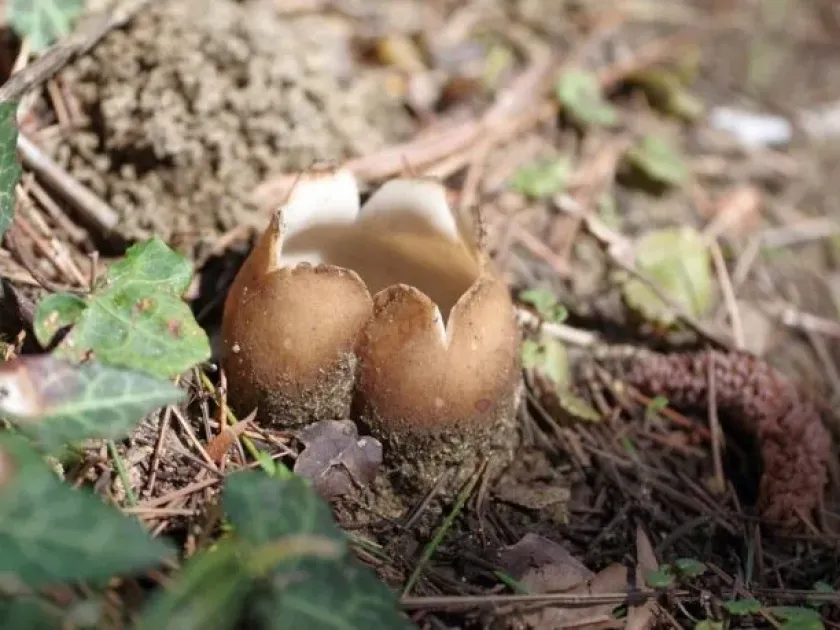
The primary symptom is the emergence of distinctive star-shaped or cup-shaped fruiting bodies, which appear near the base of conifer trees in early spring.
Affected trees often show signs of stunted growth, a reduction in the annual shoot length, and a general lack of vigor in their foliage.
Upon examination of the root system, a white, mycelial mat can be observed coating the fine roots, which prevents efficient uptake of water and nutrients.
Needles may turn yellow or brown and drop prematurely as the tree struggles to maintain its physiological functions due to root damage.
Necrosis of the fine root tips is another diagnostic indicator, showing that the fungus is actively consuming the tree's nutrient-absorbing organs.
Pathogen
Geopora sumneriana is a cup fungus belonging to the order Pezizales, typically found in soils rich in organic matter under conifer trees, particularly cedars.
The fungus develops an extensive mycelial network in the soil that can sometimes form a mycorrhizal-like association, although it is often perceived as an opportunistic pathogen.
Its reproductive structures, known as apothecia, are characteristically cup-shaped or star-shaped and are usually semi-buried in the soil or needle mulch.
The dispersal of the pathogen occurs primarily through air currents and water runoff, allowing it to spread easily across garden beds or nursery rows.
It survives adverse conditions by forming sclerotia, which are dense, hardened masses of fungal tissue that allow the fungus to persist in the soil for several years.
Conditions for development
Geopora sumneriana flourishes in moist, cool conditions, especially during spring when soil temperatures reach the threshold for rapid fungal activity.
The fungus thrives in acidic soils that have a high concentration of decomposing conifer needles and organic debris, which provide a perfect substrate.
Poor soil drainage and low aeration levels contribute significantly to the proliferation of the fungus, creating an environment where it can easily dominate.
Deep layers of mulch that are left undisturbed for long periods create a stable, humid microclimate that encourages the production of fruiting bodies.
Over-irrigation in garden settings can exacerbate the spread of the fungus, as excessive soil moisture provides a medium for spore germination and mycelial spread.
Why it matters
The main impact of Geopora sumneriana is the impairment of the tree's root system, which leads to physiological stress and reduced growth performance.
Young conifer seedlings are particularly vulnerable, as the fungus can quickly colonize their limited root mass, leading to plant mortality.
In landscape settings, the presence of the fungus diminishes the aesthetic value of prized conifer trees due to needle discoloration and crown thinning.
The pathogen stresses the trees, making them significantly more susceptible to opportunistic secondary pests and other soil-borne diseases.
Economic losses in commercial nurseries can be substantial if large numbers of saplings become infected and fail to reach a sellable condition.
Protection
Management starts with good sanitation practices, such as removing fallen needles and decaying organic matter from under the tree canopy to reduce the food source.
Improving soil aeration and drainage is crucial for preventing the environmental conditions that favor the rapid spread of the fungus.
- Manual collection and destruction of fruiting bodies to prevent spore dispersal.
- Application of copper-based fungicides to the soil in affected areas.
- Incorporation of biological control agents like Trichoderma to compete with the pathogen.
Regular monitoring of the soil condition and moisture levels helps in identifying early signs of the fungus before it reaches critical mass.
If soil conditions permit, slightly adjusting the pH can sometimes make the environment less favorable for the fungus to thrive and compete.
Discussion
No discussions yet — be the first.