
Geoglossum umbratile
Geoglossum umbratile
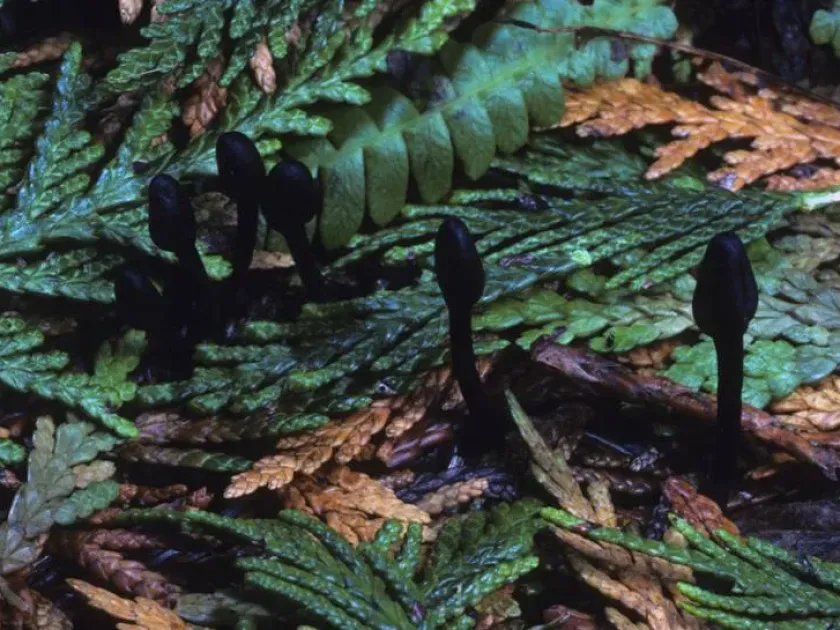
Description
Pathogen
Geoglossum umbratile, commonly known as the dark earth tongue, is a species of fungus in the family Geoglossaceae. It is essential to clarify that this fungus is not a plant pathogen.
The fungus functions as a saprotroph, meaning it derives nutrients from decaying organic matter. It does not infect living plant tissues, nor does it affect crops or garden plants.
The fruiting bodies are typically club-shaped and dark brown to black in appearance. These structures emerge from the soil surface to release spores for reproduction.
Within the ecosystem, it contributes to the decomposition process by breaking down complex organic material into simpler substances, aiding soil health.
Agronomists classify this organism as a harmless component of the soil mycobiota rather than a disease agent requiring any form of control or protective measure.
Conditions for development
Geoglossum umbratile thrives in moist and shaded environments. It is frequently associated with mossy areas and woodland soils rich in organic decay.
High humidity is the primary requirement for the growth of its mycelium. The fungus is sensitive to drought and significant changes in soil chemistry.
The peak period for observing its fruiting bodies is during the late summer and autumn months, characterized by moderate temperatures and higher rainfall.
The presence of non-disturbed soil layers is crucial for this fungus, as it does not colonize frequently tilled or chemically treated agricultural plots.
Due to its ecological preferences, it serves as an indicator species for natural, stable habitats rather than managed agricultural landscapes.
Discussion
No discussions yet — be the first.